What to Do If Air Fryer Overheats: Quick Troubleshooting
Urgent troubleshooting guide for air fryer overheating. Learn safe steps, checks, and prevention tips from Air Fryer 101 to restore performance and protect your appliance.


If your air fryer overheats, unplug it immediately and let it cool. Begin with a quick safety check: clear any crumb buildup from vents, ensure the unit sits away from walls, and load food in a single layer. Run a short test at a low temperature. If the problem repeats, reduce load, clean thoroughly, and inspect the cord for damage. Air Fryer 101 recommends safety first.
What overheating looks and sounds
Overheating air fryers often trip safety protections, emit a burnt smell, or shut off mid-cycle. You may notice excessive smoke, a rattling fan, or the unit becoming uncomfortably hot to touch on the exterior. If you asked yourself what to do if air fryer overheats, your first priority is safety. According to Air Fryer 101, continuing to use the appliance while it shows signs of overheating can damage internal components or pose a fire risk. Start by powering down and unplugging, then allow the unit to cool completely before inspecting visible parts like the basket, tray, and vents for obstruction or buildup.
Immediate safety steps you should take
Power off the unit and unplug it from the outlet. Move it away from walls and flammable objects. Do not touch hot surfaces; use insulated oven mitts if you must handle it. Let the appliance cool for at least 15-20 minutes. While cooling, check that the outlet is safe to use with another device. If you smell burning or see smoke, keep clear and contact emergency services if necessary.
Common causes of air fryer overheating
There are several frequent culprits that lead to overheating. Crumb buildup blocking vents or a dirty crumb tray reduces airflow and triggers the unit’s safety shutoff. Overfilling the basket or piling foods too high can obstruct airflow and trap heat. Placing the air fryer too close to walls or a heat source also hinders proper cooling. A faulty thermostat or control board, and repeatedly using the appliance at very high temps for extended periods, are more serious issues. Finally, using a damaged power cord or outlet can cause irregular power delivery that overheats internal components.
Check airflow and placement
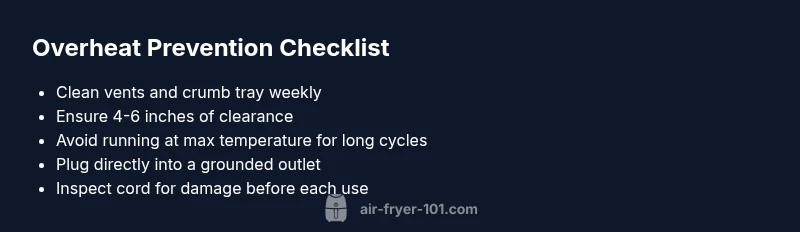
Airflow is the lifeblood of the air fryer. Ensure the unit has at least 4-6 inches of clearance on all sides and is not tucked into a cabinet with poor ventilation. Clean the vents and ensure the crumb tray and basket are free of grease and crumbs. When loading foods, use a single layer and avoid stacking pieces in a way that blocks the fan or airflow around the basket. Proper placement and cleaning reduce overheating risk dramatically.
Inspect electrical supply and cords
Verify the outlet provides a stable, appropriate power supply for the air fryer. Do not use extension cords or adapters; plug directly into a grounded outlet. Inspect the power cord for cuts, nicks, or heat damage. If the cord feels unusually warm during use, discontinue use and replace the cord or have the outlet inspected. A loose outlet or poor electrical connection can cause intermittent heating that triggers overheat protection.
Cleaning and maintenance to prevent overheating
Create a simple maintenance routine: wipe the interior after each use, clean the crumb tray weekly, and remove any grease from the heating element area when safe to do so. Regularly check and replace worn gaskets or seals if your model uses them. Always dry components before reassembly to avoid steam or moisture that could affect electronics. Avoid cleaning with water jets that could enter electrical compartments. Consistent cleaning preserves airflow and temperature accuracy.
Step-by-step reset and test
Start with a full power-down: unplug the unit, wait 2-5 minutes, then plug back in. Run a dry test without food at a low temperature for 3-5 minutes to observe if the fan runs smoothly and the unit maintains temperature. If you hear unusual noises or smell burning, power down immediately. Then load a small batch of food and run at a moderate temp for 8-10 minutes while watching for any signs of overheating. If it passes this test, gradually increase to your normal setting.
When to replace parts vs replace the unit
If cleaning and a reset do not fix the overheating, the thermostat or temperature sensor may be failing. A fault in the control board can also cause misreadings and overheating. Check your warranty status before attempting parts replacement. If repeated overheating occurs after professional inspection, replacing the faulty component or the entire unit may be recommended by a technician.
Prevention tips for long-term reliability
Develop a consistent routine: clean vents and trays weekly, avoid cooking at ultra-high temperatures for long periods, and never run the air fryer empty. Record any recurring symptoms and how you addressed them to identify patterns. Keep the device in a well-ventilated area and away from heat sources. By following these practices, you reduce overheating risk and extend the life of your air fryer.
Steps
Estimated time: 30-45 minutes
- 1
Power down and unplug
Turn off the unit and disconnect from the outlet. Do not touch hot surfaces. Wait 2-5 minutes to ensure there is no residual heat.
Tip: Use dry, heat-resistant gloves if you need to handle the unit briefly. - 2
Allow to cool completely
Let the air fryer sit for 15-20 minutes in a safe area away from flammable materials. Cooling ensures you can inspect safely.
Tip: Do not rush this step to avoid burns or accidental reactivation. - 3
Inspect vents and crumb tray
Check all vents for obstruction and remove any crumbs or grease from the tray and basket.
Tip: Vacuuming or brushing gently helps remove fine debris without scratching surfaces. - 4
Check clearance and placement
Ensure the unit sits on a heat-resistant surface with 4-6 inches of clearance on all sides.
Tip: Avoid placing near curtains or other textiles that could catch heat. - 5
Test the unit without food
Plug in, run a dry cycle at a low temp for 3-5 minutes to observe the fan and heating element.
Tip: Listen for unusual noises or smells; stop if anything seems off. - 6
Reset and re-test with a small batch
Run a small test batch at a moderate temp for 8-10 minutes to verify stable operation.
Tip: Use a shallow, single-layer load to maximize airflow. - 7
Evaluate results
If the unit maintains temperature and shows normal cycling, gradually return to typical cooking settings.
Tip: Keep a log of temperatures that consistently work. - 8
Seek professional help if needed
If overheating recurs after reset and cleaning, contact a technician or the manufacturer for guidance.
Tip: Document any warning codes or symptoms to share with support.
Diagnosis: Air fryer overheats during operation or turns off due to overheat protection.
Possible Causes
- highBlocked air intake or exhaust vent from crumb buildup or proximity to walls
- mediumFaulty temperature sensor or control board malfunction
- mediumOverfilled basket or excessive food mass obstructing airflow
Fixes
- easyUnplug and allow to cool, then clean air vents and crumb tray; ensure 4-6 inches clearance from walls
- easyReset electronics by unplugging for 5-10 minutes, then test at a low temperature
- mediumCheck the power source; try a different outlet; inspect cord for damage; if persists, contact service
Got Questions?
Why does my air fryer overheat?
Overheating can result from blocked airflow, a faulty thermostat, or using very high temperatures for long periods. Start with cleaning vents, then check the thermostat if the issue persists.
Overheating usually comes from blocked airflow, a bad sensor, or cooking at the hottest temps for too long. Start by cleaning the vents and then test the thermostat if it keeps happening.
Can I keep using it if it overheats once?
No. Unplug, let it cool, inspect for obstructions, and perform a low-temp test before resuming normal use. If it overheats again, stop and seek service.
No—unplug, cool, and inspect. If it overheats again, stop using it and get it serviced.
Should I use an extension cord with an air fryer?
Avoid extension cords. Plug the air fryer directly into a grounded outlet to ensure stable power and reduce overheating risk.
Avoid extension cords; plug directly into a grounded outlet.
How often should vents be cleaned?
Clean vents weekly or after greasy cooking. Regular cleaning helps maintain airflow and prevents heat buildup.
Clean the vents weekly, especially after cooking fatty foods.
When should I replace parts?
If cleaning and resets don’t resolve overheating, the thermostat or control board may be failing. Check warranty and consider professional replacement.
If it still overheats after cleaning and resetting, see a professional.
Is it safe to use at high temps?
Operate at recommended temperatures for your model and avoid long preheats or extended cycles that can push the system beyond its safe limits.
Stick to recommended temps and avoid long preheats.
Watch Video
Quick Summary
- Unplug and cool before inspection
- Maintain clear airflow around the unit
- Regularly clean vents and trays
- Seek professional help if overheating repeats