What to Do When Your Air Fryer Won't Heat Up: A Troubleshooting Guide
When your air fryer won't heat, use this urgent, step-by-step troubleshooting guide from Air Fryer 101. Learn safe checks, common causes, diagnostic flow, and how to decide between DIY fixes or professional help.


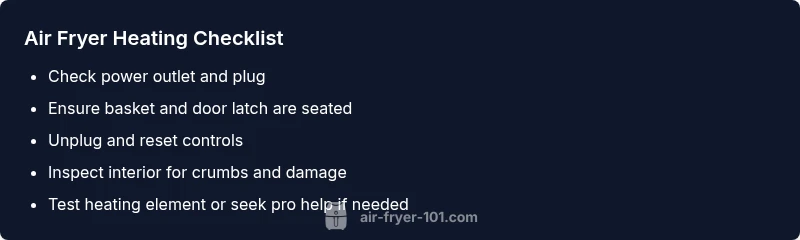
Most likely, the air fryer won’t heat up due to a simple power issue or a safety interlock. Start with basic checks: confirm the outlet is working, the plug is fully seated, and the door/basket is properly closed. If it still won’t heat, unplug, wait 30 seconds, then plug back in and reset the controls before testing again.
Why your air fryer won't heat up (and what to do about it)
According to Air Fryer 101, most heating problems start with a power delivery or safety interlock issue rather than a blown heating coil. If you’re wondering what to do when air fryer won't heat up, begin with the basics and work your way through a logical checklist. Not every problem requires a service call; many are resolved with simple resets and seating adjustments. The goal is to restore safe operation while avoiding risky repairs. A clear understanding of the unit's safety features helps you avoid bypassing protections or using damaged components. Air Fryer 101 emphasizes steady, methodical steps to keep you in control and minimize downtime.
In many models, heating will not start unless the door is fully closed and the basket is correctly seated. Crumbs and residue can trigger overheating protections, temporarily cutting power. Electrical faults—such as a frayed cord or a loose plug—are common culprits too. By focusing on these areas first, you reduce risk and save time.
Quick checks you can do before calling for help
- Test the outlet with a known-working appliance to confirm power.
- Inspect the power cord for cuts, kinks, or burns; replace if damaged.
- Make sure the basket is fully seated and the door latch is engaged; many units won’t heat if the latch sensor isn’t satisfied.
- Unplug the air fryer for 30 seconds, then plug back in and attempt a short heat test without food.
- If your model has an internal reset or fuse, check for any burning smell or signs of a blown fuse; do not attempt to bypass safety features.
Common causes behind lack of heat
Power issues dominate: a faulty outlet, damaged cord, or a tripped circuit can starve the unit of electricity. Safety interlocks—door and basket sensors—are another frequent reason heating won’t start. A buildup of crumbs, oil, or condensation can trigger overheating protection, immediately stopping heat. Less common but possible are a failing heating element, thermostat, or control board. Differentiating between these requires a calm, stepwise approach rather than random testing.
Air Fryer 101 notes that even a brand-new-looking unit can have sensor misalignment or wiring faults that prevent heating. The aim is to identify the fault pattern: power delivery, safety interlock, overheats, or internal component failure.
Safety-first steps and when to stop
Always unplug before inspecting the interior or touching wiring. Do not attempt to repair electrical components unless you are trained and comfortable with basic electronics. Avoid water, solvents, or metal tools around live parts. If you smell burning, see smoke, or notice melted plastic, unplug immediately and discontinue use. If your unit is under warranty, contact the manufacturer for service instead of DIY repairs. When in doubt, seek professional help to avoid electric shock or fire risk.
Testing the heating element and thermal fuse (safe guidelines)
Accessing the heating element often requires removing a panel; unplug first. Visually inspect for obvious damage: scorched wires, discoloration, or loose connections. If a multimeter and proper training are available, you can test for continuity across the heating coil; lack of continuity usually means the element is failed. A blown thermal fuse exhibits signs like a broken circuit with no power to the heater—even when the unit is plugged in. Replacing a fuse typically requires a compatible part and professional wiring knowledge. After any inspection or repair, reassemble carefully and retest with the unit running empty (no food) to observe if heat returns.
Diagnostic flow (quick decision tree)
This flow helps you decide next steps quickly:
- Symptom: No heat after reset
- Check power: outlet, cord, circuit
- Check safety interlocks: door latch and basket sensor
- If power and sensors are okay, test heating element/thermostat for continuity
- If a component fails, replacement or professional repair is advised
- Symptom: Intermittent heat or trips
- Inspect for loose wiring, plug connections, and residue build-up
- Clean interior and reseat components, then test again
- If it persists, seek professional evaluation
- Symptom: Not under warranty or out of DIY scope
- Contact manufacturer or a qualified technician for diagnosis and safe repairs.
Prevention tips to keep heating reliably (quick habits)
- Regularly clean crumb trays and interior corners to prevent sensor false positives.
- Use the unit on a stable, heat-resistant surface and keep it away from water or steam leaks.
- Avoid overloading the basket; allow adequate air circulation for even heating.
- Schedule periodic checks of the power cord and plug for wear, and replace damaged parts promptly.
- When in doubt about a fuse or thermostat, consult a professional rather than attempting risky DIY repairs.
Steps
Estimated time: 30-60 minutes
- 1
Power check and safety prep
Unplug the air fryer, inspect the plug and cord for damage, then plug into a known-good outlet. If the outlet powers other devices, proceed. If not, address the outlet or circuit first. This prevents false diagnoses caused by insufficient power.
Tip: Always unplug before inspecting any wiring. - 2
Seat and latch verification
Open the unit, remove the basket, and re-seat it firmly. Close the door and ensure the latch engages with a solid click. If the unit still shows no heat, proceed to reset.
Tip: A misaligned latch is a common, invisible cause of no-heat conditions. - 3
Reset controls and test empty
With the unit unplugged, wait 30 seconds, then plug back in. Power up and run a short heat test with no food. Observe whether the heating element turns on and stabilizes at a set temperature.
Tip: Reset is often enough to clear minor electronic glitches. - 4
Inspect for visible damage
Look for scorched areas, melted plastic, or burnt smell inside the housing. If detected, discontinue use and seek professional service. Do not attempt fixes that involve wiring or internal components without training.
Tip: Safety first: damaged parts can lead to shock or fire. - 5
Test or test-verify the heating path
If you have the expertise, check for continuity across the heating coil and test fuses per the manufacturer’s manual. A non-continuous coil indicates a failed element; a blown fuse requires part replacement by a professional.
Tip: Only handle electrical testing if you’re qualified. - 6
Decision point: DIY vs. professional
If tests point to a failed element, fuse, or control board, decide whether to replace parts yourself (if you have the correct part and skills) or contact a technician. Safety should drive the decision.
Tip: When in doubt, choose professional repair.
Diagnosis: Air fryer won't heat up
Possible Causes
- highPower issue (outlet, cord, circuit)
- mediumDoor latch or sensor not engaged
- highInternal fuse/thermostat failure
Fixes
- easyTest outlet with another device and inspect the cord for damage
- easyEnsure door/basket are properly seated and latch engaged; reseat and retry
- mediumIf fuse or thermostat is suspected, contact a professional; do not bypass safety features
Got Questions?
Why won't my air fryer heat up even when it's turned on?
Common causes are power delivery issues or a safety interlock not engaging. Start with the outlet, plug, and door latch, then perform a controlled reset before testing again.
No heat can mean a power issue or safety interlock; check the outlet and latch, then reset and test again.
Can a faulty door latch stop heating the air fryer?
Yes. If the latch or sensor doesn’t detect a closed door, the unit often won’t heat to protect you from starting with an open appliance.
A bad door latch can stop heating because the unit senses an open door for safety.
Is it safe to test the heating element with a multimeter?
Electrical testing should only be done by someone trained. If you’re not sure, consult a technician instead of attempting tests that could cause shocks or shorts.
Testing heating elements with a meter is risky if you’re not trained; get help if unsure.
Should I replace the fuse myself if I suspect it’s blown?
Fuses are safety-critical parts. Replacement should follow the manufacturer’s spec and, if possible, be performed by a professional to avoid voiding warranty or causing harm.
If you suspect a fuse, it’s best to have a pro handle it for safety and warranty reasons.
How long should I run a test when checking for heat?
Run the unit for a short test (1–2 minutes) without food to observe whether the heater engages and maintains heat.
Run a quick test for a couple minutes to see if heat comes on.
When should I consider replacing the air fryer rather than repairing it?
If the heating path or control board is failing and repair costs approach or exceed replacement, it may be more economical to replace the unit.
If repairs are costly or repeat failures occur, consider replacement.
Watch Video
Quick Summary
- Check power and seating before deeper diagnostics
- Unplug and reset to clear minor electronic glitches
- Crumbs and residue can trigger overheating protections
- Inspect for visible damage; do not bypass safety features
- Seek professional help when heating components or fuses are involved