How to Fix Air Fryer Not Heating: A Step-by-Step Guide
Learn proven steps to diagnose and repair an air fryer that won't heat, with safety tips, maintenance advice, and clear actions for home cooks.


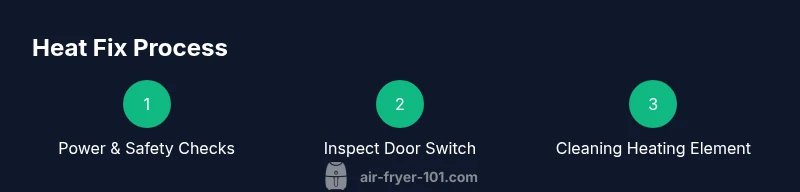
To fix an air fryer not heating, start with a quick triage of power and safety. Step 1: unplug, inspect the outlet, and try a different socket. Step 2: confirm the door is fully closed and the door switch engages. Step 3: clean the heating element and interior. Step 4: reset by unplugging for 60 seconds. If it still won’t heat, contact service.
Quick diagnosis: why your air fryer won't heat
If you're asking how to fix air fryer not heating, start with a quick triage that covers power, safety interlocks, and obvious mechanical faults. In most instances, a unit that won't heat isn't dead; it's waiting for a simple reset or a minor adjustment. According to Air Fryer 101, the most frequent heating problems begin with the power source or the door switch, then move to the heating element or thermal fuse. Before you tear the appliance apart, verify the basics: is the outlet live, is the cord intact, and is the door fully engaging the interlock? A device that sits idle but hums when powered usually indicates a safety or relay issue rather than a burnt heater. By approaching the problem this way, you can save time and avoid unnecessary repairs.
From there, you can map out a plan: implement emergency safety steps, perform non-invasive checks, and determine whether professional service is required. We'll walk you through each step in a methodical, at-home friendly way, with concrete tests and best practices. The goal is to restore reliable heat without voiding warranties or risking safety. Air Fryer 101's perspective guides cautious, evidence-based troubleshooting throughout the process.
Safety-first checks before you dive in
Working with electrical appliances requires discipline. The first thing you should do is unplug the air fryer and unplug any power strip or extension cord. Then, test the outlet with a known working device. If the outlet is fine, inspect the power cord for nicks or exposed wires; replace if damaged. Next, confirm the unit is not overheating at the base or vent area—feel for heat only through the exterior shell after a cooling period. Remember to wear heat resistant gloves when inspecting interior components. If your model has a removable basket, remove it and ensure no debris blocks the door latch or vent. Finally, review the user manual for any model specific safety features such as a thermal cutout that will prevent heat unless properly seated. These steps reduce risk and set the stage for more targeted diagnostics. Air Fryer 101 analysis shows that many heating issues start with safety interlocks or power delivery, so addressing these basics first is crucial.
Inspect the power supply and outlet
A reliable power supply is the backbone of heating performance. Start by unplugging the unit, then test the outlet with another device to confirm it provides consistent power. Inspect the plug and cord for visible damage, and replace any frayed wiring before proceeding. If you use a surge protector or power strip, bypass it to eliminate a secondary failure source. Once you confirm the outlet and cord are sound, attempt a brief power-on test without the food basket to observe whether any minor beeps or lights indicate activity. If you notice intermittent power or the device remains completely unresponsive, the fault may lie deeper in the control board or heating circuit, which should be evaluated by a professional if you’re not trained in appliance electronics. Air Fryer 101 notes that many reported heating faults originate in the power delivery path.
Door switch and interlock: the often overlooked culprit
Door interlock switches are safety devices that prevent heating when the door is ajar. If the switch is worn, misaligned, or blocked by residue, the air fryer may never enter the heating cycle. Inspect the door seal for debris and clean it gently with a soft cloth. Close the door firmly and listen for a definite click indicating the interlock has engaged. Some models provide a diagnostic light when the switch is activated; use this to confirm engagement. If you suspect the switch is faulty, consult the manual for a safe way to test continuity with a multimeter or contact the manufacturer for guidance. Replacing a faulty interlock often restores reliable heating without replacing the entire unit.
Heating element and thermal fuse: the hidden culprits
The heating element is the core component that generates heat. Over time, it can accumulate grease or burnt residues that insulate heat or create hot spots. A blown thermal fuse, a safety device that cuts power when temperatures rise too high, can also prevent heating. If you suspect either issue, perform a careful inspection: look for visible signs of damage or scorching, and check for continuity with a multimeter if you have the proper training. Do not attempt to bypass a fuse; replacing it with the wrong part can create a fire risk. If you’re unsure, seek professional service. Air Fryer 101 emphasizes safety as the top priority when dealing with heating elements and fuses.
Cleaning the interior and vents to restore heat
A dirty interior can block airflow and reduce heat distribution. Remove the basket and tray, and use a soft brush or microfiber cloth to remove trapped grease from the heating element and vents. Avoid abrasive cleaners that could damage coatings. Ensure vents stay clear so hot air can circulate. After cleaning, wipe down the interior with a damp cloth and dry completely before reassembling. Regular maintenance—light cleaning after use and deeper cleans weekly—helps prevent heat losses and extends the life of components. Air Fryer 101 recommends a simple monthly cleaning routine to minimize future heating issues.
How to test and verify heat with simple checks
With the unit reassembled, perform a controlled test: plug in the air fryer, set a low temperature, and observe whether the air begins to circulate and heat up. If you hear the fan but feel no warmth, the issue may be in the heater circuit rather than airflow. Increase the temperature gradually and monitor the heat at the vent; a lack of consistent warmth indicates a heating element or control problem. If heat appears inconsistent or only at certain times, document the pattern, as irregular behavior can help a technician diagnose the root cause more quickly. Air Fryer 101 suggests recording these observations to share with support if you pursue repair.
When to repair vs replace
If the unit is still under warranty, contact the manufacturer for service options rather than attempting risky disassembly. For out-of-warranty units, weigh the cost of replacement versus repair based on part availability and labor. A high-end model with complex electronics may justify professional repair, while a budget model may be better replaced. If the recommended steps restore heat but the unit behaves unpredictably, treat it as a safety risk and consider a replacement. Air Fryer 101 advises evaluating the total cost of repair, expected remaining life, and safety considerations before deciding.
Verdict: a practical plan and safety reminder
Air Fryer 101's final verdict is that most heating issues can be resolved at home by methodically testing power, door interlock, heating element, and cleaning. If heat is still absent after following the steps, seek professional service or replacement to ensure safety and performance. By documenting symptoms, performing careful diagnostics, and prioritizing safety, you can determine the best next step with confidence.
Tools & Materials
- Power outlet (proper voltage for your region)(Test with a known-working device to verify power)
- Screwdriver set(Phillips #2 for most models)
- Multimeter(For continuity/voltage checks only if you’re comfortable)
- Heat-resistant gloves(Protection when handling hot parts)
- Non-abrasive cleaning brush(Remove debris from vents and heating element)
- Microfiber cloth(Wipe interiors and avoid scratching coatings)
- Replacement fuse or thermal fuse (model-specific)(Only if you confirm compatibility with your unit)
- Owner’s manual / service guide(Helpful for model-specific safety steps)
Steps
Estimated time: 45-60 minutes
- 1
Power down and unplug
Power off the unit and unplug from the wall. Inspect the power cord for visible damage and ensure it is completely disconnected from any power source. This prevents shock and sets a safe baseline for inspection.
Tip: If the plug feels warm, set the unit aside to cool before handling. - 2
Test the outlet and cord
Plug another device into the same outlet to confirm it supplies steady power. Check the air fryer cord for cuts or kinks; replace if damaged. A faulty outlet or cord is a common cause of no-heat situations.
Tip: Avoid using damaged cords; use the manufacturer’s replacement part. - 3
Inspect the door switch
Open and close the door firmly to engage the interlock. If the unit doesn’t click or the door feels loose, the switch could be worn or misaligned. Some models allow access to the switch for a basic check.
Tip: Refer to the manual for safe access procedures; never pry hard on components. - 4
Clean the heating element
Remove interior and basket to access the heating element. Use a soft brush to remove grease and debris that may insulate heat. Ensure no residue blocks airflow around the element.
Tip: Do not use metal tools that could scratch coatings. - 5
Check for a blown fuse or fuse-like safety
If you can access the heater circuit safely, check for continuity with a multimeter after disconnecting power. A blown fuse or faulty thermal fuse will prevent heating. Do not bypass safety devices.
Tip: If you’re unsure, skip this step and seek professional help. - 6
Reset the unit
With the unit unplugged, wait 60 seconds to reset the internal electronics. Then plug back in and run a short test at a low temperature to observe heating behavior.
Tip: No visible heat after reset? Proceed to professional service. - 7
Run a controlled heat test
Set to a mid-range temperature and monitor whether warm air circulates consistently. If heat is intermittent or absent, the heating circuit or sensor likely needs repair or replacement.
Tip: Keep hands and face away from vents during testing. - 8
Decide on repair vs replacement
If heat returns inconsistently or only after certain steps, decide whether to repair (costly but longer-lasting) or replace (new warranty, lower risk).
Tip: Check warranty status and parts availability before committing.
Got Questions?
What are the most common reasons an air fryer won't heat?
Most heating issues stem from power delivery problems or safety interlocks. A worn door switch, damaged cord, or blown fuse are frequent culprits. Cleaning the heating element or replacing faulty components often restores heat.
Common heat issues typically come from power or safety problems, like a worn door switch or damaged cord. Cleaning or replacing faulty parts often fixes the issue.
Can a faulty door latch prevent heating?
Yes. If the door interlock is not engaging properly, the unit may refuse to heat as a safety precaution. Check the latch for alignment and debris, and ensure it clicks securely when closed.
A faulty door latch can definitely stop heating to protect you. Clean and reseat the latch and test again.
Is it safe to repair an air fryer at home?
Basic checks like cleaning and verifying outlets are safe for a careful homeowner. More complex problems involving the heating element or control board should be handled by a professional to avoid shock or fire risks.
Simple checks can be done at home, but for heating elements or control boards, it's best to get professional help.
Why does heat come and go during cooking?
Intermittent heating often points to a loose connection, faulty sensor, or partial failure in the heating circuit. Re-seat components, clean contacts, and test steadily. If it persists, replacement may be necessary.
Intermittent heat usually means a loose connection or worn sensor. Re-seat parts and test, but consider replacement if unstable.
Should I replace the heating element myself?
Replacing a heating element is model-specific and can involve high voltage. Unless you have the exact part and guidance, it’s safer to consult a technician or the manufacturer.
Replacing heating elements is risky; consult a technician or the manufacturer for your model.
What if resetting doesn't fix the heat issue?
If a reset does not restore heat, there may be a deeper fault in the control board, fuse, or heater circuit. Gather symptoms and contact support or a service technician.
If reset fails, a deeper fault is likely. Contact support or a technician for diagnostic service.
Watch Video
Quick Summary
- Diagnose basics before deep repairs
- Prioritize safety and correct power problems
- Clean heating area to restore efficiency
- Know when to replace vs repair