Why Is My Air Fryer Overheating? Troubleshooting Guide
Urgent, practical guide to diagnose and fix air fryer overheating. Learn common causes, safety steps, airflow checks, cleaning routines, and prevention tips for healthier cooking.


The most common reason an air fryer overheats is restricted airflow caused by blocked vents or a dirty basket. Unplug, let it cool, and inspect the racks and vents for grease buildup. Clean the basket, interior, and filter, then retry with proper preheating and shorter cook times. If it still overheats, limit temperature and avoid crowded batches.
Why overheating happens in air fryers
Air fryers operate by circulating hot air around a compact chamber. When airflow is blocked—by greasy vents, clogged baskets, or food residue—the heater can run hotter than intended to reach the target temperature. This not only raises the risk of overheating but also makes cooking inconsistent. According to Air Fryer 101, the most common overheating causes are airflow restrictions and grease buildup rather than a faulty unit. Understanding this helps you target fixes quickly: focus on cleaning, proper loading, and correct temperature use. In this section we outline the physics behind heat concentration in small convection ovens and set up a practical mindset for diagnosing problems at home.
Quick safety first: unplug, cool and inspect
Safety comes first when you suspect overheating. Start by unplugging the unit and letting it cool completely before touching any components. Inspect the exterior cord for damage; if the plug feels warm during use, discontinue use and replace or repair. Open the basket and remove any food debris. Wipe away oil residues from the basket, seals, and interior walls using a soft, non-abrasive cloth. Do not spray water directly into the unit while it’s plugged in or still hot. If you find obvious damage or a persistent odor of burnt plastic, discontinue use and seek professional help.
Airflow and vent hygiene: the single biggest fix
The airflow path through an air fryer is narrow and sensitive. Clean all air intake vents on the sides or back and the exhaust vent on the top or rear. Grease and fine particles can clog these passages, raising surface temperatures inside the chamber. Use a soft brush or microfiber cloth to remove buildup; for stubborn grease, a mild dish soap solution can help, but ensure the unit is dry before plugging back in. After cleaning, rotate the basket to ensure even airflow and avoid overfilling. Regular monthly cleaning, especially after several uses, dramatically reduces overheating risk.
Load size, basket design, and food type impact
Overloading the basket or placing small, dense items tightly together reduces airflow and raises hot spots. If you routinely cook large batches, split them into two or more runs with a brief pause between cycles to let air circulate. Toss or shake items halfway through cooking to promote even browning. Certain foods render more oil than others, increasing residue on the basket and walls; use light coats of oil if your recipe calls for it and opt for non-starchy foods when possible to minimize smoke.
Electrical faults to rule out
Electrical issues can masquerade as overheating. Check that the plug is fully seated in a grounded outlet and that the cord is not frayed. Avoid using extension cords, which can increase resistance and heat. If the outlet struggles to supply power, the internals may heat up to compensate, leading to a safety shutdown or heat buildup. If you notice flickering lights, warm outlets, or a burning smell, stop using the device immediately and consult a certified technician or the manufacturer’s support line.
Temperature control and preheating: using your model correctly
Many models require preheating to achieve stable temperatures. Skipping preheat or using a temperature that’s too high for the food density can cause rapid heat spikes and a sense of overheating. Follow the manufacturer’s recommended temperature ranges and preheat times for different foods. If your model doesn’t preheat, simply allow the chamber to reach the target temperature before adding food, then monitor the cycle carefully for early signs of overheating, such as smoke or a buzzing fan. Adjust cooking times downward when reusing cold or frozen foods.
Cleaning routines that prevent grease buildup
Grease residue in the basket and on interior surfaces is a frequent overheating culprit. Clean after every few uses to prevent sticky layers that trap heat. Use warm soapy water, a non-abrasive sponge, and a dedicated brush for vents. Ensure all components are fully dry before reassembling and storing. For stubborn residue, a light degreasing spray can help, but rinse thoroughly to avoid chemical residue on food. Regular cleaning reduces heat transfer resistance and extends the life of seals and gaskets.
Real-world troubleshooting flow: practical examples
Consider a scenario where the unit overheats after a brief preheat: first, inspect vents and basket for grease; if clear, test with a small, dry load at a lower temperature. If overheating persists, verify the outlet has consistent power and the cord shows no damage. If the issue remains, perform a minimal reset by unplugging for several minutes, then retry with fresh settings. In persistent cases, document symptoms (smell, smoke, heat level) and contact support with your model number, purchase date, and observed patterns.
Prevention plan: maintenance calendar and tips
Create a simple maintenance schedule: weekly wipe-down of interior and basket, monthly vent cleaning, and quarterly inspection of power cord and plug. Always allow the unit to cool completely before cleaning. Use the manufacturer’s recommended accessories and avoid using foil or parchment that blocks airflow unless specified. Storing the device in a clean, dust-free area also helps maintain airflow. By treating overheating as a maintenance issue, you’ll keep your air fryer safe and efficient.
Steps
Estimated time: 30-45 minutes
- 1
Power down and unplug
Turn off the air fryer and unplug the power cord. Let it cool completely before handling any components to avoid burns or shock.
Tip: Always unplug before cleaning; safety first. - 2
Inspect for visible blockages
Check the intake vents, exhaust vent, and fan area for grease, crumbs, or foreign objects. Remove obstructions with a soft brush or cloth.
Tip: Use a flashlight to spot hidden debris. - 3
Clean the basket and interior
Wash the basket, tray, and inner walls with warm soapy water. Dry thoroughly before reassembly to prevent moisture from affecting electronics.
Tip: Avoid abrasive cleaners that can scratch surfaces. - 4
Test with a light load at lower temp
Reassemble and run a short cycle with a small, dry food item at a moderate temperature to observe behavior without risking damage.
Tip: Record any unusual noises or smells during the test. - 5
Adjust settings and retry
If the unit holds temperature for a test run, gradually increase load and monitor. If overheating recurs, revert to recommended settings for your food type.
Tip: Don’t bypass recommended preheating if your model requires it. - 6
Seek professional help if needed
If overheating persists after these steps, contact the manufacturer or a qualified technician for a diagnostic and possible component replacement.
Tip: Have your model number and purchase date handy.
Diagnosis: Air fryer overheats or shuts down during normal operation
Possible Causes
- highBlocked air intake vents or exhaust
- highGrease or food residue on basket or interior
- mediumOvercrowded basket causing restricted airflow
- lowFaulty thermostat or temperature sensor
Fixes
- easyClean all vents, basket and interior surfaces; ensure no grease buildup
- easyCook in smaller batches and avoid crowding; shake halfway through
- easyCheck power outlet and cord; replace damaged cord if needed
- mediumIf the problem persists, consult manufacturer support for thermostat test/repair
Got Questions?
What are the most common reasons my air fryer overheats?
Most often it's restricted airflow from blocked vents or grease buildup. Overloading the basket and using high heat with cold food can also trigger overheating. Electrical issues and worn components can contribute as well.
Typically, overheating is caused by blocked vents or grease buildup. Overloading or using too high heat with cold food can also trigger it.
Is overheating dangerous for my air fryer or kitchen?
Overheating can strain components and may trigger an automatic shutoff. It can also pose a burn hazard if you touch hot surfaces. Always unplug and let the unit cool before inspecting.
Overheating can be risky—unplug, let it cool, and inspect for safety.
How do I reset my air fryer after overheating?
Unplug the unit for several minutes, then plug back in and run a short test cycle with a light load to verify stable operation before cooking again.
Unplug for a few minutes, then test with a small load to confirm it’s steady.
Can foil or parchment cause overheating?
If used, foil or parchment must be rated for high-heat and not block vents. Improper use can block airflow and cause overheating or uneven cooking.
Only use high-heat rated liners that don’t block airflow.
Should I replace my air fryer if it overheats often?
Often overheating indicates an underlying issue. Try fixes first, but if the problem recurs after professional service, consider replacement or a model with better airflow design.
If the issue persists after service, it may be time to consider a newer model with improved airflow.
Does preheating help prevent overheating?
Preheating can stabilize initial heat and improve consistency. If your model recommends it, follow the guidance to reduce heat spikes.
Preheating helps stabilize heat and prevent spikes when your model supports it.
Watch Video
Quick Summary
- Check airflow first to prevent overheating
- Avoid overcrowding and uneven loading
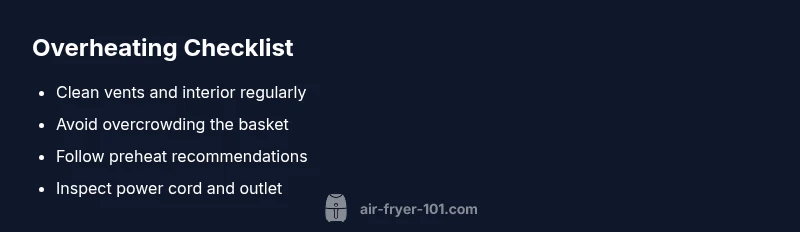
- Clean vents and interior regularly
- If persistent, seek professional help