Air Fryer Eggs Recipe: Quick, Easy Breakfast in Minutes
Master a fluffy, delicious air fryer eggs recipe with this detailed guide. Learn temps, timing, tips, and variations to make a healthy, quick breakfast every morning.


Yes. With a few simple steps, you can make a versatile air fryer eggs recipe that yields soft, custardy centers and lightly crisp edges in under 10 minutes. This quick method uses minimal oil, a few basic tools, and adjustable times for soft, medium, or hard yolks—perfect for busy mornings.
Why this air fryer eggs recipe works
According to Air Fryer 101, the air fryer eggs recipe excels because convection cooking circulates hot air around the eggs, producing even texture and a gentle crust without deep frying. The compact heat and rapid air flow shorten cooking times compared with skillet methods, while conditioning with a light spray of oil helps the eggs release cleanly from silicone cups. This method is ideal for home cooks who want protein-rich breakfasts with minimal cleanup and predictable results, even on busy weekdays. For flavor, you can season the eggs or fold in add-ins like herbs, cheese, or chopped vegetables toward the end of cooking.
As you explore this guide, you’ll discover how to dial in texture from soft to fully set yolks, how to choose the right containers, and how to adapt the technique for meal-prep or weekend brunch. The approach emphasizes simple ingredients and reliable timing, so you can focus on creativity rather than guesswork.

Key variables: egg size, texture, and timing
Egg size affects cooking time, as larger eggs require a bit more heat exposure to reach the same internal temperature. A standard large egg will set faster if poured into a silicone cup rather than fried loose in the basket, because it’s contained and heats evenly. Texture is a matter of yolk doneness: soft yolks run when pierced, medium yolks hold their shape but are still creamy, and hard yolks are fully set through. In an air fryer, the range of textures can typically be achieved by adjusting time and temperature for each batch. If you prefer a custard-like center, aim for shorter cook times with a small amount of moisture (a splash of milk or cream) added to the eggs.
Preheating helps stabilize the cooking environment, so always start with a brief warm-up period in your air fryer. Preheating reduces the variance between the first and last cup, yielding more consistent results across multiple cups.

Equipment and ingredients you need
To execute this air fryer eggs recipe with confidence, gather a few simple tools and ingredients:
- Eggs (large, fresh if possible)
- Silicone muffin cups or ramekins to hold the eggs in the air fryer
- Cooking spray or a light brush of oil for greasing cups
- Salt, pepper, and your favorite seasonings
- A whisk or fork to beat eggs
- An air fryer with a basket or tray insert
- Tongs or a small spatula for removal
- Optional add-ins: shredded cheese, chopped herbs, diced vegetables, or hot sauce
Having a dedicated set of silicone cups helps form neat rounds and makes cleanup a breeze. If you don’t have silicone cups, you can use small oven-safe ramekins or even a lined muffin tin, but silicone tends to release most cleanly in air fryers with nonstick baskets.
For ingredients beyond plain eggs, consider flavors that pair well with eggs: chives, dill, everything bagel seasoning, pepper jack cheese, or sautéed mushrooms. These elements add depth without requiring extra fats.
Step-by-step cooking guide: soft, medium, and hard yolks
Step 1 — Preheat and prep
Preheat the air fryer to 320-340°F (approximately 160-170°C). Lightly grease each silicone cup with oil to prevent sticking. This preheating step stabilizes the cooking environment and reduces the risk of uneven doneness. Place the cups in the basket or on the tray so they heat evenly.
Tip: If your model runs hot, start at 320°F and adjust upward as needed. Quick preheats save time across multiple eggs.
Step 2 — Whisk eggs and season
Crack the eggs into a bowl and whisk until the yolks and whites are fully combined. Season with salt and pepper, and whisk in any optional ingredients like cream, cheese, or herbs. A splash of milk or cream can yield a creamier texture, but keep portions modest to avoid overflowing the cups.
Tip: For a richer texture, whisk in 1-2 tablespoons of dairy per cup but not more than the cup’s capacity.
Step 3 — Fill the cups
Pour the egg mixture into each greased silicone cup, filling to about 2/3 of the cup to allow expansion without overflow. If using add-ins (cheese, vegetables), scatter them evenly so every cup has a bit of flavor without crowding.
Tip: Avoid overfilling; eggs expand slightly as they cook, which can spill into the air fryer and create a mess.
Step 4 — Air fry at the chosen texture level
- Soft yolk: 6-7 minutes at 320-330°F (160-165°C)
- Medium yolk: 7-9 minutes at 325-335°F (160-170°C)
- Hard yolk: 9-12 minutes at 330-340°F (165-170°C)
Open the air fryer briefly at the 5-minute mark if you’re aiming for a partially set center, then resume cooking. If your cups appear set but the yolk is not yet to your desired firmness, continue in 1-minute increments until achieved.
Tip: Use tongs to rotate the cups halfway through for even browning and uniform texture.
Step 5 — Check doneness and rest
Use a small knife or toothpick to test the center. If the center is still jiggly for a soft yolk, give it another 1-2 minutes. Allow the cups to rest for 1-2 minutes before removing. Resting helps the proteins set and makes the eggs sliceable.
Tip: If you plan to stack or transport these eggs, let them cool slightly to prevent condensation from pooling on the tops.
Step 6 — Serve or store
Release eggs from cups with a gentle tap or by running a small spatula around the edge. Transfer to plates and enjoy immediately, or store in an airtight container in the fridge for up to 3 days. Reheat gently in the air fryer at 300°F for 1-2 minutes if desired.
Tip: For meal prep, portion into individual cups and refrigerate; reheat directly from chill to warm without drying out the edges.
Step 7 — Visual notes and variations
If you’re curious about appearances, the top should be lightly set with a soft jiggle inside for soft yolks, while longer cooking yields a firmer center. For variations, fold in a tablespoon of cream cheese or a pinch of paprika to your mixture before cooking, or finish with fresh herbs after cooking.
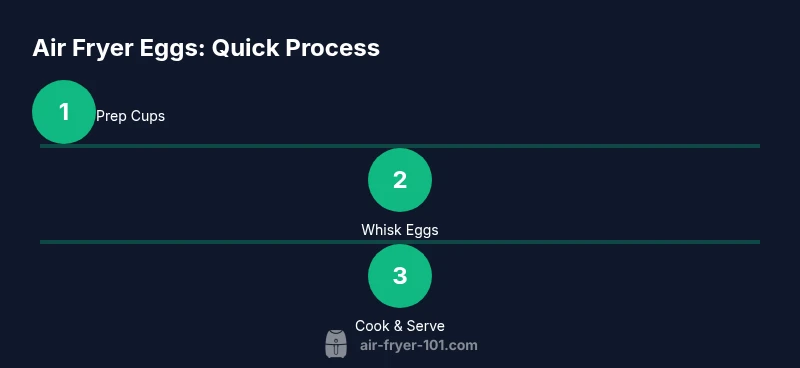
Diagram reference: See the accompanying guide image for cup placement and color cues during cooking.
Flavor ideas and serving suggestions
An air fryer eggs recipe shines with minimal fat and maximal flavor. After cooking, try these serving ideas to elevate the dish:
- Sprinkle chopped chives or parsley for color and brightness.
- Add a small amount of shredded cheese on top while the eggs are still hot so it melts into the surface.
- Top with a few drops of hot sauce, avocado slices, or a light drizzle of olive oil.
- Serve with whole-grain toast, greens, or roasted tomatoes for a balanced breakfast.
If you’re preparing a brunch, you can assemble several cups with different fillings (spinach and feta, pepper jack with jalapeño, mushroom and Swiss) to offer guests a choice.

Troubleshooting common issues and quick fixes
- Egg sticks to the cup: Ensure cups are well-greased, and consider a light spray of oil around the rim of the cups before filling. Use silicone cups if possible.
- Eggs are undercooked in the center: Extend cook time in 1-minute increments, not by opening the basket repeatedly. Avoid overcrowding cups to ensure even heat distribution.
- Eggs overflow or crack: Do not fill cups above 2/3 capacity; reduce filling if you notice expansion, and avoid stirring during cooking.
- Odd colors or textures: If the outside browns too quickly, lower the temperature slightly and increase the cooking time to let heat reach the center without scorching the exterior.
Pro-tip: If you’re new to air fryer eggs, start with a batch of two to dial in your preferred texture before scaling up to six or eight servings.

Clean-up, storage, and meal-prep tips
After cooking, remove the cups carefully and allow them to cool. Wash silicone cups in warm, soapy water or place them on the top rack of the dishwasher if they are dishwasher-safe. Rinse the air fryer basket to remove any oil residue and wipe with a non-abrasive cloth. If you’re meal-prepping, portion the eggs into airtight containers and refrigerate. Reheat gently to avoid drying out the texture. For longer storage, consider freezing individual portions—though texture may vary upon thawing. Always label containers with the date to track freshness.
Tools & Materials
- Eggs(Large eggs work best for consistent texture across cups)
- Silicone muffin cups or ramekins(Gas or electric oven-safe silicone cups recommended; 3-4 per batch)
- Cooking spray or oil(Lightly grease cups to prevent sticking)
- Salt and pepper(Season to taste; optional herbs or spices also work well)
- Whisk or fork(For beating eggs before filling cups)
- Air fryer(Preheat to 320-340°F depending on texture desired)
- Tongs or small spatula(For handling hot cups safely)
- Optional add-ins(Cheese, chopped vegetables, herbs)
Steps
Estimated time: 15-25 minutes
- 1
Preheat and prep
Preheat the air fryer to 320-340°F. Lightly grease each silicone cup to prevent sticking and place cups in the basket so they heat evenly.
Tip: Preheating reduces temperature drift and gives consistent results across cups. - 2
Whisk eggs and season
Whisk eggs until fully combined. Season with salt and pepper, and whisk in any optional add-ins if using. A splash of milk or cream yields a creamier texture.
Tip: Keep add-ins light to avoid overflowing cups. - 3
Fill the cups
Pour the egg mixture into the prepared cups, filling to about 2/3 full. Add any toppings evenly across cups.
Tip: Do not overfill; eggs expand slightly as they cook. - 4
Cook for desired yolk texture
Cook at 320-340°F for the time corresponding to texture: soft 6-7 min, medium 7-9 min, hard 9-12 min. Check after 5 minutes for even browning.
Tip: Avoid opening the fryer too often to keep heat stable. - 5
Check doneness and rest
Test the center with a toothpick; rest eggs for 1-2 minutes to finish setting.
Tip: Resting helps prevent rubbery texture. - 6
Serve or store
Release from cups, plate, and serve immediately or refrigerate up to 3 days. Reheat gently to preserve texture.
Tip: Reheating at 300°F for 1-2 minutes works well.
Got Questions?
Can I cook eggs in an air fryer without oil?
Yes. You can cook eggs with little to no oil; a light spray helps prevent sticking but is not strictly required if you use well-greased cups.
Yes, you can cook eggs with minimal or no oil; a light spray helps release but isn’t mandatory.
What texture can I expect from air fryer eggs?
You can achieve soft, medium, or hard yolks by adjusting cook time and temperature. Start with a soft yolk target and increase time for firmer yolks.
You can get soft, medium, or hard yolks by changing the cooking time; start with soft and adjust as needed.
What containers work best for air fryer eggs?
Silicone muffin cups or small ramekins work best; they release easily and fit in most air fryer baskets.
Silicone cups or small ramekins are ideal for eggs in the air fryer.
How long do eggs take in an air fryer?
Times vary by yolk doneness: soft yolks cook faster, medium yolks take slightly longer, and hard yolks require the most time. Use 6-12 minute ranges as a guide and check for doneness.
It depends on how you want the yolk—soft, medium, or hard—with typical ranges around 6 to 12 minutes.
Can I add cheese or veggies inside the eggs?
Yes, fold in small amounts of cheese or finely chopped vegetables before cooking, then top with herbs after cooking for extra flavor.
Absolutely, you can mix in cheese or small veggies before cooking, and finish with herbs.
Is this method safe for meal prep?
Yes. Cook and cool the eggs, store in airtight containers, and reheat gently to maintain texture and safety.
Yes, it’s great for meal prep; refrigerate and reheat gently to keep texture and safety.
Watch Video
Quick Summary
- Preheat and grease cups for consistent results
- Choose texture by time and temperature; soft to hard yolks achievable
- Use silicone cups for easy release and clean-up
- Add flavor with cheese, herbs, or veggies in cooking
- Store leftovers safely and reheat gently for best texture