How to Air Fry an Egg: Step-by-Step Guide
Discover a quick, healthy way to cook eggs using an air fryer. This guide covers temps, times, safety, and flavor options for perfect sunny-side up, poached-like, and scrambled eggs with minimal oil.


Here’s how to air fry and egg: a simple, reliable method to cook eggs in an air fryer with minimal effort. You’ll preheat the appliance, choose the right temperature, crack the egg into a small cup, and monitor doneness until the yolk matches your preference. The result is consistent texture, easy cleanup, and flexible timing for runny or fully set yolks.
Why air frying eggs makes sense
Air frying eggs saves time and cleanup, with less oil than traditional frying. According to Air Fryer 101, mastering eggs in an air fryer can cut busy-morning prep time while delivering consistent texture. For readers wondering how to air fry and egg, this method offers a reliable path to tender centers and lightly crisp edges without standing at the stove. It’s a flexible technique that supports breakfast variety, from simple eggs to flavored tweaks.
In practice, eggs air-fry well because the circulating hot air surrounds the cooking vessel evenly. You can use a small ramekin, silicone cup, metal dish, or even a lightly oiled muffin liner. The key is to avoid overfilling and to give space for air to move. With the right temperature and timing, you can pull off a runny yolk or a fully set white, all without added fat. This section lays the groundwork for texture outcomes and demonstrates how air frying compares to pan-frying for speed, cleanup, and consistency. Air Fryer 101 notes that experimentation is part of the process, so start with a basic setup and adjust to taste.
Selecting eggs and equipment
Choosing the right eggs and gear sets the foundation for success when learning how to air fry and egg. Fresh, large eggs typically yield the most predictable results, but older eggs peel away from shells more easily when peeled after air frying. Equipment-wise, you’ll want a small ramekin, silicone cup, or a lightweight metal dish that fits comfortably in your air fryer basket. A light spray of oil on the cup or a thin layer of parchment helps with non-stick release. Avoid overfilling the cups; give at least a half-inch of headspace for air circulation. A pair of tongs or a silicone spatula makes handling hot cups safer and cleaner. If your model is new, refer to the user manual for recommended cup sizes and any preheating steps. Air Fryer 101 guidance emphasizes planning ahead: set up your cups, preheat if your unit recommends it, and have toppings ready to customize.
Temperature, time, and texture expectations
Understanding temperature and timing is crucial for consistent results when air frying eggs. In general, a temperature range of 270-300°F (130-150°C) works well for most egg preparations. Lower end favors a softer yolk and slightly custardy whites; higher end produces a firmer white with a yolk that’s more set. For sunny-side-up style, aim toward the lower end of the range and check early. If you’re craving a poached-like texture, you’ll want slightly higher heat for a shorter duration. Scrambled eggs can be prepared by whisking and cooking in a lidded ramekin for even heat distribution. Remember that model variation, wattage, and basket design can shift times by a minute or two, so use 1-minute checks the first few attempts and adjust accordingly. Air Fryer 101 suggests starting with 6-8 minutes for a single egg and adding 1-2 minutes if needed, depending on your preference for doneness.
Methods you can use: sunny-side up, poached-like, scrambled
There isn’t a single ‘right’ method for air-frying eggs; the approach adapts to your texture goal. The simplest is sunny-side up in a cup: a gentle crack into a greased ramekin, a quick cook, and a bright, runny yolk outcome. For a poached-like egg, you’ll employ a ramekin with a touch of water or a very thin layer of oil and use slightly shorter cook times to keep the yolk centered and soft. Scrambled eggs in an air fryer pose a different challenge: whisk the eggs with a splash of milk or water, pour into a small dish, and bake with a brief stir halfway through. Each method benefits from a light coating of oil, minimal moisture, and careful monitoring to avoid overcooking. Air Fryer 101 highlights that exploring these methods helps you tailor texture for family meals, meal-prep, or quick breakfasts.
Method A: Sunny-side Up in Cup
Sunny-side up in a cup is the simplest starting point for beginners. Lightly oil a ramekin, crack the egg into it, and place it in a preheated air fryer. Cook at 285-300°F (140-150°C) for about 6-8 minutes, depending on yolk preference. Use a timer and peek at the whites as they set to ensure a gentle finish. If the edges brown too quickly, lower the temperature by 10 degrees in subsequent attempts. Serve with a pinch of salt and pepper, or add herbs for bright flavor. This method yields a bright yolk and a delicate white—classic breakfast comfort with minimal cleanup.
Method B: Poached-like Egg in a Ramekin
For a poached-like texture, place a small amount of water (about 1–2 teaspoons) in a greased ramekin, crack the egg on top, and cover with a small tight lid or foil to trap steam. Cook at 275-290°F (135-145°C) for 6-9 minutes, checking for the yolk’s firmness. The steam creates a gentle, even set without flipping. This approach is excellent when you want a soft, custardy yolk without the risk of runny whites. Finish with a light seasoning and a drizzle of olive oil for added richness.
Flavor boosters, safety, and cleanup
Flavor boosters like grated cheese, chopped chives, paprika, or a dash of hot sauce can elevate air-fried eggs without adding heavy fats. Safety comes first: handle hot cups with tongs, avoid overcrowding, and let the cups cool briefly before handling. Cleanup is typically quick—wash ramekins in warm, soapy water, wipe down the air fryer basket, and line the cups with parchment on busy mornings to reduce sticking. Remember to unplug and cool the appliance after use. Air Fryer 101 recommends keeping a small bottle of oil spray handy for consistent release and minimal residue on cooking surfaces.
Common mistakes and fixes
Common missteps include overcrowding cups, cooking at too high a temperature, or not preheating when required by your model. The fix is straightforward: use smaller portions, reduce temp by 10-20 degrees, and preheat for 2-3 minutes if your air fryer requires it. Another frequent issue is yolk overcooking; to remedy, start with a shorter cook time and check every minute until the desired doneness is achieved. Finally, if sticking occurs, switch to silicone cups or use parchment liners to simplify cleanup and ensure every egg releases cleanly.
Step-by-step overview and practical tips
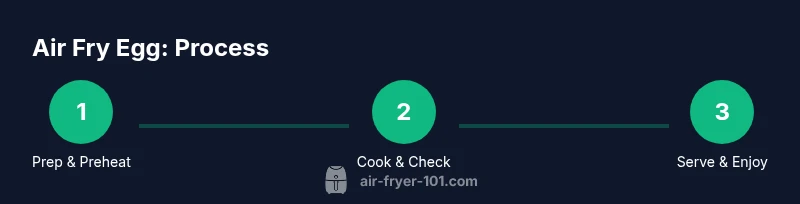
This section provides a practical, recipe-like framework you can reuse for different egg styles. You’ll set your preferred temperature, prepare your cups, place the eggs into the basket, and monitor until your target yolk texture is reached. The following steps in the dedicated STEP-BY-STEP block outline precise actions, contingencies, and timing for consistent outcomes across devices.
Tools & Materials
- Air fryer(Clean and preheat if recommended by your model)
- Small ramekins or silicone cups(Fit inside your air fryer basket with room for air flow)
- Cooking spray or oil(Light coating to prevent sticking)
- Eggs (large)(Fresh eggs work best)
- Tongs or silicone spatula(For safe handling of hot cups)
- Parchment paper (optional)(Line cups to simplify cleanup)
Steps
Estimated time: Total time: 15-20 minutes
- 1
Gather ingredients and preheat
Assemble the tools and ingredients, then preheat the air fryer to your target range (typically around 285–300°F / 140–150°C) for 2–3 minutes. Preheating helps eggs cook evenly and reduces the risk of undercooked whites.
Tip: If your model requires preheating, don’t skip it; it makes timing more predictable. - 2
Prepare cups and oil
Lightly oil the ramekins or silicone cups to minimize sticking. If you’re using parchment, place a small circle in each cup.
Tip: A quick spray on the cup edges prevents egg from grabbing when you remove it. - 3
Crack eggs into cups
Gently crack each egg into its own cup. Avoid breaking the yolk unless you want scrambled texture; if needed, you can gently nudge the yolk with a spoon.
Tip: If you’re new to this, crack one egg first to calibrate timing. - 4
Place in air fryer
Set the cups in the basket with space between them so air can circulate. Do not stack cups; air needs to flow around each container.
Tip: Use tongs to position cups to avoid hot splashes. - 5
Cook and monitor
Cook for 6–8 minutes for a runny yolk; 8–10 minutes yields a more set white with a softer yolk. Check at the 6-minute mark and adjust by 1–2 minutes as needed.
Tip: Start with shorter times and extend in small increments to avoid overcooking. - 6
Remove, rest, and serve
Carefully lift cups with tongs, let eggs rest for 30–60 seconds, then serve with salt, pepper, and optional toppings.
Tip: A brief rest helps the yolk settle and finish cooking from residual heat.
Got Questions?
Can you air fry eggs in their shells?
Cooking eggs in their shells in an air fryer is not recommended. The rapid heat can stress the shell and cause a burst. Crack the egg into a cup instead for safe, consistent results.
Eggs should not be cooked in their shells in an air fryer; crack them into a cup for safe, consistent results.
What temperature is best for air frying eggs?
Most cooks start around 270–300°F (130–150°C). Lower temps yield softer whites and runnier yolks; higher temps set whites faster and yolks more firmly. Adjust based on your equipment and desired doneness.
A good starting point is 270 to 300 degrees Fahrenheit; adjust to your preferred doneness.
How long do eggs take to cook in an air fryer?
Eggs typically need 6–12 minutes, depending on yolk and white firmness. Start with 6–8 minutes for runny yolks and add time in 1-minute increments if needed.
Most eggs cook in 6 to 12 minutes; start with 6–8 and adjust as you like.
Can I air fry scrambled eggs?
Yes. Whisk eggs with a splash of milk or water, pour into a greased cup, and cook until just set, stirring once halfway through for even texture.
Yes, scrambled eggs work in an air fryer—whisk, pour into a cup, and cook until set.
Is air frying eggs healthier than pan-frying?
Air frying uses little to no oil, which can reduce added fat while preserving protein. The eggs’ nutrition remains the same; it’s the oil amount that changes.
Air frying uses less oil, which can reduce added fat while preserving protein.
Watch Video
Quick Summary
- Crack eggs into cups, not directly in the basket.
- Use a 270–300°F range for controlled results.
- Monitor closely to target yolk texture (runny to firm).
- Preheat and space cups for best air circulation.