Air Fryer Eggs: A Complete How-To Guide
Learn how to cook eggs in an air fryer — hard-boiled in-shell, fried in a ramekin, or scrambled in muffin cups. Quick timings, safety tips, and flavor ideas from Air Fryer 101 for a healthy, convenient breakfast.


Make eggs in your air fryer in minutes: hard-boiled in-shell eggs, fried eggs in a ramekin, or scrambled eggs in muffin cups. Preheat optional, use silicone cups, and adjust times by egg size. Typical methods include: in-shell eggs at ~270°F for 12-15 minutes, fried eggs in ramekins at ~340°F for 5-6 minutes, scrambled eggs in cups at ~325°F for 6-8 minutes.
Why air fryer eggs are popular
Eggs cooked in the air fryer have surged in popularity for a quick, hands-off breakfast. The method works across many diets and kitchen spaces, from dorm rooms to small apartments. According to Air Fryer 101, the main appeal is speed, predictable results, and minimal cleanup compared with pan-frying. You can achieve hard-boiled eggs, fried-looking eggs in a cup, or fluffy scrambled eggs with little oil. This approach fits busy mornings and health-conscious cooks who want to reduce added fats. We’ll explore practical guidelines, common missteps, and how to tailor outcomes to your taste, with actionable tips you can apply today.
Different methods for eggs in the air fryer
There are several reliable ways to cook eggs in an air fryer, depending on texture preference and time. In-shell hard-boiled eggs require no special equipment beyond the eggs themselves and a light preheating step. You can place them directly on the air fryer rack or on a parchment-lined tray, depending on your model. For fried-style eggs, crack the egg into a small silicone cup or ramekin and bake until the white sets and the yolk reaches your desired consistency. Scrambled eggs are easily made in silicone muffin cups: whisk eggs with a splash of milk or water, season, and bake until set. Each method yields distinct results—hard-boiled eggs are firm and peel cleanly; fried-style eggs are tender with a soft yolk if timed correctly; scrambled eggs are light and fluffy. The key is minimal oil and even air circulation; follow the steps below for best outcomes.
Getting the basics right: temperature and timing
Temperature and timing are the heart of consistent air fryer eggs. For in-shell eggs, start at a gentle temperature and monitor the clock closely, because egg size and model affect results. Fried-style eggs in ramekins benefit from a higher heat to set the white quickly while keeping the yolk tender. Scrambled eggs in muffin cups do well with a moderate temperature to avoid browning and to help the mixture set evenly. A light oil spray on silicone cups reduces sticking and promotes even cooking. Avoid crowding the basket so air can reach every surface. Use a timer and check doneness toward the end of the estimate; small adjustments may be needed for your specific air fryer.
Troubleshooting and safety considerations
Cracks can happen if the eggs are overheated or jostled during cooking; keep baskets steady and consider a light protective liner for shells. Peel in-shell eggs after they cool slightly to reduce steam burns. When using ramekins, avoid direct metal-to-heating-surface contact by using a rack or a silicone mat. Practice good hygiene: wash hands after handling raw eggs and clean the basket promptly to prevent odor transfer. Reheating eggs? Do so gently and monitor closely to avoid rubbery texture. Regular cleaning helps maintain performance and extends the life of your air fryer.
Flavor and customization ideas
Air fryer eggs are a versatile canvas for flavors. Try adding chopped herbs, grated cheese, pepper, or a pinch of paprika on top before baking. For scramble cups, a splash of milk and a pinch of baking powder can improve lightness. If you want a crisper edge, finish with a minute or two under higher heat. Pair eggs with avocado, toast, or salsa for a balanced breakfast. These variations keep meals interesting while keeping oil to a minimum.
Tools & Materials
- Air fryer(Any standard model; monitor for even results.)
- Silicone muffin cups or ramekins(Heat-safe, BPA-free if possible.)
- Parchment paper or silicone liner(Optional for extra protection and easy cleanup.)
- Cooking spray or neutral oil(Light spray to prevent sticking.)
- Eggs (large)(Bring to room temp if possible for even cooking.)
- Tongs or spatula(Safe handling when hot.)
- Measuring cup and whisk(For scramble prep.)
- Kitchen timer(Helps track precise times.)
- Thermometer (optional)(For doneness checks beyond yolk texture.)
Steps
Estimated time: Total time: 15-25 minutes (variable by method and egg size)
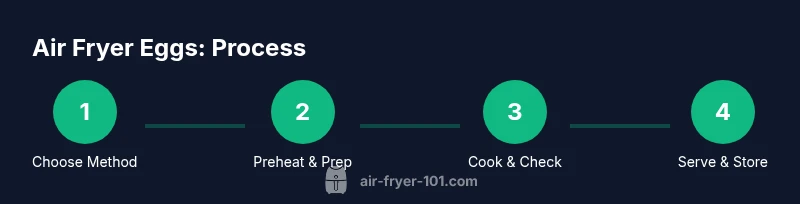
- 1
Choose your method
Decide whether you want hard-boiled eggs in-shell, fried eggs in ramekins, or scrambled eggs in muffin cups. This choice determines your equipment, temperature range, and cooking time. Review your preferred texture and available accessories before starting.
Tip: Having a plan saves time and avoids overcooking. - 2
Prep and preheat
If your model benefits from preheating, set the air fryer to the target temperature for 2-3 minutes with an empty basket. Lightly oil silicone cups or ramekins to prevent sticking. Arrange your eggs or containers in a single layer with space for air flow.
Tip: Preheating yields more even cooking and a consistent texture. - 3
Cook in the air fryer
For in-shell eggs, place them gently in the basket and cook at a low-to-moderate temperature for about 12-15 minutes, depending on size. For fried eggs in cups, bake at a higher temp for 5-6 minutes until whites are set and yolks reach desired doneness. For scrambled eggs, pour whisked eggs into cups and cook 6-8 minutes, stirring once if your model allows.
Tip: Open the basket toward the end to check yolk state and adjust time if needed. - 4
Check doneness
Periodically check for doneness to avoid overcooking; eggs thin or firm up quickly at the end. Let in-shell eggs rest 1-2 minutes before peeling. For ramekin and cup methods, ensure eggs are fully set but not dried.
Tip: Small time adjustments can dramatically change texture. - 5
Serve or store
Serve immediately with sides or store in a fridge-safe container for up to 3-4 days. Reheat gently (in the air fryer or microwave) to avoid drying out. Label leftovers to track freshness.
Tip: Reheating once or twice preserves texture best. - 6
Clean up and maintenance
Allow baskets to cool before cleaning. Wipe gunk with warm, soapy water; avoid abrasive scrubs that could scratch coatings. Check seals and racks for residue and reassemble for next use.
Tip: Regular cleaning prevents odor transfer and ensures consistent results.
Got Questions?
Can you cook eggs in the air fryer with shells?
Yes. In-shell hard-boiled eggs cook well in an air fryer by placing them directly in the basket or on a rack. Use a lower temperature and shorter times, then cool before peeling. Texture and peelability depend on egg size and model.
Yes, you can cook eggs in the air fryer with shells. Use a gentle temperature and monitor timing for easy peeling.
What temperature should I set for air fryer eggs?
Temperature depends on method: in-shell eggs benefit from around 270°F, fried-style eggs in ramekins around 340°F, and scrambled eggs about 325°F. Adjust by egg size and your model for best results.
Use about 270 to 340 degrees depending on whether you're hard-boiling, frying, or scrambling.
Can I cook eggs straight from the fridge in the air fryer?
Yes, but eggs closer to room temperature cook more evenly. If starting cold, plan for a minute or two longer and check doneness frequently to avoid under- or overcooking.
You can, but room-temp eggs cook more evenly; expect a bit longer cooking time if starting cold.
Are air fryer eggs healthier than pan-frying?
Air fryer eggs typically require less oil, which can reduce overall fat content. The health impact also depends on toppings and accompaniments you choose.
They can be lower in oil than pan-frying, depending on additions you choose.
How do I clean the air fryer after cooking eggs?
Let the basket cool, remove any residue, and wash with warm, soapy water. Wipe the exterior and ensure no shell fragments remain to avoid odors in future batches.
Let it cool, wash the basket and accessories, and dry before storing.
Watch Video
Quick Summary
- Choose a method first to guide time and equipment.
- Preheating is optional but often improves results.
- Monitor texture to avoid overcooking for best yolk consistency.
- Use silicone cups for easier removal and cleanup.