What to Do with Eggs in the Air Fryer: A Practical Guide
Learn safe, efficient ways to cook eggs in the air fryer—from hard-boiled in-shell to scrambled in cups—with timing tips, troubleshooting, and flavor ideas.


Today you’ll learn exactly what to do with eggs in the air fryer to achieve reliable, tasty results. The guide covers three popular methods—hard-boiled eggs (in-shell), poached or fried eggs in a pan or cup, and scramble-style eggs—plus prep tips, safety notes, and cleanup shortcuts. By following the steps, you’ll cook eggs confidently while maximizing flavor and minimizing mess.
Why Eggs in the Air Fryer Make Sense
According to Air Fryer 101, eggs benefit from the air fryer’s even heat and minimal oil, making them quick and versatile for busy home cooks. This section explains how the air fryer’s hot air circulation yields predictable results for a range of textures, from firm hard-boiled centers to tender, lightly crisped exteriors when fried or scrambled in cups. We’ll explore why this method can simplify meal planning, reduce mess, and work well with different egg styles. The key is knowing the right temperature range and holding times, which we’ll cover in the following sections. You’ll discover how the method scales from single servings to family meals, and why small adjustments to temperature or timing can yield noticeably better outcomes. This guidance is designed for home cooks who want reliable results with minimal fuss, using equipment most ovens and kitchens already have on hand.
Safety and Egg Handling: What to Know Before You Start
Safety and cleanliness are the cornerstones of any egg-based air fryer technique. Always start with clean hands and clean surfaces, and wash eggs briefly under running water just before use if you prefer. Keep raw eggs separate from ready-to-eat foods to prevent cross-contamination, and use separate utensils for raw versus cooked eggs. Preheat if your model supports it, and avoid overcrowding the basket to ensure even heat distribution. Use a thermometer to confirm doneness when you’re experimenting with new times, and allow cooked eggs to rest briefly after cooking to finish carrying heat safely. This section sets the stage for consistent results and reduced food-safety risks.
In-Shell Hard-Boiled Eggs: Steps and Tips
Hard-boiled eggs in an air fryer are popular because they skip the traditional pot of boiling water while delivering a predictable shell-to-center texture. A common approach is to place in-shell eggs in a single layer, preheat to a low temperature, and cook for a defined window (generally around 270–275°F / 132–135°C for 15–17 minutes). After cooking, plunge the eggs into an ice bath for 5–10 minutes to stop the cooking and make peeling easier. Air Fryer 101 analysis shows that starting at a slightly lower temperature helps set the white and yolk more evenly, producing firmer whites with nicely set centers. Peel under cool running water to reduce stubborn shells, and store peeled eggs in the fridge for up to a week.
Poached or Fried Eggs in a Cup or On a Tray
If you prefer eggs with runny yolks or a delicate poach, use silicone cups or small ramekins placed in the basket. Crack eggs into cups, add a tablespoon of water or broth to create gentle steam, and cook at a moderate heat (about 300°F / 149°C) for 6–8 minutes, depending on desired doneness. For a fried texture, you can flatten the yolk and cook a little longer until the white is set but the yolk remains slightly soft. Lining cups with a little oil prevents sticking, and finishing with a quick salt-and-pepper seasoning elevates the flavor. Be prepared to adjust times slightly for different egg sizes and air fryer models.
Scrambled Eggs in the Air Fryer: Quick, Easy, and Fluffy
Scrambled eggs cook beautifully in the air fryer when you beat them with a splash of milk, salt, and pepper, then pour into a lightly oiled silicone cup or muffin tin. Cook at around 290°F / 143°C for 4–6 minutes, then stir and continue cooking for another 2–4 minutes until the eggs are just set. This method yields a light, airy texture with minimal stirring, and it scales well for larger batches. If you like extra creaminess, whisk in a splash of cream or cheese at the last minute. A short rest after cooking helps the eggs finish setting and improves flavor.
Flavor Boosts: Seasoning, Mix-Ins, and Finishing Touches
Eggs in the air fryer welcome a range of flavor pairings. Try adding shredded cheese, chopped herbs, and a pinch of smoked paprika for delightful bites. For a crumbled-top texture, mix in sautéed mushrooms, spinach, or diced peppers before cooking. A light spray of olive oil or a pat of butter after cooking can enhance mouthfeel and aroma. For a health-forward approach, consider low-sodium seasonings or peppery finishes that bring brightness without excess calories. These tweaks help you customize eggs to different meals—breakfast, lunch, or light dinners—without extra pans to wash.
Troubleshooting and Common Issues
If your eggs crack during cooking, it’s usually due to rapid temperature changes or pressure buildup in a crowded basket. Make sure eggs are not touching and avoid overfilling. If the yolk overcooks or the white remains translucent, adjust the temperature downward by 10–20°F and shorten cooking time in small increments. Peeling can be easier after an ice bath if the shell clings; you can also roll the egg gently on the counter before peeling to release the membrane. For scrambled eggs, if texture is too dry, add a splash of milk and reheat briefly with a drizzle of water to restore creaminess.
Cleanup, Storage, and Reuse
After cooking, allow the air fryer and accessories to cool, then wash silicone cups and baskets with warm soapy water. Peel-hard boiled eggs can be stored in their shells or peeled and kept in an airtight container for up to several days in the fridge. For leftovers, refrigerate promptly and reheat gently to preserve texture. When storing, label with date and note the cooking method used, as eggs prepared in-shell and in cups may exhibit slightly different texture after refrigeration. These habits help reduce waste and keep eggs tasty across multiple meals.
Tools & Materials
- Air fryer(Ensure it’s clean and functioning before use)
- Silicone muffin cups or small ramekins(For holding eggs, nonstick surface helps peeling)
- Tongs or oven-safe gripper(To handle hot cups safely)
- Instant-read thermometer(Check internal temperature for safety)
- Small bowl or cup for cracked eggs(Optional for cracking and beating eggs)
- Ice bath setup (bowl of ice water)(Stops cooking and firms peeling)
- Dish soap and sponge(Clean accessories after use)
- Salt, pepper, optional seasonings(Flavor enhancers to taste)
Steps
Estimated time: 40-60 minutes
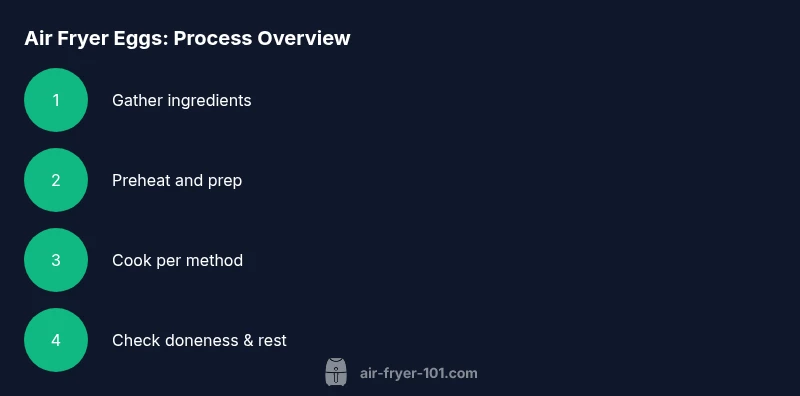
- 1
Gather equipment and ingredients
Collect your air fryer, silicone cups, tongs, thermometer, and the eggs you plan to cook. Organize seasonings and prep any cups with a light coating of oil to prevent sticking. Having everything within reach reduces the chance of mid-cook interruptions.
Tip: Prep cups and tools within arm’s reach to keep the workflow smooth. - 2
Preheat the air fryer
If your model supports preheating, set it to a low heat around 270–275°F (132–135°C) and let it come to temperature for 3–5 minutes. Preheating helps ensure even cooking from the first bite and reduces uneven centers.
Tip: Preheating is especially important for larger eggs or when cooking several at once. - 3
Prepare eggs
Check each egg for cracks and dry, clean the shells. If possible, let cold eggs sit at room temperature for 10–15 minutes to minimize cracking from a sudden heat change. If using cracked eggs for scrambling, crack into a bowl first to avoid shell fragments in the pan.
Tip: Handling room-temperature eggs reduces stress cracks during air fryer cooking. - 4
Cook in-shell hard-boiled eggs
Place eggs in a single layer in the air fryer basket. Cook at 270–275°F for 15–17 minutes, then transfer to an ice bath for 5–10 minutes before peeling. Timing can vary slightly by model, so start with a test egg if you’re unsure.
Tip: Peel under running cold water to free stubborn shells and preserve the white. - 5
Cook eggs in cups (cracked eggs)
Crack eggs into silicone cups, add a tablespoon of water if you want steam, and place the cups in the basket. Cook at 300°F for 6–8 minutes for runny to softly set yolks; increase by 1–2 minutes for firmer yolks. Let stand 1–2 minutes after removal.
Tip: Lightly oil the cups to prevent sticking and to help peeling if you don’t use a lid. - 6
Scramble eggs in cups
Beat eggs with a splash of milk, pour into cups, and bake at 290°F for 4–6 minutes, then stir and cook 2–4 minutes more until set. Adjust salt and pepper after the first cook because air fryer textures can soften seasoning.
Tip: For extra fluff, whisk vigorously and add a small dash of cream or cheese at the end. - 7
Check doneness and serve
Use a thermometer to verify an internal temperature of at least 160°F (71°C) for safety. Let rest briefly before serving to avoid hot, rubbery textures. Taste and adjust seasonings as needed.
Tip: Resting helps carryover cooking settle and improves flavor balance. - 8
Storage and cleanup
Cool all cooked eggs completely before refrigerating in airtight containers. Leftovers can last 3–4 days; reheat gently to preserve texture. Clean cups and basket with warm, soapy water after cooling.
Tip: Label leftovers with date and method used to keep track of texture differences.
Got Questions?
Can you cook eggs in-shell in an air fryer?
Yes. Cooking eggs in-shell yields hard-boiled or softly set centers depending on time and temperature. Practice with a single egg first to dial in your preferred texture.
Yes. You can cook eggs in-shell in an air fryer to hard-boiled or softly set centers; start with one egg to dial in your texture.
What is the best temperature for air fryer eggs?
A common approach is 270–275°F (132–135°C) for hard-boiled eggs. Other methods vary for poached or scrambled preparations, so adjust by methods and desired doneness.
Most recipes use around 270 degrees for hard-boiled eggs; adjust based on the method you choose.
Are air fryer eggs safe to eat if the yolk is not fully set?
Food safety guidelines suggest cooking eggs to an internal temperature of 160°F (71°C). Do not rely on appearance alone; use a thermometer for accuracy.
Yes, but ensure the egg reaches 160 degrees internal temperature for safety; use a thermometer to confirm.
How do I store leftover air fryer eggs?
Cool promptly and refrigerate in airtight containers for up to 3–4 days. Reheat gently to preserve texture and moisture.
Cool quickly and store in the fridge for a few days; reheat gently when you’re ready to eat.
Can I reheat air fryer eggs safely?
Yes. Reheat at a low to moderate temperature to avoid rubbery texture, and check that the center is warmed through.
Yes, reheat gently to avoid a rubbery texture; ensure the center is warm.
Can I add cheese or other fillings with eggs in the air fryer?
Cheese can be added for melted, savory results. Add cheese toward the end of cooking to prevent over-rounding and ensure even melting.
Yes, you can add cheese; add it near the end so it melts without overcooking.
Watch Video
Quick Summary
- Experiment with methods to match texture needs.
- Preheat and monitor temperature for consistent results.
- Silicone cups simplify handling and cleaning.
- Peel and serve eggs after a brief rest for best texture.