Eggs in the Air Fryer: A Step-by-Step Guide
Master cooking eggs in an air fryer with practical steps for hard-boiled, soft-boiled, and fried styles. Learn temps, timings, cooling, peeling, and quick serving ideas.


Yes—eggs cook beautifully in an air fryer. You can prepare them in-shell for hard- or soft-boiled results, or peeled for deviled eggs and quick breakfasts. Start with preheating, then cook at a moderate temperature and adjust time for your preferred yolk firmness. Use a rack or parchment to prevent sticking and easy peeling.
Why eggs in the air fryer work for home cooks
According to Air Fryer 101, eggs cooked in the air fryer benefit from even heat circulation and minimal oil, making them predictable and quick. The technique leverages the air fryer’s hot air flow to gently set the yolk while the white firms up without the risk of water bath splashes or soggy textures. Whether you prefer a true boiled texture in-shell or a peeled, ready-to-eat result, the method adapts to your schedule. In this guide we’ll cover in-shell and peeled approaches, the best temperatures, how to avoid cracks, and tips for peeling and serving. You’ll learn to treat eggs like a simple, versatile protein that can power fast breakfasts, meal-prep lunches, and savory snacks.
In-shell vs peeled: choosing your method
Eggs cooked in the air fryer can stay in their shell for easy “boiled” textures or be peeled for ready-to-fill deviled eggs, salads, or sandwiches. In-shell eggs tend to have firmer whites and a yolk that ranges from jammy to fully set depending on time and temperature. Peeled eggs, on the other hand, cook through more consistently and peel with less cling if cooled rapidly. If you’re after speed, peeling first lets you heat-fill or flavor immediately. If you want to keep skins intact and peel later, go with in-shell cooking and chill before peeling. Whichever route you choose, a gentle, lower-temperature approach helps reduce cracking and improves reliability across batches.
Temperature and time ranges for different yolk doneness
Doneness in air-fried eggs is mainly about time and temperature. For soft to medium yolks in-shell: target around 270-290°F (130-180°C) for about 9-11 minutes. For firmer yolks or hard-boiled equivalents, go 300°F (150°C) or slightly higher for 11-13 minutes. If you’re peeling first, reduce cook time by roughly 1-2 minutes to prevent overcooking the whites. Note that results vary by model and egg size, so use these as guidelines and adjust in 1–2 minute increments on subsequent attempts. After cooking, plunge into an ice bath for 3–5 minutes to stop the carryover cooking.
Prepping eggs and equipment for best results
Begin with room-temperature eggs; cold eggs can crack when heated quickly. Arrange eggs in a single layer on a parchment square or a small rack so air can circulate around each egg. If you stack eggs or crowd the fryer basket, hotspots can cause uneven cooking and more cracks. Lightly spray the eggs or the parchment with a neutral oil if you’re worried about sticking, though most eggs will release cleanly after a brief cooling bath. Preheating the air fryer for a few minutes is optional but helps achieve a more uniform finish and reduces total time.
Step-by-step overview: preparing and cooking in-shell eggs
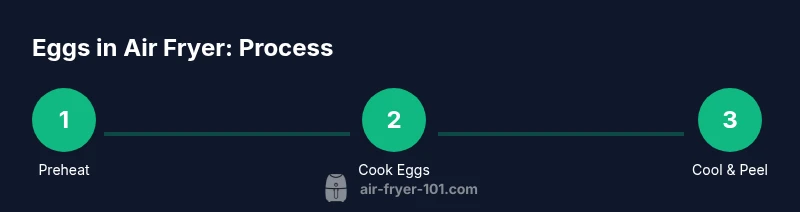
This overview focuses on the in-shell method. You’ll preheat, place the eggs on a rack, set the timer, then cool and peel. The key is consistent spacing and avoiding abrupt temperature changes. If you want peeled eggs, you’ll skip a single pre-boil step and instead adjust the time slightly so the whites don’t become rubbery. The flow below is designed to be practical for busy mornings or batch cooking. With practice, you’ll dial in preferred firmness in just a couple of tests.
Tools and setup to prevent cracking and sticking
Use a parchment circle or silicone mat to prevent sticking, and a small rack to keep eggs elevated for even air flow. Avoid stacking eggs; crowding is a common reason for uneven cooking and cracks. Keeping your fryer basket clean reduces residue that might cause sticking. A pair of tongs or a heat-safe spoon makes turning and removing eggs safer and faster.
Peeling and cooling: best practices after cooking
Once the eggs finish cooking, transfer them to an ice bath or cold running water immediately. This stops cooking and helps separate the shell from the white, making peeling easier even for slightly older eggs. Peel under cool water if sticky bits cling, and pat dry before slicing or serving. For peeled eggs, a quick drizzle of lemon juice or a pinch of paprika can elevate flavor without added fat.
Flavor ideas and serving suggestions
Air-fried eggs pair beautifully with whole-grain toast, avocado, or a light sprinkle of sea salt and cracked pepper. Try soft-boiled yolks over a salad, or use peeled eggs to make quick, spoonable deviled eggs with mayo, mustard, and a touch of paprika. For grab-and-go meals, slice peeled eggs and tuck them into wraps with greens and hummus.
Troubleshooting common issues
Cracked shells are often caused by sudden temperature changes or overcrowding. If whites appear rubbery, reduce cook time by 1–2 minutes and avoid peeling too soon. If peeling is stubborn, give the eggs another 30–60 seconds in the ice bath and retest peeling.
Batch cooking ideas and storage
Cook a dozen eggs at once by using a rack and spacing them apart. Store peeled eggs in an airtight container with a damp paper towel to retain moisture for up to 3–4 days in the refrigerator. Use peeled eggs in salads, sandwiches, or quick bowls for busy weekdays.
Tools & Materials
- Eggs (large)(Plan 1-2 eggs per person; room-temperature preferred for even cooking.)
- Air fryer(Any model with adjustable temperatures; preheat to 270-300°F as needed.)
- Parchment circles or silicone mat(Prevents sticking and eases peeling.)
- Tongs or heat-safe spoon(To handle hot eggs safely.)
- Ice bath or cold running water(Stops cooking and aids peeling.)
- Small rack or silicone rack liner(Keeps eggs from crowding and ensures air flow.)
Steps
Estimated time: 15-25 minutes
- 1
Gather ingredients and preheat
Place eggs on the counter and preheat the air fryer to 270-290°F (130-180°C) depending on desired firmness. Preheating helps the eggs start cooking immediately and reduces total time.
Tip: Preheat for 3-5 minutes to stabilize the cooking environment. - 2
Arrange eggs for best air flow
Place eggs in a single layer on parchment rounds or a small rack. Give each egg space so hot air can circulate around each one for even cooking.
Tip: Avoid stacking; crowded baskets lead to uneven results. - 3
Choose time and temperature
Decide whether you want a soft, medium, or hard yolk and set the temperature accordingly within the 270-300°F range. For peeled eggs, consider slightly shorter times to prevent overcooking the white.
Tip: Use incremental time adjustments in 1-2 minute steps. - 4
Cook to doneness
Cook the eggs for the chosen duration. In-shell soft yolks usually require the lower end of the range; hard yolks go toward the higher end.
Tip: Check a test egg first to dial in your ideal result. - 5
Cool immediately
Transfer eggs to an ice bath for 3-5 minutes to stop the cooking and firm up the peel. This step also makes peeling easier.
Tip: The quick chill helps maintain yolk texture. - 6
Peel and serve or store
Peel under cold water if needed, then slice, fill, or serve. Store peeled eggs in an airtight container with a damp towel for up to 3-4 days.
Tip: Label leftovers with date for freshness. - 7
Experiment and batch test
Try different temperatures and times to perfect your personal preference. Keep notes on model differences and egg size for repeatable results.
Tip: A small batch test saves time in busy weeks.
Got Questions?
Can you cook eggs in an air fryer without boiling them?
Yes. In-shell eggs can resemble boiled eggs, or peeled eggs can be used for quick deviled-egg style dishes. Times depend on model and egg size.
Yes. You can cook eggs in-shell or peeled in an air fryer to mimic boiled textures.
What temperature is best for soft-boiled eggs in the air fryer?
Aim for around 270-290°F (130-180°C) and cook 9-11 minutes for soft to medium yolks in-shell.
Soft-boiled is best around 270-290 degrees for about 9 to 11 minutes.
Are air fryer eggs easier to peel?
Peeling after an ice bath helps. Peel under running water to reduce cling and slip.
Yes, using ice bath and peeling under water usually makes peeling easier.
How many eggs can I cook at once in most air fryers?
Most models handle 4-6 eggs in a single layer; avoid stacking to maintain air flow.
Usually 4 to 6 eggs per batch depending on basket size.
Can I use peeled eggs for deviled eggs after air frying?
Yes. Peel after cooling, then fill with your favorite deviled-egg mix for quick results.
Peeled eggs work great for deviled eggs after air frying.
Is preheating recommended for eggs in the air fryer?
Preheating is optional but helps with even cooking and consistent results across batches.
Preheating can improve consistency and speed.
Watch Video
Quick Summary
- Cook eggs in air fryer with space between eggs
- Choose in-shell or peeled based on your plan
- Preheat and avoid crowding for best results
- Cool quickly to stop cooking and aid peeling
- Tailor time to yolk preference and model differences