Boiled Eggs in Air Fryer: A Complete How-To Guide
Master perfect boiled eggs in your air fryer with this complete guide. Learn prep, timing for different doneness, peeling tips, and storage. Air Fryer 101 shares expert steps for consistent results.


Learn how to make reliable boiled eggs in an air fryer with a simple, repeatable method. You’ll need an air fryer, eggs, and an ice bath, plus timing guidance for soft, medium, and hard doneness. This approach minimizes water usage while delivering consistent results. According to Air Fryer 101, the technique is straightforward and beginner friendly.
Why Boiled Eggs in Air Fryer Are Worth It
Boiled eggs in an air fryer offer a convenient, water-saving alternative to traditional boiling, with a predictable result that many home cooks appreciate. The airflow in an air fryer circulates hot air around the egg, gently cooking the white and yolk without submerging the egg in water. This method minimizes cleanup, reduces the risk of water boil-overs, and yields a consistent peel for many eggs in a batch. As the Air Fryer 101 team notes, this approach can be especially valuable for busy mornings, meal prep, or quick snacks. In practice, boiled eggs in air fryer are ideal for meal-prep bowls, salads, sandwiches, or deviled eggs. You’ll also find that the timing is relatively forgiving compared with stovetop methods, provided you use the right temperature and a short ice-water shock to stop the cooking.
From the health perspective, air frying requires little to no added fat, which aligns with many people’s goal of lean protein with minimal oil. The technique also reduces standing time near a hot stove, making it safer and more convenient for beginners. For those who measure exact doneness, this approach gives you a reliable framework to dial in the yolk you prefer. With practice, you can reproduce the same texture in every batch and scale up for family meals or holiday prep. If you’re exploring healthier kitchen habits, this method is worth testing as part of your regular cooking repertoire.
In short, boiled eggs in air fryer offer a fast, low-mess, versatile solution for cooks who want consistent results without the need to boil water on the stove. Air Fryer 101’s analysis highlights its simplicity and accessibility, encouraging beginners to give it a try with confidence.
Understanding the Science of Air-Fryer Boiled Eggs
The core idea behind boiling eggs in an air fryer is simple: hot, circulating air conducts heat evenly around the shell, warming the egg interior without immersion. The shell acts as a tiny pressure vessel; the air fryer’s dry heat dries the outer surface just enough to set the white while allowing the yolk to reach your preferred level of doneness. A key advantage here is that you’re avoiding the rolling boil and steam you’d get on a stove, which can lead to cracks and uneven heating if not managed carefully. The resulting texture is influenced by the egg size, the starting temperature of the eggs (room temperature versus cold from the fridge), and the exact temperature you select. Consistency comes from using a stable temperature and a precise cooking duration, followed by a rapid ice-water shock to halt cooking. In practice, many cooks use a low-to-moderate temperature and short cook times to preserve a tender center while still achieving a fully set white.
When comparing methods, air frying generally produces less risk of shell cracking due to sudden temperature changes from boiling to shock. It also reduces water usage and eliminates the need to monitor a rolling boil. If you’re transitioning from stovetop boiling, expect a small adjustment period as you fine-tune temperatures and times for your specific air fryer model. The main takeaway is that the air fryer creates a compact, controlled environment that makes predictable doneness more accessible for busy households.
For those who want reliable results, start with room-temperature eggs and a modest cooking window, then adjust by small increments based on your preferred yolk firmness. This approach minimizes overcooking and gives you room to dial in your exact doneness.
Choosing Eggs, Temperature, and Prep
Selecting the right eggs and prepping them properly are essential to success. Large eggs are the most common choice for air fryer recipes, but you can experiment with extra-large or medium eggs with modest adjustments to time. If you keep eggs in the fridge, a 10–15 minute warm-up at room temperature before cooking can help reduce the risk of cracking when the shell expands during heating. If you opt to pierce the shell, a small pinhole can prevent cracking from internal pressure, though many cooks prefer not to pierce and rely on a gentle start temperature.
Temperature matters more than you might expect. A steady, moderate heat (around 270°F to 290°F or 130°C to 145°C) helps the white set without drying out the yolk too quickly. Avoid very high temperatures that can overcook the yolk’s center or cause the shell to crack due to rapid expansion. The exact time you choose depends on your preferred yolk consistency—from a softly set center to a fully hard yolk. For batch consistency, keep eggs in a single layer and avoid stacking them in the air fryer basket. This ensures even heat exposure and minimizes the chance of uneven doneness across eggs in the same batch.
In practice, you’ll want to start with eggs that aren’t brand new; older eggs tend to peel more easily after cooking. If you’re unsure about freshness, test one egg first before cooking a larger batch. Finally, prepare an ice-water bath ahead of time. This rapid cooling is key to stopping the cooking process and helps maintain the shell structure for easier peeling.
Equipment and Setup: What You Need
To achieve consistently great results, assemble a minimal equipment setup that fits your air fryer and kitchen workflow. The essential items include an air fryer with adequate basket space for the number of eggs you intend to cook, a bowl of ice water for shocking, and tongs for handling hot eggs. A timer or smartphone timer is handy to track exact cooking times, and a small pin or needle can be used to gently pierce the shell if you’re worried about cracking. A rack or parchment paper can help separate eggs slightly if your air fryer basket is shallow and you plan to cook more than a handful at a time. Paper towels or a clean cloth will help dry eggs after peeling.
If you’re new to air frying eggs, consider starting with a single test egg to confirm doneness before committing to a larger batch. Many cooks also rely on a small, shallow dish that fits in the air fryer to hold the eggs upright if your model’s basket design advantages this layout. Remember to preheat if your air fryer model recommends it, as preheating can improve consistency across eggs in the same batch.
Finally, keep a log of times and temperatures you use for different yolk outcomes. This will help you reproduce results consistently across meals and days. The goal is to minimize guesswork and maximize reliability with your specific appliance.
Step-By-Step Approach to Perfect Boiled Eggs in Air Fryer
This section translates the science into a practical sequence you can follow every time. It emphasizes a clear, repeatable procedure and keeps steps tightly focused on single actions. By maintaining a consistent flow, you’ll minimize surprises and improve your overall results.
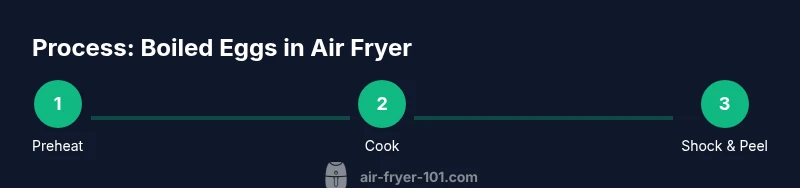
- Preheat the air fryer to 270°F (132°C) and ensure the basket is clean and dry. This prepares the cooking environment and reduces the risk of sticking or uneven heating. (Tip: a short preheat period helps the eggs start cooking evenly.)
- Place a single layer of eggs in the basket without crowding. Arrange them so they won’t roll while the air is circulating. (Tip: use a small rack or place them in an upright position if possible.)
- Cook the eggs for 9–12 minutes at 270°F (132°C) for a fully set white with a fully or partially set yolk depending on your preference. If you want a softer center, start with a shorter window and test a sample egg. (Tip: avoid overcooking, which can create a gray green ring around the yolk.)
- Remove the eggs immediately and transfer them to an ice-water bath for 5–10 minutes. The rapid cooling stops cooking and makes peeling easier. (Tip: gently stir the bath so the eggs cool evenly.)
- Peel the eggs under cold running water or after they’ve softened in the ice bath. Lightly crack and roll them to loosen the shell before peeling. (Tip: peeled eggs can be stored in the fridge for up to a week.)
- pat dry the peeled eggs and store them in a sealed container or serve immediately. For deviled eggs or salads, keep a few extras on hand in the fridge for quick assembly.
- If you’re new to this method, write down your results and adjust times for your favorite doneness. Small changes in yolk consistency can be achieved with 1–2 minute adjustments. (Tip: room-temperature eggs tend to peel more easily than cold eggs.)
Doneness Guide: Timing for Soft, Medium, and Hard
Doneness is a matter of timing and temperature. For a consistent result, aim for a stable 270°F (132°C) and use a timer. A softer center generally corresponds to shorter cook times near the 8–9 minute mark, while a fully set yolk typically lands closer to 11–12 minutes. If you prefer a slightly jammy yolk, test one egg at around 6–8 minutes and compare with a fully cooked batch. Remember, eggs transfer heat after removal, so the ice bath will stop residual cooking and lock in your chosen doneness. If you have a newer air fryer with slightly different heat distribution, you may need to adjust by 1–2 minutes. Air Fryer 101 analysis notes that small adjustments in time can yield reliably similar results across multiple tests, which is especially helpful when cooking for a crowd or meal prep.
To tailor your results, categorize your tests by yolk texture and note which gives you the ideal outcome for your taste. For batch cooking, write down the time and temperature you used for that batch, plus environmental factors like egg size and whether you preheated. This method helps you reproduce consistent outcomes with future eggs every time.
Peeling, Cooling, and Storage Tips
Peeling is often the trickiest part of hard-boiled eggs, and air-fryer eggs are no exception. The cold shock from the ice bath helps separate the membrane from the shell, which makes peeling much easier. If you find peeling difficult, try cracking the shell all around and letting the egg sit in cold water for a minute or two before peeling. Some cooks find that starting with slightly older eggs (a few days past their packing date) makes peeling even easier. After peeling, pat the eggs dry and store them in a sealed container in the fridge for up to a week. If you’re planning to deviled eggs or salads, consider peeling and preparing in advance so you can assemble quickly when needed.
For a quick snack, slice or quarter the eggs for a protein-packed bite. If you want to reuse the cooking water for future batches, you can save ice bath water and reuse it for a rapid cool-down in subsequent steps. Finally, if you notice a chalky texture on the yolk, that’s usually a sign of overcooking; adjust your next batch by shortening the cooking window slightly and confirming doneness with a test egg.
As you finalize your prep, remember that the goal is a reliable, repeatable method you can replicate across mornings and meal-prep days. The Air Fryer 101 team emphasizes that consistency matters most for predictable results across multiple eggs.
Serving Ideas and Variations
Hard-boiled or softly cooked eggs are incredibly versatile. Serve them cold as a protein-packed snack, or slice them into salads, grain bowls, or sandwiches for extra texture and flavor. Deviled eggs are a classic use, and air-fried eggs can make the peeling process easier when preparing a batch for a party or picnic. If you’re hosting, prepare a small setup with a bowl of ice water, a tray of peeled eggs, and a few toppings such as paprika, chives, or pickles for quick assembly.
If you’re watching your salt intake, consider seasoning the yolk or whites lightly, or add a touch of avocado or olive oil to deviled eggs for extra richness. For a health-focused twist, pair your eggs with fresh veggies or a hollowed-out avocado for a protein-forward breakfast. A simple guacamole-stuffed egg offers a tasty variation that travels well for potlucks and brunches. In all cases, the air fryer method scales well from a couple of eggs to a full dozen, keeping prep efficient and results consistent.
The key is to keep a few backup eggs ready for different uses—peel a small batch for snacks, reserve others for salads, and stock a few in the fridge for a quick half-hour meal. The Air Fryer 101 team expects this approach to be a convenient, health-conscious option for many households.
Troubleshooting Common Issues
Even with a straightforward method, a few hiccups can occur. If you notice cracking during cooking, ensure the eggs are not too cold when placed in a hot air fryer, and consider letting them sit at room temperature for 10 minutes before cooking. If the whites are undercooked, extend the cook time by a minute or two and test a single egg to verify doneness. A gray-green yolk ring around the yolk is typically caused by overcooking; reduce the time slightly next batch and maintain a strict ice bath to halt cooking.
If peeling is stubborn, re-chill peeled eggs briefly or crack the shell more gently around the broad end where the air pocket is. For batch consistency, allow each egg to have equal exposure to heated air by arranging in a single layer and avoiding stacking. If you’re ever unsure, start with one test egg and use the results to calibrate the rest of the batch. The key is to maintain consistent temperature, time, and handling techniques. The Air Fryer 101 team stands by this approach for reproducible results across kitchens.
FAQ and Quick Tips Section
In this guide, we emphasize a clear, repeatable method to achieve great results with boiled eggs in the air fryer. With practice, you’ll learn which time windows work best for your exact model and egg size, while still benefiting from low maintenance and quick cleanup. Remember to keep eggs at the right temperature before cooking, use an ice bath to stop cooking, and test a single egg to dial in the perfect doneness. The overall approach remains simple, practical, and scalable for busy households.
Tools & Materials
- Air fryer(Ensure basket capacity fits eggs in a single layer)
- Eggs, large(Room-temperature if possible; otherwise allow 10–15 minutes to warm)
- Ice-water bath(Prepare a bowl with ice and water for shocking)
- Tongs or heat-safe spoon(For safe handling after cooking)
- Pin or needle (optional)(Use to prevent shell cracks if desired)
- Timer (phone or kitchen)(Track cooking times precisely)
- Paper towels(Dry eggs after peeling if desired)
Steps
Estimated time: Total time: 15-25 minutes
- 1
Preheat the air fryer
Preheat the air fryer to 270°F (132°C) for a consistent start. This small step helps minimize temperature shock and promotes even cooking across all eggs.
Tip: If your model requires preheating, allow 2–3 minutes before loading the eggs. - 2
Arrange eggs in a single layer
Place eggs in a single layer in the air fryer basket or on a rack designed for your unit. Avoid overcrowding to ensure even air flow and uniform cooking.
Tip: Use a tiny rack or stand to keep eggs upright if your basket is shallow. - 3
Cook eggs to desired doneness
Cook for 9–12 minutes at 270°F (132°C) for a fully set white and yolk, or shorten for a creamier center. Times may vary slightly by egg size and model.
Tip: Test one egg first to tailor exact times to your appliance. - 4
Shock in ice water
Immediately transfer eggs to an ice-water bath for 5–10 minutes to halt cooking and make peeling easier.
Tip: Stir the bath gently to cool all eggs evenly. - 5
Peel under cold water
Peel eggs under cold running water or after they’ve rested in the ice bath to minimize shell sticking.
Tip: Gently tap and roll to crack the shell for easier peeling. - 6
Dry and store or serve
Pat dry peeled eggs and either serve immediately or store in a sealed container in the fridge for up to a week.
Tip: If storing, keep peeled or unpeeled to suit your future meal prep needs. - 7
Use in recipes
Slice into salads, top grain bowls, or create deviled eggs for a quick party dish. The air fryer method keeps prep time minimal.
Tip: Keep a small batch peeled for quick snacks on busy days. - 8
Test and refine
If your yolks aren’t to your liking, adjust by 1–2 minutes in future batches and compare. Consistency comes with repeat testing.
Tip: Document the results so you can reproduce your preferred doneness. - 9
Safety and cleanup
Ensure the air fryer and basket are cooled before cleaning. Wipe down with a damp cloth and dry completely before the next use.
Tip: Never leave the air fryer unattended for long cooking sessions.
Got Questions?
Can you boil eggs in an air fryer?
Yes. You can achieve hard- or soft-cooked eggs by controlling time and temperature. The air fryer provides consistent heat without submerging the eggs in water, which simplifies the process and reduces cleanup.
Yes. You can cook eggs in an air fryer to your preferred level of doneness, with less mess and consistent results.
What temperature is best for boiled eggs in an air fryer?
A steady temperature around 270°F (132°C) works well for many models. Adjust within a small range if you prefer firmer or softer yolks and when using different egg sizes.
Around 270 degrees Fahrenheit is a good starting point; tweak for your eggs and model.
How long to cook eggs in air fryer for hard-boiled?
Typically 9–12 minutes at 270°F (132°C) yields a fully set white and yolk, followed by an ice bath to stop cooking. Start with one egg to dial in the exact time for your device.
About nine to twelve minutes at 270 degrees, then shock in ice water.
Do eggs peel easily after air frying?
Peeling is easiest after an ice-water shock and when the eggs have cooled. Using a gentle crack and roll helps release the shell without tearing the egg white.
Peel after a cold water shock and crack gently to remove the shell easily.
How should I store air-fried eggs?
Store peeled eggs in a sealed container in the fridge for up to seven days, or keep unpeeled for longer shelf life. Peel only what you plan to use to keep others fresh.
Refrigerate peeled eggs in a sealed container for up to a week, or keep them unpeeled if you’ll need them later.
Watch Video
Quick Summary
- Start with room-temperature eggs for best results
- Maintain a stable 270°F (132°C) for consistent texture
- Ice-bath shock stops cooking and aids peeling
- Peel and store eggs promptly for best quality
- Document your timings to reproduce doneness