Hard Boil Eggs in Air Fryer: A Step-by-Step Guide
Master the quick, reliable method to hard boil eggs in an air fryer with temperature guidance, prep tips, and peeling techniques for perfect results.


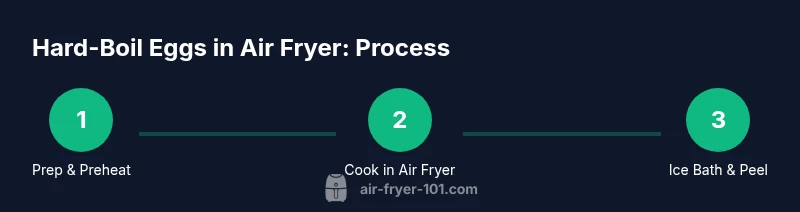
According to Air Fryer 101, hard boiling eggs in an air fryer is quick and convenient. Set the air fryer to 270–275°F and cook eggs for 12–14 minutes, depending on size. Immediately transfer to ice water to stop cooking and ease peeling. Preheating helps consistency, and starting with room-temperature eggs yields the best results.
Why this method works for hard boil eggs in air fryer
Air fryers cook by circulating hot air around food, creating a heat environment that mimics boiling with less water and often shorter times. When you hard boil eggs in air fryer, you rely on a steady, gentle heat to set the whites firmly while the yolk reaches the desired level of doneness. This approach reduces water handling, minimizes the potential for splashes, and can yield shells that peel more cleanly after an ice bath. According to Air Fryer 101, the secret to consistent results is cooking in a single layer, avoiding overcrowding, and preheating when your model supports it. A quick preheat to 270–275°F helps stabilize heat, especially for small batches. After cooking, shock the eggs in ice water to stop the carryover cooking and speed up peeling. With these steps, you can scale up to a dozen eggs for meal prep, store the extras in the fridge for up to a week, and enjoy reliably peeled shells when you need them. If you’re new to this method, practice with a small batch to dial in your model’s quirks before committing to a big batch. Hard boil eggs in air fryer is a practical alternative to stove boiling.
Temperature, time, and egg-size considerations
The temperature and time are the two levers that determine the finished texture of the whites and yolk and influence how easily the shell peels. In practice, most home cooks start with 270–275°F and 12–14 minutes for medium to large eggs. If you’re using small eggs, try 11–12 minutes; for extra-large eggs, 13–15 minutes may be needed. Preheating helps minimize variation, but even without it you can achieve consistent results with careful timing and a single layer in the basket. It also helps to let eggs sit at room temperature for 15–30 minutes before cooking to reduce the risk of cracking from a sudden temperature change. Air Fryer 101 analysis shows that consistent timing, spacing, and gentle heat lead to more uniform peeling and fewer gray rings around yolks. Remember: every model behaves a little differently; treat these times as starting points and adjust by 1–2 minutes based on your results and your preference for a firmer or softer yolk.
Prep and equipment setup
Before you start, assemble the tools and prepare the eggs. Bring eggs to room temperature if possible, as this helps ensure even cooking and reduces the chance of shell cracks. Preheat the air fryer to 270–275°F if your model supports it, or run a brief empty cycle to stabilize heat. Arrange eggs in a single layer in the basket or on the tray, leaving space between them so air can circulate freely. Have an ice bath ready: a large bowl filled with ice and cold water will stop cooking and make peeling easier. Keep a kitchen timer handy to track the 12-minute cook time precisely. When the timer goes off, transfer the eggs promptly to the ice bath and let them sit for at least 5 minutes before peeling. This pause curbs carryover cooking and helps maintain a bright, firm white and a yolk with the intended texture. As Air Fryer 101 notes, organization matters as much as the heat you apply.
Common issues and troubleshooting
Even with the right basics, you may encounter a few hiccups. Cracked shells are more likely if eggs are very cold when placed in a hot air fryer or if they touch each other; avoid crowding and let eggs come to room temperature. If yolks appear gray or chalky, they were overcooked; shorten the cook time by 1–2 minutes on the next batch and rely on the ice bath to stop cooking. If peeling is stubborn, peel under cool running water or after the eggs have cooled in the ice bath; the water helps loosen the membrane. For very fresh eggs, peeling can be trickier; using a small crack and then soaking the egg briefly in water can help. If you’re cooking a batch for meal prep, consider cooking an extra two or three and storing them for later use, since the shells hold up well in the fridge for about a week. Keep in mind that altitude and air fryer model variance can influence results; treat timing as a starting point and adjust accordingly.
Peel, store, and serving ideas
Peeling is easiest when you crack the shell all over and then roll the egg gently to loosen the membrane before removing it. Peel under cold running water to help the shell separate cleanly. Store peeled eggs in a sealed container in the fridge for up to 1 week, or store unpeeled eggs for longer. Hard-boiled air fryer eggs are versatile: slice them for salads, chop for egg salad, or use them to top avocado toast. For a simple flavor boost, sprinkle with a pinch of salt, pepper, or paprika, or dust with Everything Bagel seasoning for extra zing. If you’re cooking a batch for meal prep, label containers with the time and date so you can track freshness easily. When you peel eggs, handle gently to maintain the yolk’s texture and avoid crumbling the whites.
Variations and flavor ideas
The classic approach yields clean, reliable results, but you can tailor it for different dishes. If you want a different doneness, try slight adjustments: 11–12 minutes for a softer center or 13–14 minutes for a firmer yolk. Flavor additions to the water, such as a pinch of salt or a splash of vinegar, can sometimes help with peeling, though this is optional. For salads, deviled eggs, or snack packs, consider pre-slicing a batch and storing the filling separately. If you’re prepping eggs for a crowd, consider cooking in staggered batches to maintain consistent texture across the batch. Keep notes on your exact model and the adjustments you make; this will help you refine your approach over time and ensure you always get reliable results.
Safety and cleanup
Safety first: always handle hot eggs and the air fryer with oven mitts and resist the urge to pull the basket while it’s hot. Allow the air fryer to cool before cleaning; wipe the basket, tray, and interior with a damp cloth to remove any shell fragments or oil. Dry all components thoroughly before reassembling to prevent corrosion or residue buildup. Wash any utensils used for peeling or transferring eggs with soap and water and dry them completely. If you’ve used an ice bath, discard the water and ice safely, and sanitize the bowl before reusing it. By keeping things tidy and safe, you’ll be ready for your next batch without delay.
Tools & Materials
- Air fryer(Preheat to 270–275°F if supported.)
- Eggs (room temperature preferred)(Bring to room temperature 15–30 minutes if possible.)
- Large bowl with ice water(For the ice bath to stop cooking.)
- Tongs(To transfer eggs safely.)
- Kitchen timer(To track cook time accurately.)
- Paper towels(For cleanup and handling.)
- Peeler or running water(Optional for easier peeling.)
Steps
Estimated time: 17-25 minutes
- 1
Preheat and prep
If your air fryer requires preheating, run it empty for 2–3 minutes at 270–275°F to stabilize temperature. Gather eggs, create an ice bath, and have a timer ready. This sets the stage for even cooking.
Tip: Preheating reduces temperature drift and improves consistency. - 2
Arrange eggs in a single layer
Place eggs in a single layer in the basket or tray, leaving space between each egg for air to circulate. Do not stack or crowd the eggs, which can cause uneven cooking.
Tip: Crowding causes variable results; air needs room to move. - 3
Set temperature and cook time
Program 270–275°F and a cook time of 12 minutes for medium to large eggs; adjust by ±1–2 minutes for size and yolk preference. Start with the base time and tweak later batches.
Tip: Keep notes on results to refine timing. - 4
Shock in ice bath
As soon as the timer ends, transfer eggs to the ice-water bath and let them rest 5–10 minutes to stop cooking. This also makes peeling easier and prevents overcooked yolks.
Tip: Use tongs to avoid burns. - 5
Peel and dry
Peel under cold running water or after the eggs have cooled in the ice bath; pat dry before storing. Peeling under water helps the membrane separate more cleanly.
Tip: Peel under water to minimize tearing. - 6
Evaluate and adjust for next batch
Taste test a few eggs to decide if you want a firmer or softer yolk; adjust time by 1–2 minutes for future batches. Keep a cooking log for model-specific tweaks.
Tip: Document your model and results for consistency.
Got Questions?
Can I use any air fryer to hard boil eggs?
Yes, most air fryers can hard boil eggs if you set a low temperature and short cook time, then cool them in ice water. Results vary by model, so start with the base times and adjust as needed.
Yes, most air fryers work, but you may need to tweak times.
Do egg sizes affect cooking time?
Yes. Time varies by egg size. Start with 12 minutes for medium to large eggs, about 11–12 minutes for small eggs, and 13–15 minutes for extra-large eggs. Ice bath helps stop cooking.
Egg size matters; use slight time adjustments.
Is preheating necessary?
Preheating can improve consistency but isn’t strictly required on all models. If you skip it, expect a little more variation; monitor and adjust times accordingly.
Preheating helps, but you can skip if your model performs well.
How do you peel eggs after air frying?
Peel under cold water or after the ice bath; the membrane separates more easily when cold. For very fresh eggs, crack and soak briefly in water to loosen shells.
Peel under water for easiest removal.
How long do boiled eggs last in the fridge?
Boiled eggs keep best in the fridge for about a week, whether peeled or unpeeled. Unpeeled eggs may last a bit longer; peeled eggs should be eaten sooner.
Typically about a week in the fridge.
Watch Video
Quick Summary
- Preheat when possible for even cooking.
- Use room-temperature eggs for best results.
- Peel under running water for easier peeling.
- Adjust time by 1–2 minutes for yolk preference.
- Chill eggs promptly to stop cooking.