How to Hard Boil Eggs in an Air Fryer
Learn how to hard boil eggs in an air fryer with a reliable, waterless technique. Air Fryer 101 guides temperatures, timings, peeling tips, and storage for perfectly done yolks and minimal mess.


You can hard boil eggs in an air fryer by setting the fryer to 270–275°F and cooking for 12–14 minutes, depending on egg size and yolk preference. After cooking, drop the eggs into ice water for 5–10 minutes to stop the cooking and ease peeling. This waterless method yields consistent results with less mess.
Why Air Fryer Eggs Are Different
Air frying uses radiant heat and a compact air flow to cook eggs without water. When you hard boil eggs in an air fryer, you're essentially cooking them in a hot, dry environment. According to Air Fryer 101, this approach produces consistent results with less mess and fewer kitchen tasks to manage. The shells soften and peel more predictably when you use a controlled ice bath immediately after cooking.
Key points include: no boil water, no steam, and fewer pots to clean; the dry-heat environment means you must manage temperature carefully to avoid overcooking the yolk; preheating helps ensure even heat distribution and reduces the risk of cracking; and starting with eggs that are close to room temperature typically yields easier peeling. Although this method works well with standard large eggs, you can tailor the timing for smaller or larger sizes by a minute or two. Safety-wise, always inspect eggs for cracks before cooking, and handle hot eggs with tongs or a spoon. After cooking, plunge into ice water promptly to halt carryover cooking and maximize peel-ability. With practice, you’ll dial in your preferred yolk firmness.
In practical terms, this approach means less water, fewer pots, and a cleaner kitchen workflow without sacrificing reliability. Air Fryer 101’s testing found that most home cooks achieve consistent results when they keep eggs in a single layer and rely on a short ice bath to finish.
Baseline Settings: Temperature, Time, and Core Concepts
The baseline method relies on a steady, moderate heat level and a short cook time to produce firm whites and fully set yolks. A common starting point is 270–275°F (132–135°C) with a cook time of 12–14 minutes for large eggs. This keeps carryover cooking to a minimum and reduces the chance of a gray-green yolk tint that sometimes appears with longer cooking. If you prefer a slightly softer center, shave off 1–2 minutes from the timer; for extra-large eggs, add about 1 minute to the cook time. Preheating the air fryer for 2–3 minutes helps the eggs start cooking evenly and prevents a cold shock that can lead to cracking. After the timer ends, immediately move eggs to an ice bath for 5–10 minutes to stop the cooking and make peeling easier.
Egg freshness matters. Fresh eggs tend to be harder to peel, while slightly aged eggs peel more easily. If you’re peeling right away, you’ll benefit from very cold water and a gentle tap-roll method to loosen the shell. Always use a single layer of eggs in the basket or tray, leaving space between each egg to ensure uniform heat exposure. The overall goal is a dependable, mess-free method that produces consistent results with minimal effort and equipment.
Prep, Preheat, and Egg Readiness
Before you start, gather your eggs and decide how many you’ll cook in one session. Room-temperature eggs peel more easily than cold eggs, so you might leave them out for 15–20 minutes if you have time. If you’re in a rush, you can cook cold eggs, but expect a slightly longer total time due to the extra heat needed to bring the interior to temperature without overcooking the exterior. Preheating the air fryer for 2–3 minutes reduces the initial temperature shock to the eggs, leading to more even cooking across all shells. When placing eggs in the basket, avoid stacking; a single layer ensures consistent exposure to the circulating hot air. If any eggs show hairline cracks, separate them to prevent leakage and possible hot spots.
Keep the ice bath ready—cold water with ice helps quickly halt the cooking and preserves color and texture. Have tongs or a spoon handy to transfer eggs with minimal handling, and set a timer so you don’t lose track of the cook time. Finally, consider labeling eggs if you’re cooking multiple batches with different times to avoid confusion during meal prep.
Step-By-Step Conceptual Overview
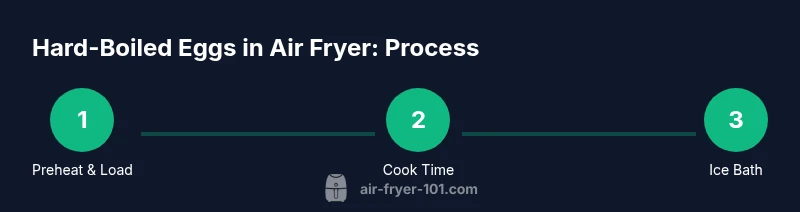
The basic concept is straightforward: you’re delivering dry heat to the eggs, then stopping the cooking with a rapid cool-down. In practice, plan to preheat, load eggs in a single layer, apply a precise cook time, and immediately shock in ice water. The steps you’ll follow in the formal guide translate into these core ideas: preheat and arrange, cook for the target duration, ice bath to halt carryover, then peel and refrigerate if needed. The process is forgiving as long as you keep eggs from touching and maintain a stable temperature throughout the cook.
For best results, avoid opening the air fryer mid-cycle, as this can cause uneven results. If your air fryer runs hot or has irregular air flow, you may want to reduce the temperature by 5–10°F and extend the time by 1–2 minutes to compensate. In short, consistency and a quick ice bath are the keys to reliable hard-boiled air fryer eggs.
Troubleshooting Common Issues
Cracked shells are often the result of a cold egg meeting hot air or a sudden temperature change. To minimize this, consider allowing eggs to reach room temperature before cooking or preheating your air fryer so the initial exposure isn’t a temperature shock. If shells stick or peel is rough, it’s a sign that the eggs were very fresh or the cooling step was too slow. An ice bath helps correct this by contracting the shell away from the white. A greenish ring around the yolk usually indicates overcooking; shorten the cook time by 1 minute and ensure an immediate ice bath. For a difficult peel, roll the egg gently on the counter to create micro-cracks and peel under running water while supporting the whites.
If you notice uneven cooking (one end overdone, one end underdone), check your basket for even spacing and avoid crowding. Some air fryers have hotter zones; rotate the basket halfway through the cook or run a brief 1-minute intermittent heat to even out the exposure. Finally, if you must cook more eggs than your basket comfortably holds, cook in batches rather than stacking—this preserves structure and reduces cracking.
Peeling, Storing, and Using Air Fryer Eggs
Peeling can be facilitated by an ice bath and a light tap to crack the shell all over. Start peeling at the wider end where the air sac is located, and use cold water to help loosen the membrane. If you plan to use the eggs right away, slice them in half or chop for salads, sandwiches, or egg salad. For meal prep, refrigerate unpeeled eggs in a covered container for up to 1 week, or peeled eggs for up to 5 days. When storing peeled eggs, place them in a sealed container with a damp paper towel to maintain moisture and prevent drying out. Always label cooked eggs with the date so you can track freshness; the indicator of quality is aroma and texture—discard if there’s an off smell or unusual texture. For flavor additions, consider a light dusting of salt, paprika, or a dollop of mayo when making deviled eggs.
Variation Guide: Soft-Centered vs Fully Set Yolks
If you prefer a softer center, reduce the cook time by 1–2 minutes. For a fully hard center, keep to the 12–14 minute baseline or extend by up to 1 minute if you consistently undercook. The yolk firmness is influenced by egg size, initial temperature, and exact air fryer model. A quick way to experiment is to cook a small test batch of 2 eggs, adjusting by 1 minute per test to fine tune the result. Remember that even with the same model, individual units can behave differently, so it’s worth keeping a small log of times and outcomes for future batches.
Quick Meal Prep Ideas with Air Fryer Eggs
Hard-boiled air fryer eggs are incredibly versatile. Slice into salads, mash into egg salad sandwiches, fill with herbed mayo for deviled eggs, or chop and toss with greens for a protein boost. If you’re watching your salt intake, season lightly and rely on fresh herbs for brightness. For meal-prep, keep peeled eggs ready to go in the fridge and pair with vegetables, whole grains, or lean proteins for quick lunches. You can also experiment with flavored fillings such as curry mayo or Dijon mustard to vary the flavor profile without adding heavy sauces.
Tools & Materials
- Eggs (large)(6 large eggs, refrigerated)
- Air fryer(Any model that fits eggs in a single layer)
- Ice bath setup(Bowl with ice and cold water)
- Tongs or spoon(To transfer eggs safely)
- Timer(Accurate cooking times)
- Kitchen thermometer (optional)(To double-check egg interior if desired)
- Paper towels(For drying and handling)
- Small rack or trivet (optional)(Helps keep eggs in a single layer)
Steps
Estimated time: 25-30 minutes
- 1
Preheat and prepare
Preheat the air fryer to 270–275°F for 2–3 minutes. This minimizes temperature shock and helps distribute heat evenly across all eggs. Have your ice bath ready for immediate use after cooking.
Tip: Preheating reduces the risk of uneven cooking and cracked shells. - 2
Arrange eggs in a single layer
Place eggs in a single layer in the air fryer basket or on a rack. Do not stack or crowd; space between eggs ensures even heat exposure and uniform doneness.
Tip: Room-temperature eggs peel more easily than cold eggs. - 3
Cook at baseline temperature
Cook the eggs at 270°F for 12–14 minutes, depending on yolk firmness desired and egg size. Avoid opening the fryer door during the process to maintain consistent heat.
Tip: Test with 2 eggs first when using a new model to calibrate time. - 4
Ice bath to stop cooking
Immediately transfer eggs to the ice bath and let them sit for 5–10 minutes. The rapid cool-down halts carryover cooking and makes peeling easier.
Tip: Leave shells submerged so the surface remains cool and firm. - 5
Peel and refrigerate
Gently crack and peel under cold running water if needed, then dry. Use peeled eggs right away or store unpeeled in the fridge for up to a week.
Tip: Peeling under water helps remove stubborn membranes.
Got Questions?
Can you really hard boil eggs in an air fryer?
Yes. An air fryer can produce hard-boiled eggs by circulating hot air to heat the eggs in a dry environment, followed by an ice bath to stop cooking.
Yes, air fryers can hard boil eggs with a quick ice bath to stop cooking.
Do I need to preheat the air fryer?
Preheating helps ensure even cooking and reduces the chance of cracks, especially on models with uneven heat. It’s generally recommended.
Preheating helps even cooking and reduces cracking.
How long should I cook eggs of different sizes?
Large eggs typically cook in 12–14 minutes at 270°F. Smaller eggs may need 11–13 minutes, while extra-large eggs may require 14–15 minutes. Always finish with an ice bath.
Large eggs 12–14 minutes, adjust by size, and always use ice bath.
Why are my eggs hard to peel after air frying?
Fresh eggs peel harder due to pH levels and shell membranes. Let eggs age slightly or use an ice bath and peel under running water to loosen membranes.
Fresh eggs peel harder; try aging and peeling under water.
How long can I store air fryer eggs?
Hard-boiled eggs can be stored in the refrigerator for up to a week, peeled or unpeeled. Keep peeled eggs in a covered container with a damp paper towel to retain moisture.
Store boiled eggs for up to a week, peeled or unpeeled.
Can I reuse the water or shells after cooking?
Do not reuse ice bath water for cooking the next batch. Dispose of used shells in the trash or compost if appropriate. Sanitizing is not required between batches, but keep your equipment clean.
Don't reuse the ice bath water; dispose of shells responsibly.
Watch Video
Quick Summary
- Preheat, cook in a single layer, and ice bath immediately.
- Adjust time by 1 minute for yolk preference and egg size.
- Peel under running water for easier removal.
- Store peeled eggs in the refrigerator for up to 5 days.
- Practice with 2 eggs first to dial in your model.