Soft Boil Eggs in the Air Fryer: A Step-by-Step Guide
Learn how to soft boil eggs in an air fryer with a simple, reliable method. We cover temperatures, timing ranges, peeling tips, and batch cooking to help you get creamy yolks and set whites every time.


You can soft boil eggs using an air fryer by controlling temperature and time to keep the yolk runny while the whites set. Preheat briefly, place eggs on the rack, and monitor until desired doneness. Finish with a cold water bath to stop cooking and ease peeling. This method simplifies timing and reduces the number of pots to clean.
Why Soft Boiling Eggs in the Air Fryer Makes Sense
For many home cooks, soft boiled eggs are a favorite for toast toppers and bright yolk centers. Using an air fryer offers a practical, water-saving alternative to traditional boiling while delivering consistent whites and a creamy yolk. The Air Fryer 101 team found that modern fryers with stable heat can reproduce reliable results across several models, especially when eggs start at room temperature. This method reduces the pot-and-water mess and speeds up the process, making it ideal for busy weekday mornings or quick meal prep. In this article, we cover how to pick eggs, set up your fryer, and dial in timing to match your preferred level of doneness. Expect a smooth, reliable process every time, plus easy peeling after a short ice bath.
Egg Size, Shells, and Doneness Variations
Egg size and shell thickness influence cook time and the exact moment whites set and the yolk stays creamy. Large and extra-large eggs typically require slightly different timing ranges, and even a small variance in distance from the heating element can shift results. Start with standard large eggs, then experiment with a single test egg if you switch brands or batch sizes. Keeping the shell intact is essential for attractive presentation, so choose eggs without cracks and handle gently during loading. Air fryer performance can vary between models, so use the guideline ranges as a starting point and adjust by a minute or two based on your results.
Prepping Your Eggs and Equipment
Before you begin, gather your eggs, ice water for the shock bath, tongs or a small spoon for handling, and a tray or rack that fits your air fryer basket. Bringing eggs to room temperature can produce more even doneness, especially if they have been refrigerated. Lightly dust the rack with a tiny pinch of salt if you want extra flavor, though it’s optional. Ensure your air fryer is clean and dry to prevent smells from lingering. A simple, clean setup reduces variables and helps you reproduce results consistently.
Temperature and Timing Principles
Soft boiling in an air fryer relies on steady, gentle heat rather than a rolling boil. Most home models perform well in a low-to-moderate temperature range, with adjustments based on egg size and personal preference. A common starting point is a low-to-mid heat setting, and you’ll tweak the time to achieve the exact yolk consistency you want. Remember that air fryers don’t use a water bath, so the egg’s shell becomes the vessel that transfers heat. The goal is whites that are just set and yolks that remain creamy and slightly runny when pierced.
Step-by-Step Method Overview
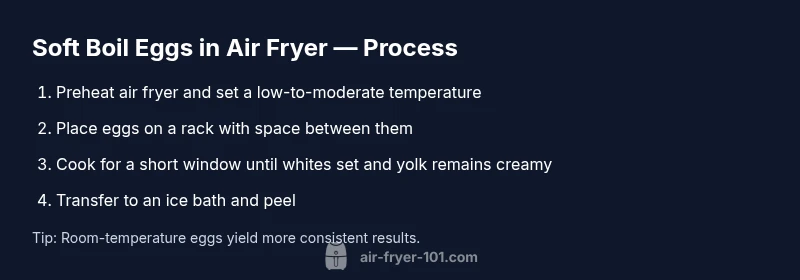
Here is a concise flow you can follow, then refer to the detailed STEP-BY-STEP section for precise actions. The process starts with preheating, then arranging eggs on a rack with space around each, cooking for a short, controlled window, and finishing with an ice bath. This sequence minimizes cracking and helps you reach a reliably soft yolk.
Troubleshooting Common Issues
If the whites are undercooked, the eggs were likely in the fryer too long or the temperature was too low. Overly firm yolks usually indicate too much time or too-high heat. Cracked shells often result from rapid temperature changes or rough handling. To reduce cracking, avoid rapid temperature shifts and handle eggs gently with tongs. Keep a note of your model’s performance so you can refine the exact timing for future batches.
Peeling and Serving Tips
Peeling soft-boiled eggs can be easier when they are slightly cooled but still warm inside. Give the eggs a quick shake to loosen the shell after the ice bath, then peel under running water to help remove the membrane. Serve immediately on toast, grain bowls, or salads. A light dusting of sea salt or a pinch of paprika can elevate the flavor without adding calories.
Batch Cooking and Storage
If you cook multiple eggs at once, space them evenly to avoid crowding effects that can alter doneness. Store peeled eggs in an airtight container in the refrigerator for up to a couple of days. Reheat gently by briefly returning them to the air fryer or by warming in hot water for a minute or two to maintain a creamy center. Label batches by date to keep track of freshness.
Safety and Food Handling
Always handle raw eggs with clean hands and utensils. Do not leave eggs at room temperature for extended periods for safety reasons, and cool cooked eggs promptly in ice water to stop residual cooking. When in doubt, discard if an egg shows any off smell or unusual texture after cooking. Following basic kitchen safety practices helps prevent foodborne illness and ensures a pleasant eating experience.
Variations and Flavor Add-Ins
If you want extra flavor, you can lightly salt the eggs before cooking or finish with a dash of herbs after peeling. For a richer texture, you can add a pinch of truffle salt or a drizzle of olive oil. If you’re preparing multiple eggs for a brunch, consider pairing soft-boiled eggs with avocado toast, a pesto drizzle, or a simple citrusy mayo for contrast. Experimentation with small batches helps you find your preferred flavor without waste.
Cleaning Up and Maintenance
After cooking, wipe down the basket and rack to remove any shell fragments and egg residue. Soak removable parts in warm, soapy water for a few minutes if needed, then rinse and air-dry completely before the next use. Proper storage of your air fryer, including removal of crumbs from the crevices, reduces odors and keeps the appliance performing well over time.
Quick-Start Checklist
- Gather eggs, ice bath, and a rack or tray that fits your air fryer.
- Preheat the air fryer to a low-to-moderate temperature setting.
- Place eggs with space around each for even heat.
- Cook for a short, controlled window and transfer to ice bath immediately.
- Peel under running water and serve promptly for best creaminess.
Tools & Materials
- Eggs (large or extra-large)(Use fresh eggs if possible; room-temperature eggs help with even cooking.)
- Air fryer(Any model with reliable temperature control will work.)
- Rack or tray that fits the air fryer basket(Allows even spacing between eggs.)
- Bowl of ice water(For the ice bath to halt cooking quickly.)
- Tongs or spoon(Gently handle eggs to avoid cracks.)
- Timer(Use a reliable timer to track cook time.)
Steps
Estimated time: 15-25 minutes
- 1
Gather eggs and preheat
Collect eggs and bring them to room temperature. Preheat the air fryer to a低-to-moderate temperature to ensure even heat distribution as soon as the eggs enter the basket.
Tip: Preheating reduces cold-start time and helps prevent cracks. - 2
Arrange eggs on rack
Place eggs on the rack or tray with space between each egg so air can circulate freely. Avoid stacking or crowding to promote uniform cooking.
Tip: If your fryer has hot spots, rotate the rack halfway through cooking. - 3
Cook to desired doneness
Set the timer for a short, controlled window and monitor the whites just setting while the yolk remains creamy. Times vary by model and egg size; start with a conservative window and adjust next batch.
Tip: Note how the egg responds to your specific fryer to refine future batches. - 4
Ice bath to halt cooking
As soon as the timer ends, transfer eggs to an ice bath to stop residual cooking and make peeling easier. Chill for several minutes.
Tip: Ice bath helps maintain that perfect soft center. - 5
Peel and test yolk
Peel under running water to separate the shell from the membrane. Gently pierce the yolk to confirm it’s soft and creamy inside.
Tip: If the yolk isn’t as runny as you like, adjust the next batch by a minute or two. - 6
Serve or store
Serve immediately with toast or salads, or refrigerate peeled eggs for future meals. They’re best within a day or two for peak creaminess.
Tip: Store peeled eggs in a sealed container to prevent absorbing fridge odors.
Got Questions?
Can I soft boil eggs in an air fryer?
Yes. With careful timing and temperature control, you can achieve a softly set white and creamy yolk using an air fryer. Results vary by model, so start with a conservative window and adjust.
Yes, you can soft boil eggs in an air fryer by following timing guidelines and choosing the right temperature for your model.
What temperature should I use for soft boiling?
Aim for a low-to-moderate range and adjust based on your fryer and egg size. Start with a conservative setting and make small tweaks in future batches.
Start with a low to moderate heat and tweak slightly based on how your eggs cook.
How long does it take to soft boil an egg in a fryer?
Cook times vary by model and egg size. Begin with a short window and adjust by a minute or two until you reach your preferred yolk consistency.
It varies by model; begin with a short window and adjust gradually.
Should eggs be cold or room temperature?
Room-temperature eggs cook more evenly, especially when starting from the fridge. Let them sit out briefly if possible.
Room-temperature eggs tend to cook more evenly.
How do I peel air-fried soft boiled eggs easily?
Peel under running water to help separate the membrane from the shell. A gentle roll can loosen the shell further without damaging the yolk.
Peel under water and roll gently to loosen the shell.
Can I cook multiple eggs at once?
Yes, you can cook several eggs at once as long as they’re spaced for even heat. Larger batches may require a minute or two longer.
You can cook several eggs at once; expect small timing adjustments.
Watch Video
Quick Summary
- Control temperature to balance whites and yolk texture.
- Ice bath stops cooking quickly for creamy centers.
- Room-temperature eggs yield more consistent results.
- Preheat briefly to reduce cook time and promote even heat.