How to Hard-Boil Eggs in the Air Fryer
Learn how to hard boil eggs in an air fryer with step-by-step timing, temperature tips, and practical variations for peeled or unpeeled eggs. Quick, convenient, and mess-free guidance from Air Fryer 101.


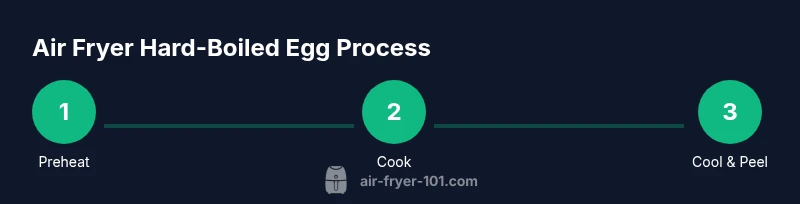
Cook hard-boiled eggs in your air fryer by preheating to 270–275°F (130–135°C), arranging eggs in a single layer, and frying for 12–15 minutes. Transfer immediately to an ice bath for 5–6 minutes, then cool, dry, and peel. Times can vary by egg size and model, so adjust by a minute or two as needed.
Why this method makes sense for home cooks
Using an air fryer to hard boil eggs can save time, reduce mess, and deliver consistent results. According to Air Fryer 101, this method minimizes water usage and leverages convection to heat eggs evenly. With the right temperature and timing, you’ll get firm whites and fully set yolks without the need to boil a pot on the stove. Understanding how temperature stability and rapid air circulation affect doneness helps you dial in your preferred level of firmness across egg sizes and air fryer models.
How air fryer temperatures and times influence eggs
Eggs cooked in an air fryer rely on rapid hot air movement to transfer heat. Too high a temperature risks overcooked whites and a dry exterior, while too low can leave yolks underdone. A target range around 270–275°F (130–135°C) is widely effective for large eggs, with typical cook times of 12–15 minutes depending on size and model. Because every air fryer varies, treat the first attempt as a calibration run. Start with a small batch to dial in your preferred doneness, then scale for future batches.
Pros and cons compared to traditional boiling
Pros:
- Faster setup and cleanup
- Less water usage and fewer pots to scrub
- Consistent heat from convection
- Great for small kitchens or apartments
Cons:
- Shells can be slightly tougher to peel if eggs are very fresh
- Results may vary a bit between models unless you calibrate
- Peeling after a short ice bath is often easier but adds a minute of prep
Eggs selection and prep: size, freshness, and prep
Choose large eggs for standard results. Very fresh eggs sometimes peel less easily, so using eggs that have rested a day or two can help. Let cold eggs sit at room temperature for 10–15 minutes before cooking to promote even heat transfer. Store-bought eggs should be kept refrigerated until ready to cook. If you plan to peel after cooking, a gentle ice bath helps loosen the shell and makes peeling smoother.
Core method overview: what to expect in practice
In practice you will preheat the air fryer to the target temperature, place eggs in a single layer, cook for the designated time, and then plunge them into an ice bath to halt the cooking process and aid peeling. You’ll then dry and either serve immediately or refrigerate for later use. Once you dial in your model’s timing, you’ll enjoy reliable results with minimal hands-on time.
Variations: peeled vs unpeeled, soft center options
Unpeeled eggs tend to retain moisture better and peel more cleanly after a thorough ice bath. If you want a softer center (soft-boiled), reduce the cook time by 2–3 minutes and monitor yolk firmness. For deviled eggs or salads, peeled eggs offer convenience and presentation speed. Peeling can be done quickly after chilling, but you can also store unpeeled eggs and peel just before use.
Troubleshooting common issues
If shells crack during cooking, it’s usually due to sudden temperature changes or overcrowding. If whites are undercooked, increase time by 1 minute or slightly raise the temperature for the next batch. Overcooked yolks may appear grey and dry; drop the time by 1 minute in subsequent attempts. Ensure eggs are placed in a single layer and not touching the basket walls to promote even heat.
Health, safety, and storage considerations
Always handle hot eggs with care to prevent burns. After cooking, refrigerate peeled eggs within two hours, or keep unpeeled eggs in the fridge for up to a week. Use peeled eggs within 3–5 days for best texture. If you’re preparing eggs for a meal prep plan, consider labeling batches by time and temperature so you can reheat or serve confidently. For safety guidelines, refer to reputable sources such as FDA.gov and USDA.gov.
Tools & Materials
- Air fryer with a basket(Ensure the basket is clean and arrange eggs in a single layer)
- Large eggs(Room-temperature eggs cook more evenly)
- Ice bath bowl with cold water and ice(Quickly stop cooking and ease peeling)
- Tongs or spoon(For safe handling of hot eggs)
- Kitchen timer(Precise timing helps consistency)
- Paper towels(Dry eggs after cooling; helps peeling)
Steps
Estimated time: Total time: 20-25 minutes
- 1
Preheat and prep
Preheat the air fryer to 270–275°F (130–135°C) for 3–5 minutes. While it heats, gather your eggs and prepare the ice bath. This initial step ensures even cooking and quick cooling.
Tip: Some air fryer models don’t require preheating; skip if yours hasn’t a preheat setting. - 2
Place eggs in a single layer
Arrange the eggs in a single layer in the basket or on the rack, making sure they don’t touch for uniform heat exposure.
Tip: If you have a small fryer, cook in batches to avoid overcrowding. - 3
Cook at target time
Cook at 270–275°F (130–135°C) for 12–15 minutes depending on egg size and model. Start with 12 minutes for medium results and adjust on future batches.
Tip: Record your first batch’s time and adjust by 1 minute in subsequent tries. - 4
Ice bath immediately
As soon as cooking finishes, transfer eggs to the ice bath and chill for 5–6 minutes to halt cooking and loosen shells.
Tip: Swirl gently to cool all sides evenly and prevent cracking from thermal shock. - 5
Dry and peel
Remove eggs from water, dry with towels, then peel when desired. Cold eggs peel more easily after a brief rest.
Tip: Peel under running water for the easiest shell removal. - 6
Store or serve
Serve immediately or refrigerate peeled or unpeeled eggs for later use. Peeled eggs should be consumed within a few days for best texture.
Tip: Label batches by date to track freshness during meal prep.
Got Questions?
Can I cook more than a dozen eggs at once in a standard air fryer?
Cooking multiple eggs is possible if they fit in a single layer without touching. If needed, cook in batches to maintain even heat and reliable doneness.
Yes, you can cook several eggs at once, but avoid crowding. Use batches to keep heat even.
What if my eggs crack during cooking?
Cracks usually come from rapid temperature changes or overcrowding. Allow eggs to come to room temperature before cooking and ensure a single-layer layout.
Cracks are common if there’s crowding or sudden heat shifts; give them space and avoid stacking.
Is there a difference between peeled and unpeeled results?
Unpeeled eggs stay fresher longer, while peeled eggs are quicker to eat. Peeling after an ice bath typically yields cleaner shells.
Peeling after chilling helps, and peeled eggs are convenient for salads and snacks.
Can I make soft-centered eggs in the air fryer?
Yes. Reduce cook time by 2–3 minutes and monitor yolk firmness. This yields a softer center while keeping the whites set.
You can get a softer yolk by shortening the cook time a bit and watching closely.
How long will air-fried hard-boiled eggs last in the fridge?
Hard-boiled eggs, peeled or unpeeled, will keep best for up to a week in the refrigerator when stored properly.
Keep cooked eggs in the fridge for up to a week for best quality.
Do I need to preheat my air fryer for this recipe?
Preheating helps ensure consistent results for time-sensitive foods like eggs. If your model has a fixed cooking cycle, you may skip preheating.
Preheating helps with consistency, but some models don’t require it.
Watch Video
Quick Summary
- Cook eggs at 270–275°F for best results
- Use a single egg layer to ensure even cooking
- Ice bath is essential for stopping carryover cooking
- Peel more easily after cold shock, then refrigerate
- Calibrate times by model and egg size for consistency