Egg Air Fryer Guide: Master Perfect Eggs Every Time
Learn how to cook eggs perfectly in an air fryer with step-by-step instructions, safety tips, and beginner-friendly recipes from Air Fryer 101. Discover hard-boiled, soft-boiled, and scrambled methods with minimal oil for healthier breakfasts.


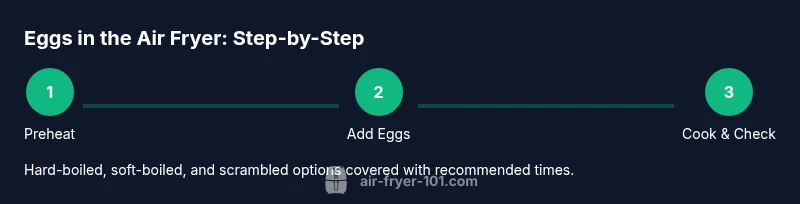
Eggs come out perfect in an air fryer with the right temp and timing. Preheat, cook briefly, and vary times for hard, soft, or scrambled results. See our full guide for precise steps. This quick path helps you achieve reliable textures in 15–25 minutes, with little to no oil.
Why egg air fryer recipes are appealing
According to Air Fryer 101, using an egg air fryer can deliver tender whites and fully set yolks with little to no added oil, making breakfast and meal prep faster and healthier. This section explores why eggs are a natural fit for air frying, what texture you can expect, and how air fryer architecture (basket, rack, and timer) influences results. You'll learn quick rules of thumb for texture (soft vs hard), how to adjust times based on egg size, and how to avoid common cracking or overcooking pitfalls. The goal is to give you confidence to cook eggs with precision, whether you're prepping a weekly breakfast or whipping up a brunch dish.
How an egg air fryer works
An egg air fryer uses hot air circulated by a fan to cook eggs with minimal oil. The circulating heat creates a dry exterior that firms the white quickly while keeping the yolk tender, especially when you control temperature and time precisely. The shell acts as a moisture barrier during in-shell cooking, and the basket design helps heat reach the entire surface of each egg. Understanding this helps you pick the right method—hard, soft, poached, or scrambled—without overcooking or cracking.
Prep and safety basics for egg cooking in air fryer
Before you start, gather eggs without cracks and bring them to room temperature if possible. Preheat if your model supports it, and use a basket liner or silicone cups to minimize sticking. Do not overcrowd the basket—eggs in a single layer cook more evenly and yield more consistent results. For safety, use tongs or heat-safe gloves when handling hot eggs, and check doneness with an instant-read thermometer if needed.
Practical methods: hard-boiled, soft-boiled, scrambled, and poached
Hard-boiled in-shell eggs typically cook in a higher-heat environment for a set period, soft-boiled eggs require shorter times, and scrambled eggs benefit from a silicone cup approach. Poached eggs can be made in small ramekins with a touch of water or oil, then covered to trap steam. Although every air fryer is different, this section provides flexible time ranges to help you dial in your preferred texture while keeping the yolk intact and the white fully set. Adjust times by egg size and model, then log your results for repeatability.
Troubleshooting common issues
Even with a reliable method, you may encounter cracked shells, undercooked yolks, or uneven texture. Common causes include cold eggs entering hot air, overcrowding, or too-short preheating. Ensure eggs are in a single layer, use room-temperature eggs when possible, and give a short rest after cooking to finish carries-over heating. If you notice cracking, lower the cooking temperature slightly and extend the time by 1–2 minutes while monitoring texture.
Quick-start recipes to try this week
Try these starter combinations to build confidence:
- Basic hard-boiled eggs in-shell: 13–15 minutes at 270–275°F, then cold-water shock for 5 minutes.
- Soft-boiled eggs in-shell: 6–7 minutes at 270–275°F, immediately cool in an ice bath.
- Scrambled eggs in silicone cups: beat with a splash of milk, 5–7 minutes at 300°F, stir halfway for fluffiness. Use parchment cups for easy cleanup.
How to store and reheat air-fried eggs
Refrigerate hard-boiled eggs in their shells for up to 1 week, or peeled portions in an airtight container. Reheat gently in the air fryer at a lower initial temperature (around 250–275°F) for a few minutes until warmed through. This method preserves texture better than microwaving and helps avoid rubbery yolks.
Tools & Materials
- Air fryer with adjustable temperature(Ensure it can reach 270–300°F (130–150°C) for eggs in shells and 300°F (149°C) for scrambled eggs.)
- Fresh eggs (large or medium)(Room-temperature eggs reduce cracking and cook more evenly.)
- Silicone cups or ramekins(For scrambled or poached eggs; helps with even cooking.)
- Parchment paper circles or non-stick spray(Optional; aids easy cleanup and prevents sticking.)
- Tongs or heat-safe silicone tongs(For safe handling of hot eggs.)
- Instant-read thermometer(Check doneness in doubt; particularly for larger eggs.)
Steps
Estimated time: Total time: 18–28 minutes
- 1
Preheat and prepare the basket
Preheat the air fryer to 270°F (132°C) for in-shell methods or 300°F (149°C) for scrambled setups. Lightly oil or line the basket with parchment to prevent sticking. This step boosts even heat distribution and reduces sticking.
Tip: Preheating helps eggs set quickly and reduces cracking. - 2
Arrange eggs in a single layer
Place eggs in a single layer in the basket or on a rack; avoid stacking. Space between eggs allows hot air to circulate for even cooking. Use silicone cups if you’re scrambling in cups.
Tip: Keep at least a half-inch of space around each egg. - 3
Cook hard-boiled eggs in-shell
Cook for 13–15 minutes at 270–275°F (132–135°C). Adjust by size; larger eggs may need an extra minute. After cooking, shock in ice water for 5 minutes to stop carryover cooking.
Tip: Starting with medium eggs yields more predictable yolk texture. - 4
Cook soft-boiled eggs in-shell
Cook for 6–7 minutes at 270–275°F (132–135°C). Transfer to ice water immediately for 5–10 minutes. Test a yolk by cracking one; adjust future runs for your preferred runniness.
Tip: Ice bath stops the cooking process and preserves yolk texture. - 5
Scramble eggs using silicone cups
Beat eggs with a dash of milk, pour into silicone cups, and cook at 300°F (149°C) for 5–7 minutes. Stir halfway for uniform texture and fluffier results.
Tip: Seal the cups with a small foil tent if your air fryer runs hot. - 6
Poach eggs in ramekins
Crack an egg into a small ramekin with a teaspoon of water, then cover and cook for 7–9 minutes. The steam helps set the whites while keeping the yolk moist.
Tip: A touch of salt and pepper enhances flavor without oil. - 7
Peel, serve, and store
Let eggs rest 1–2 minutes after cooking, then peel or serve directly. Refrigerate leftovers in an airtight container for up to 3–4 days.
Tip: Peeling under cold running water makes peeling easier.
Got Questions?
Can you hard boil eggs in an air fryer?
Yes. Hard-boiled eggs can be made in an air fryer by cooking in-shell eggs at a low temperature for about 13–15 minutes and finishing with an ice-water shock.
Yes, you can hard-boil eggs in an air fryer. Cook 13–15 minutes in-shell, then plunge into ice water to stop cooking.
Do you need to preheat the air fryer for eggs?
Preheating helps eggs cook evenly and reduces shell cracking. If your model runs hot, you can skip preheating but monitor closely.
Preheating helps eggs cook evenly, so it’s recommended when possible.
Can you cook scrambled eggs without shells in an air fryer?
Yes. Beat eggs and cook in silicone cups or a small ramekin at around 300°F for 5–7 minutes, stirring halfway for fluffier texture.
Yes—scrambled eggs work in silicone cups at about 300 degrees for 5 to 7 minutes.
How do you peel air-fried hard-boiled eggs easily?
Cool the eggs in an ice bath for 5 minutes, then crack and roll to loosen the shell. Peeling under cold running water helps.
Cool in ice water and peel under running water for easier removal.
Are air-fried eggs healthier than boiled eggs?
Eggs cooked in an air fryer use no added oil during cooking, which can be a healthier option depending on toppings. Overall health impact depends on the serving and additions.
Air-fried eggs use no oil during cooking, which can be healthier, but toppings matter.
What if eggs crack during cooking?
Cracks usually result from temperature shock or cold eggs. Use room-temperature eggs and preheat gradually to minimize cracking.
Cracks happen from temperature shock; use room-temp eggs and preheat properly.
Watch Video
Quick Summary
- Start with room-temperature eggs for best results.
- Preheat when your model supports it to improve texture.
- Different textures require different times and temps; log your results.
- Use silicone cups or ramekins for scrambled or poached eggs to prevent sticking.