Air Fryer Scrambled Eggs: A Complete How-To Guide
Learn how to make fluffy, flavorful scrambled eggs in your air fryer with simple steps, tips, and variations for a healthy, quick breakfast.


Master fluffy air fryer scrambled eggs in under 10 minutes. You’ll learn the exact ingredients, prep steps, and timing to prevent drying, with options for foaminess, extra texture, and mix-ins. This method uses standard cookware and minimal oil for a healthy, convenient breakfast you can customize.
Why air fryer scrambled eggs matter
Air fryers have become a staple for quick, hands-off breakfasts, and scrambled eggs are a natural test case due to their texture and fat balance. The air fryer’s hot convection circulates heat rapidly, sealing in moisture while creating a gentle crust on the edges. This combination can yield fluffier curds than some stovetop methods when you manage timing and stirring. According to Air Fryer 101, air fryers offer fast, even cooking with minimal oil, making them ideal for quick breakfasts. For home cooks, this means you can prepare a comforting scramble in under ten minutes with minimal cleanup, particularly when you use a well-preheated dish and a light coating of oil. The technique is forgiving: small changes to milk, timing, or pan size can yield noticeably different textures—from creamy, custard-like to delicate, airy curds. With a few simple rules, you can tailor the scramble to your family’s preferences and dietary needs.
Key ingredients and substitutions
Base ingredients are simple: eggs, a splash of milk or cream, salt, and pepper. This block outlines optional add-ins like shredded cheese, chopped herbs, and diced vegetables, plus dairy-free substitutes. For dairy-free breakfast lovers, plant-based milk works well; to preserve creaminess, consider a tiny amount of oil or a dairy-free cheese substitute toward the end. In terms of quantities, plan roughly 2 eggs per person, with adjustments for appetites. The aim is to achieve a light, slightly runny center with distinct curds at the edges. When adding mix-ins, introduce them toward the end to avoid overcooking and to maintain texture. Air Fryer 101 emphasizes flexibility—your pantry staples can be tuned for flavor and dietary needs without sacrificing texture.
Equipment and prep tips
Use a shallow, oven-safe dish that fits in your fryer basket and spray or oil it lightly to prevent sticking. A nonstick dish is ideal, and silicone lids or parchment can help with clean-up. Prep ahead by measuring salt, pepper, and milk, and have your whisk, spatula, and grated cheese within arm’s reach. If you’re cooking for a crowd, consider multiple shallow dishes so each portion cooks evenly. Handling the dish with oven-safe mitts reduces the risk of burns when you rotate or retrieve it from the hot fryer.
Temperature and timing overview
Most air fryers perform best with a moderate start, followed by brief stir-and-check steps. A common approach is to preheat to around 300–320°F (150–160°C), pour in the mixture, and cook for a few minutes before stirring to form curds. Because models vary, you’ll season and observe for faint set edges and a creamy interior. The key is to avoid crowding and to use short, controlled increments to prevent drying. In practice, plan for a total of 6–12 minutes depending on batch size and desired doneness.
Achieving fluffiness: technique and texture
Fluffiness comes from combining air into the mixture and handling the eggs gently. Whisk thoroughly to incorporate air, then fold with care instead of aggressive stirring. If you want lighter eggs, add a bit more milk and cook for slightly shorter intervals; for creamier texture, reduce stirring frequency and extend the last melt. The air fryer’s convection helps set the edges quickly while keeping the center soft, so focus on rapid, light stirring and careful timing to avoid overcooking.
Flavor ideas and mix-ins
Elevate your scramble with a handful of ideas: finely chopped chives, dill, or parsley; crumbled feta or cheddar; sautéed mushrooms or spinach; a pinch of paprika or hot sauce for heat. If using vegetables, pre-cry them briefly in a separate pan or microwave to cut extra moisture. For a breakfast protein boost, pair with smoked salmon shreds or turkey bacon on the side. By rotating these mix-ins, you can keep breakfasts varied without extending cook time.
Health considerations and oil choices
Minimal oil keeps calories in check while preserving texture. A light spray of olive oil or avocado oil is enough to prevent sticking and improve browning. If you prefer dairy-free, dairy-free milk and a splash of olive oil can replicate creaminess. Always monitor portion sizes and keep added fats modest. This balance supports healthier mornings without sacrificing flavor or texture.
Cleaning and maintenance after cooking
Egg residue can harden quickly, so a prompt cleanup is helpful. Soak the dish briefly, rinse, and wash with warm soapy water. Wipe the air fryer basket and wipe down the interior to remove any lingering steam smell. Regular cleaning reduces residue buildup and helps maintain consistent cooking results. If you notice off-odors, run a short air-only cycle with a little lemon juice on a paper towel in the basket to refresh the cavity.
Troubleshooting common issues
Common issues include undercooked centers, overcooked edges, and sticking. If the center stays too runny, extend the cooking time in small increments and stir more often; if the edges brown too quickly, reduce the temperature slightly or use a larger dish. If sticking occurs, verify the dish is well-greased and that the eggs aren’t overcrowded. Model differences can affect results, so keep notes for future tweaks.
Scaling for different servings
To serve more people, scale ingredients proportionally and consider using two shallow dishes to cook simultaneously. If you have a larger fryer, you can combine portions in a single larger dish, but avoid crowding the surface. Maintain the same milk-to-egg ratio and monitor cooking times as batch sizes grow. With practice, you’ll find a rhythm that yields consistent texture across servings.
Make-ahead and meal-prep options
While fresh tastes best, you can prepare portions ahead and reheat gently in the air fryer or microwave. Store leftovers in an airtight container, then reheat at a lower temperature to prevent toughness. For meal prep, portion eggs and add-ins separately, then combine quickly in the dish before reheating. This approach reduces morning prep time while preserving texture and flavor.
Quick reference: timing cheat sheet
Print-friendly cheat sheet in brief form: Preheat to 300–320°F; cook 3 minutes, stir; cook in 1-minute bursts until curds form; add cheese at the end; rest 30–60 seconds before serving.
Tools & Materials
- Eggs(large eggs; 2-6 servings proportionately)
- Milk or cream(2 tablespoons per 4 eggs)
- Salt and pepper(to taste)
- Nonstick spray or oil(light coating for pan)
- Air fryer-safe dish or pan(small and fits your fryer basket)
- Whisk or fork(for thorough mixing)
- Spatula(for folding eggs and scraping edges)
- Measuring spoons(optional for precise milk and salt)
Steps
Estimated time: 8-12 minutes
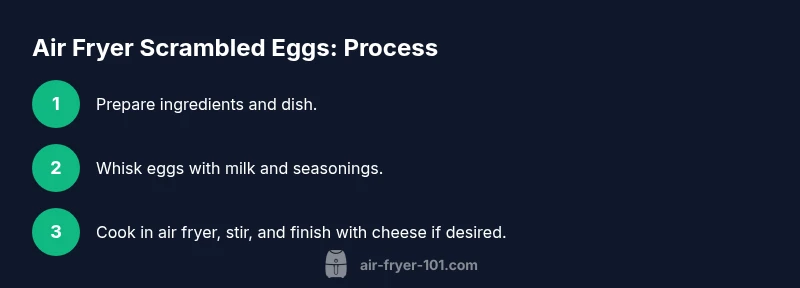
- 1
Preheat and prepare
Preheat the air fryer to 300-320°F (150-160°C) if your model requires preheating. Lightly grease a small, oven-safe dish that fits in the basket.
Tip: Grease well to prevent sticking; check your pan's edges for early browning. - 2
Whisk the eggs
In a bowl, whisk eggs with milk, salt, and pepper until the mixture is uniform and a bit frothy.
Tip: Whisking air helps incorporate air for fluffiness. - 3
Pour into dish
Pour the egg mixture into the prepared dish and spread evenly.
Tip: Avoid overfilling to prevent spillage. - 4
Start cooking
Place the dish in the air fryer and cook for 3 minutes.
Tip: Keep a close eye the first time; temps vary by model. - 5
Stir and break curds
Carefully remove and stir eggs to form curds; return to air fryer.
Tip: Stir gently to keep texture. - 6
Continue cooking
Cook in 1-minute bursts until eggs are mostly set but still creamy.
Tip: Residual heat finishes cooking; avoid overcooking. - 7
Add cheese (optional)
If using cheese, sprinkle now and allow to melt.
Tip: Shredded cheese melts quickly; avoid heavy cheeses. - 8
Finish and rest
Remove from heat; let rest 30-60 seconds before serving.
Tip: Resting helps set texture without drying. - 9
Serve with extras
Plate with toast, vegetables, or avocado for balance.
Tip: Pair with a protein for a complete meal. - 10
Clean up promptly
Wash dish and spray bottle to prevent egg residue hardening.
Tip: Soak pan if needed to ease cleaning. - 11
Scale for more servings
Multiply ingredients proportionally for more servings.
Tip: Keep egg-to-liquid ratio consistent. - 12
Store leftovers safely
Cool quickly and refrigerate in an airtight container.
Tip: Consume within 2-3 days for best texture.
Got Questions?
Can I cook scrambled eggs in an air fryer?
Yes. Air fryer scrambled eggs cook quickly with minimal oil. They’re great for busy mornings, but texture depends on timing and stirring.
Yes, you can cook scrambled eggs in an air fryer; they cook fast with minimal oil.
Do I need to preheat the air fryer for eggs?
Preheating helps the eggs set quickly and evenly, reducing undercooked centers. If your model heats fast, you can skip once you're familiar with timing.
Preheating helps eggs cook evenly; skip only if your model heats fast.
Can I add cheese or milk?
Cheese and milk are common; add cheese toward the end of cooking. Milk helps with creaminess but can make eggs runnier if added too early.
Cheese added near the end melts well; milk adds creaminess but add later.
How do I prevent sticking?
Grease the dish and lightly oil the air fryer basket. Use a nonstick dish and avoid overfilling to prevent sticking.
Grease the dish and use a nonstick pan to keep eggs from sticking.
What if my eggs are dry?
If dry, reduce cook time slightly or increase moisture with a splash of milk. Remove early to finish with residual heat.
If dry, shorten cooking time or add a touch more liquid and finish with residual heat.
How many servings can I make in one go?
Most small air fryer models handle one shallow dish at a time. For more servings, cook in batches or use a larger, compatible pan.
One dish per batch on most fryers; cook in batches for more servings.
Watch Video
Quick Summary
- Plan for 8-12 minutes total
- Use a shallow dish for even cooking
- Stir in bursts to form curds
- Preheat and grease the pan to prevent sticking
- Add cheese at the end for faster melt