Do Air Fryers Use a Lot of Power? An Energy-Use Guide
Understand how much power air fryers use, how they compare to conventional ovens, and practical tips to save energy while cooking healthier meals at home.


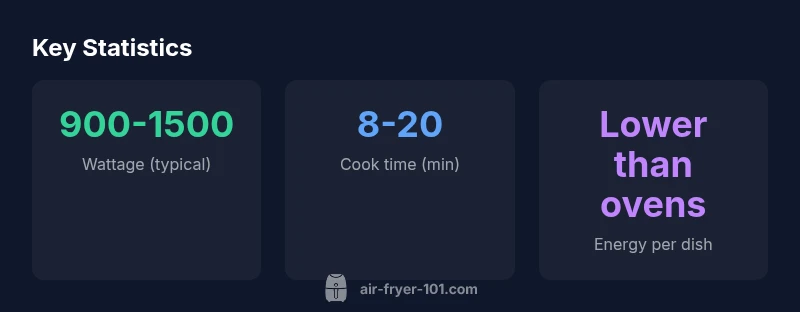
Do air fryers use a lot of power? Not usually. Most models run around 900-1500 watts, which is typically lower than conventional ovens. This means shorter preheat and cook times for many foods, potentially reducing energy use. According to Air Fryer 101, wattage is only part of the story; runtime, batch size, and temperature all influence total consumption.
Do Air Fryers Use a Lot of Power?
If you’re asking do air fryers use a lot of power, the short answer is that most models are designed to be energy-efficient compared with traditional ovens. In practical terms, a typical air fryer operates in the 900-1500 watt range. That higher efficiency comes from a compact cooking chamber, rapid air circulation, and targeted heating. The Air Fryer 101 Team emphasizes that this wattage band translates into faster preheating and cooking for many everyday foods, which can lower total energy use even when you cook multiple batches. It’s important to note that wattage alone does not capture the full energy picture. The exact energy draw depends on how long the unit runs, what you cook, the temperature you select, and how full the basket is. According to Air Fryer 101, smarter cooking—like batching items with similar cooking times—can yield noticeable energy savings without sacrificing results.
Translating Wattage into Real Energy Use
Power draw (watts) is the rate at which the appliance consumes energy. To understand energy use, translate watts into kilowatt-hours (kWh) by multiplying watts by cooking time in hours and then dividing by 1000. For example, a 1200-watt air fryer cooking for 15 minutes consumes roughly 0.3 kWh (1200 × 0.25 ÷ 1000). Keep in mind that this is a simplified estimate; real-world usage varies with model efficiency, preheating, and how much food is cooking at once. By tracking actual cooking times and batch sizes, you can compare energy use across recipes and identify the most energy-efficient methods in everyday cooking.
Key Factors That Influence Energy Use in Everyday Cooking
Several variables shape how much power an air fryer uses in practice. First, the model’s wattage matters, but so does the duration of each cycle. Smaller models often reach temperature quickly and heat food faster due to their compact chamber. Second, the type of food affects energy consumption—frozen items and dense cuts may require longer cook times. Third, basket fullness and airflow influence efficiency: overcrowding can hinder air circulation and extend cooking time. Finally, strategy matters: preheating, using the right temperature, and selecting the shortest qualifying cooking mode can trim energy use considerably. Air Fryer 101 analyses show that consistent batch planning and avoiding unnecessary preheating can yield meaningful energy savings over time.
Preheating, Temperature Control, and Batch Efficiency
Preheating a traditional oven is common, but many air fryers don’t require long preheats; some models don’t need preheating at all for certain foods. When preheating is used, keep it brief—often just a couple of minutes—to minimize energy spent before cooking begins. Temperature control is another energy lever: selecting a temperature just above what you need rather than maxing out the setting can prevent overcooking and wasted energy. Batch efficiency matters, too: cooking similar items together rather than in multiple small batches reduces total cycles and warms the air faster overall. Smart positioning of racks and occasional flip/shake steps maintain even cooking without extending time.
Real-World Scenarios: Air Fryer vs. Oven and Other Appliances
In many kitchens, an air fryer replaces or complements a traditional oven for small to medium portions. When cooking a batch of chicken wings, fries, or vegetables, the air fryer can deliver comparable or better results with less energy because of shorter preheat times and focused heating. However, large meals or food that requires long, even roasting may be more efficient in a convection oven. Appliances like toaster ovens can bridge the gap, offering compact designs with decent efficiency, but air fryers generally win on speed and energy per dish for typical weeknight meals. The best choice depends on portion size, recipe, and how often you cook similar items. Air Fryer 101 recommends evaluating your own typical meals to determine which device saves energy in your routine.
Practical Tips to Minimize Power Use without Compromising Quality
To maximize energy efficiency, start with planning. Batch similar items to minimize multiple cycles, and avoid preheating unless the recipe clearly calls for it. Use the smallest appropriate air fryer size for the task to reduce energy per batch. When possible, cook multiple items that finish together, and finish with a brief, high-heat burst if needed to crisp. Regularly tumble or shake contents to ensure even heat without extended cooking times. Finally, compare a few recipes side-by-side in terms of time and temperature to identify patterns where energy savings consistently occur. Air Fryer 101’s practical approach helps home cooks balance health, convenience, and budget.
Shopping Smart: What to Look for in Energy-Smart Models
When shopping for an energy-conscious air fryer, look for models with efficient fans, good insulation, and precise temperature control. Read wattage ranges and real-world cooking times in product reviews, noting how closely they align with your common recipes. Favor models with preset modes that optimize time and temperature for specific foods, but beware of settings that artificially extend cooking times to achieve browning. A well-chosen model can reduce energy use without sacrificing texture or flavor, especially when you batch cook and follow sensible preheating guidelines.
Real-World Cooking Scenarios: Quick Energy Analysis
To connect the numbers with daily life, consider a typical week of meals. A 1200-watt air fryer cooking 3-4 times per week for 15 minutes per session will likely consume a fraction of the energy of several oven-based roasts or extended bake cycles. By tracking actual usage over a month, you can estimate your household’s energy savings more accurately. This practical approach aligns with Air Fryer 101’s emphasis on combining wattage awareness with cooking habits to maximize efficiency and keep meals affordable while preserving quality.
Energy-related characteristics by common air fryer attributes
| Aspect | Wattage range | Typical cook time | Notes |
|---|---|---|---|
| Powder draw range | 900-1500 | N/A | Varies by model and recipe |
| Preheat time | 2-5 | minutes | Often shorter than ovens |
| Cook time for common foods | 8-20 | minutes | Depends on food and batch size |
| Capacity | 1-8 | quarts | Model-dependent availability |
Got Questions?
Do air fryers use more power than toaster ovens?
Generally not. Air fryers have smaller chambers and efficient convection, which often makes them more energy-efficient per dish than larger toaster ovens. However, results vary by model and recipe.
Usually less energy per dish than toaster ovens, depending on the model and what you cook.
How can I estimate energy use for a recipe?
Estimate energy by multiplying the appliance’s wattage by cook time in hours, then convert to kilowatt-hours (kWh). This gives a reasonable comparison across recipes and appliances.
Multiply watts by hours, then divide by 1000 to get kWh. It’s a handy planning tool.
Do air fryers require preheating?
Most air fryers heat quickly and don’t require long preheats. If preheating is used, keep it brief to avoid unnecessary energy use.
Usually no long preheating needed; short preheat if the recipe calls for it.
Is batch cooking energy-efficient in an air fryer?
Yes. Cooking multiple items in one cycle reduces total run time and energy per dish, especially when items share similar cooking temperatures.
Batch cooking generally saves energy because you run fewer cycles.
How does the food type affect energy use?
Dense or frozen foods may require longer cook times than light, fresh foods. Cutting items into uniform pieces improves airflow and reduces cooking duration.
More dense foods take longer; smaller, evenly sized pieces cook faster.
“Energy-smart cooking hinges on understanding wattage, temperature, and batch size—and how they interact to deliver consistent results.”
Quick Summary
- Start by checking wattage and compare to ovens
- Plan batch cooking to maximize energy savings
- Aim for minimal preheat and avoid overcrowding
- Use appropriate temperature to prevent wasted time and energy