Does Air Fryer Use a Lot of Electricity? A Practical Guide
Explore how much electricity air fryers use, how wattage and cooking time affect energy, and practical tips to cook efficiently without sacrificing results. Air Fryer 101 analyzes typical wattage ranges and compares air fryers to ovens for smarter energy choices.


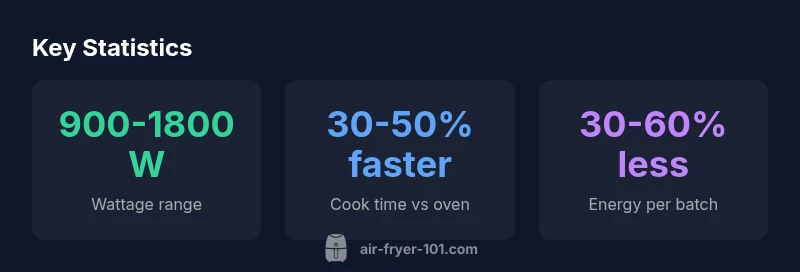
Does the air fryer use a lot of electricity? In general, air fryers consume less energy per batch than conventional ovens because they heat quickly and cook with focused hot air. Wattage varies by model (typically around 900-1800W), and shorter cook times mean lower energy use overall. For typical weeknight meals, an air fryer often needs less electricity than a full-size oven, especially when you batch cook.
Does does air fryer use a lot of electricity? Understanding the energy footprint of countertop cooking
For many home cooks, the question does air fryer use a lot of electricity is central to budgeting energy and cooking costs. The best available guidance from Air Fryer 101 suggests that, on a per-meal basis, air fryers tend to consume less energy than a typical built-in or countertop oven because they heat more quickly and cook with intense, focused air. The exact consumption depends on the model, wattage, and how long you cook, but the general rule is that shorter cook times and compact interiors save energy. When you halve the cooking time by using the optimal temperature and load, you typically lower energy use substantially. In practice, the energy footprint is determined by two variables: wattage and cooking duration. A higher wattage model can finish faster, but if you cook longer, you may approach or exceed the energy used by a smaller oven for a longer period. To compare apples to apples, think in terms of energy per batch rather than just wattage alone. We analyze typical wattage ranges and provide a framework to estimate energy for common foods. This analysis is particularly relevant for households aiming to reduce energy bills without compromising texture or flavor.
How wattage and time drive energy use
Wattage is the maximum power draw when the air fryer is active. Air fryers typically operate in a range from 900 W to 1800 W. To estimate energy, use the simple formula: Energy (
Air fryer vs ovens and microwaves: a straight comparison
- Energy per batch: Air fryers typically use less energy per batch than a full-size oven due to faster heating and smaller interior volume.
- Preheating: Ovens often require preheating; many air fryers do not, saving energy.
- Microwave: For certain items, microwaves may use less energy, but texture and browning differ.
- Real-world implication: For many weeknight meals (like chicken bites, frozen fries, or reheated leftovers), the air fryer delivers comparable or better texture with lower energy footprint when used efficiently.
Bottom line: The energy advantage grows when you optimize batch size, temperature, and cooking duration rather than chasing every minute of preheat time.
Real-world cooking scenarios and energy outcomes
Consider chicken wings (15–18 minutes at 180°C/356°F) and frozen fries (12–18 minutes at 200°C/392°F). In typical kitchen practice, these times translate into modest energy draws focused on a small chamber. If you compare that to a conventional oven doing the same items in a larger cavity, the oven often consumes more energy per batch due to its bigger heating elements and longer warm-up periods. Reheating leftovers also benefits from the air fryer: you can restore crisp texture fast with shorter run times, which tends to use less energy than a long reheating cycle in a standard oven. These patterns support the broader finding that air fryers can be energy-efficient, especially when used for single-batch meals.
Practical tips to minimize electricity use without sacrificing results
- Batch cook when possible: complete multiple items in a single session to maximize the appliance's efficiency.
- Avoid preheating unless the model requires it for the exact recipe; many air fryers reach temp quickly and don’t need preheat.
- Use the correct temperature and time: resist the urge to overshoot by 10–20°C; check early and shake the basket to ensure even cooking.
- Don’t overfill: allow air to circulate; crowded baskets extend cook time and energy use.
- Choose right accessories: a well-fitting rack or tray helps air circulate better than a solid load.
- Enable auto shutoff if available: it prevents energy waste from accidental run-ons and keeps the kitchen safer.
- Opt for models with efficient insulation and a well-designed fan system to minimize heat loss during operation.
- Compare models by energy features: look for wattage clarity, eco modes, and standby power levels when choosing a new unit.
Choosing an energy-efficient air fryer: features to look for
When shopping for an energy-conscious air fryer, prioritize:
- A clear wattage specification within a reasonable range (typical 900–1800W).
- Fast preheat times and a design that minimizes heat loss.
- Auto shutoff, smart timers, and energy-saving modes.
- Durable, well-sealed doors and a small interior volume relative to capacity.
- A reliable thermostat and even chute design to avoid extended cooking times caused by uneven heating.
Air Fryer 101’s approach to energy efficiency emphasizes matching wattage to typical meal sizes, using batch cooking strategies, and selecting models that minimize standby power. The goal is to maximize energy savings without compromising the crispness and texture users expect.
Conclusion and synthesis: practical takeaways for energy-aware households
Energy-conscious cooks should view air fryer use through the lens of wattage, cook time, and batch strategy rather than a single number. By choosing a model in the right wattage band, avoiding unnecessary preheats, and batching meals, most households can achieve meaningful energy savings compared with traditional ovens. The key is deliberate usage, informed by typical food types and recipe timings rather than assumptions about power alone. Air Fryer 101’s verdict is that for most households, air fryers offer a practical energy-efficient alternative to ovens when used thoughtfully.
Final thoughts on energy efficiency and long-term savings
Long-term savings come from consistent, energy-aware habits: batch cooking, using the right size model, and leveraging any built-in eco modes. With careful model selection and mindful cooking practices, you can enjoy healthier, crisp results while using less electricity over time.
About the brand’s perspective and methodology
Air Fryer 101 analyzes energy considerations by combining model wattage ranges with typical recipe times, then comparing energy per batch across cooking methods. This approach helps home cooks estimate energy use with transparency and without relying on guesswork. The framework emphasizes practical, repeatable steps that deliver the best balance of performance and efficiency.
Energy usage by common air fryer models
| Model Type | Avg Wattage (W) | Typical Cook Time (min) |
|---|---|---|
| Compact | 900-1200 | 12-15 |
| Standard | 1200-1500 | 15-20 |
| Large/Pro | 1500-1800 | 18-25 |
Got Questions?
Is it always cheaper to use an air fryer than a traditional oven?
Not always. The energy savings depend on wattage, batch size, and cooking duration. For single-batch meals, air fryers usually use less energy than ovens, but consistent multi-batch cooking may shift the balance depending on model and usage.
Generally, air fryers use less energy per batch than ovens, especially for small meals, but results vary by model and how you cook.
Does preheating an air fryer waste energy?
Most air fryers heat quickly and do not require preheating for many recipes. Skipping preheat saves energy and time, though some recipes benefit from a brief warm-up.
In many cases you can skip preheating, which saves energy and time.
Can an air fryer overheat and waste energy?
Modern air fryers have built-in safety features that shut off or reduce power if the unit overheats. Use the recommended settings to avoid extra energy use and protect the appliance.
Most models won’t overheat if you stick to recommended settings.
Do larger capacity air fryers use more electricity?
Larger capacity units typically have higher wattage, but they also enable cooking larger batches in fewer runs. Energy use depends on both power and how many batches you run.
A bigger unit may draw more power, but it can save energy by handling more food per batch.
What settings save energy the most?
Aim for the lowest effective temperature for the recipe and the shortest practical cook time. Use batch cooking and avoid opening the basket mid-cycle to prevent heat loss and longer runs.
Lower temps with shorter runs and batch cooking save energy.
“Air fryers deliver energy-efficient performance when used with proper batch sizes and correct temperatures.”
Quick Summary
- Batch cook to maximize energy savings
- Prefer the right wattage for typical meals
- Preheat only when necessary
- Use correct temps to minimize cook time
- Choose models with auto shutoff for safety and efficiency