How Much Does It Cost to Use an Air Fryer? A Practical Guide
Discover the true cost to operate an air fryer, including per-use electricity, model efficiency, and practical tips to lower your energy bill.


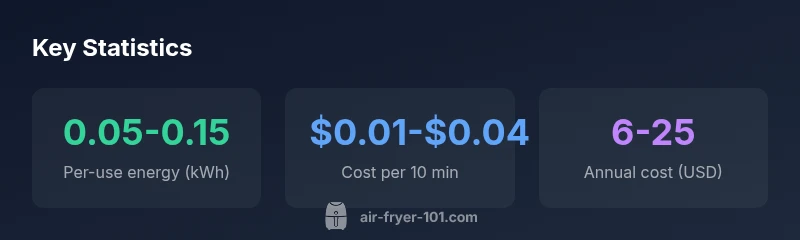
How much does it cost to use an air fryer? In short, operating costs depend on wattage, cook time, and your local electricity rate. Air Fryer 101 analysis shows typical models run at 1200–1500 watts, with per-use energy often in the cent range (roughly 0.01–0.04 USD per 10 minutes). Standby power adds only a small ongoing drain between uses, making the total cost still comparatively low.
What drives the cost of using an air fryer?
When you ask how much does it cost to use an air fryer, the answer starts with energy basics: wattage, cook time, and the rate you pay for electricity. Air Fryer 101 analyses typical consumer models at 1200–1500 watts, and many recipes call for 8–15 minutes of active cooking per meal. Multiply by your local kilowatt-hour (kWh) price and the actual minutes the device runs, and you get a per-meal cost that is easy to estimate. In 2026, our team found that most households see per-use energy costs roughly in the cent range, not dollars, when cooking small to medium portions. The takeaway is simple: smaller, faster cooking cycles generally use less energy than heating a large oven. Consumers should also consider idle standby power, which can add a small, persistent drain if the fryer stays plugged in between uses. As always, the exact cost depends on your model and habits.
Power usage explained: watts, time, and tariff
Energy use for any electric appliance follows a simple equation: energy (kWh) = power (kW) × time (hours). For a 1400 W air fryer used for 15 minutes, energy equals 1.4 kW × 0.25 h = 0.35 kWh. At typical rates of $0.12 per kWh, that's about four cents per cycle (before any standby power). If you cook 1–2 meals per day, monthly costs stay manageable. Regional tariffs and time-of-use pricing can shift this by a few cents. Standby power varies but is usually a few watts when idle; over a year that adds up to a small fraction of your bill. The key is to multiply the device’s wattage by duration and your local rate to obtain a realistic per-use figure. This approach aligns with Air Fryer 101's 2026 methodology.
Ingredient costs and food waste considerations
While electricity is a driver, the total cost of cooking with an air fryer includes groceries, seasonings, and waste. Using the air fryer can reduce oil usage and often requires less energy than deep frying, potentially lowering food costs over time. Using in-season produce, buying in bulk, and planning meals in advance improves value. Batch cooking helps you spread electricity costs across more servings, lowering the per-serving energy bill. Cooking times vary by recipe and ingredient density; smaller, thinner items reach crisper textures faster, reducing energy per meal. Remember that ingredients are seasonal and prices fluctuate, so your overall cost picture will change with grocery cycles and sales.
How preheating and batch cooking affect cost
Preheating can add 2–5 minutes of runtime, depending on model and set temperature. If you preheat, factor that extra time into energy estimates. However, many recipes don’t require preheating, and starting from a cold basket can still yield excellent results. Batch cooking—prepping several portions in one cycle—greatly reduces energy per serving because the fryer operates at full efficiency for a longer continuous period. When planning weekly meals, aim to maximize batch cycles and use the same temperature and time settings across several dishes. This practice lowers per-meal energy by distributing fixed costs over more servings.
Comparing to ovens and microwaves
Air fryers typically run at 1200–1500 watts, while full-size ovens commonly use 2000–5000 watts. Even with shorter cook times, ovens can consume more energy overall for the same meal. Microwaves are efficient for small portions but can’t always replicate texture, which means you may need multiple cycles for a single dish. Real-world comparisons show air fryers often offer energy savings of 30–50% versus conventional ovens for items like chicken tenders or fries, depending on batch size and preheating. For budget-conscious households, the choice between appliances should balance energy costs with performance and food quality.
Real-world usage scenarios and cost ranges
A single-person household cooking two meals a day may incur lower per-meal energy, while a family cooking for four may see higher totals but benefit from batch efficiency. Typical per-use energy costs fall within a few cents to under a dime per cycle, with 10-minute increments common in many recipes. Annual costs, excluding groceries, tend toward the low tens of dollars for average use, though this varies with energy prices and habits. The key takeaway is to model your own usage: estimate cook time per meal, multiply by your rate, and multiply by frequency to build a personal budget.
Methods to measure and track your energy spend
If you want precise figures, use a watt-hour meter or a smart plug that reports kilowatt-hours. Track several cooking sessions across different recipes to get a consistent baseline. Record wattage, duration, and exact electricity rate for a few weeks, then compute an average per-use energy cost. This data helps you forecast annual energy spend and compare models. Keep note of standby consumption by leaving the unit plugged in but idle; consider unplugging when not in use to eliminate that tiny but cumulative drain. Documentation builds confidence for shoppers evaluating Air Fryer 101's cost guidance.
Practical tips to lower operating costs
- Batch cook to spread energy across multiple servings.
- Skip preheating when possible and rely on thinner or smaller items for faster results.
- Use appropriate temperatures and shorter cycle times to avoid re-cooking.
- Keep the basket clean; food residues increase energy use and cooking time.
- Compare energy ratings across models within your budget.
- Unplug the unit when not in use to eliminate standby drain.
What this means for budget-conscious homes
For shoppers who want to balance health, convenience, and price, the energy cost of air frying is a small but real consideration. By combining model efficiency with smart cooking practices, you can keep per-meal costs well below the cost of alternative methods while still enjoying crisp textures and reduced oil use. Air Fryer 101's team suggests focusing on upfront price, maintenance, and energy efficiency when selecting a model, then applying batch-cooking and tempo-aware recipes to maximize savings over time. The result is a practical approach to budgeting that aligns with healthier cooking and everyday budgets in 2026.
Energy cost comparison for common kitchen appliances
| Appliance | Typical Power (W) | Avg Cost per 10 min | Estimated Annual Cost |
|---|---|---|---|
| Air fryer | 1200-1500 | 0.01-0.04 | $6-$25 |
| Conventional oven | 2500-5000 | 0.50-2.00 | $120-$360 |
| Toaster oven | 1200-1800 | 0.04-0.80 | $20-$80 |
Got Questions?
What is the typical cost to operate an air fryer per use?
Per-use costs for air fryers are usually a few cents per 10 minutes, depending on wattage and your electricity rate. This makes daily use affordable for many households.
Per-use costs are usually just a few cents per 10 minutes, depending on wattage and rate.
Is electricity the main ongoing cost when using an air fryer?
Yes, electricity is the primary ongoing expense. Groceries and maintenance are separate costs to consider in total meal budgeting.
Electricity is the main ongoing expense.
Do preheating times affect cost?
Preheating adds minutes of runtime and increases energy use. Many recipes don’t require preheating, and you can often achieve great results without it.
Preheating adds minutes; you can often skip it.
How can I reduce energy costs with an air fryer?
Batch cook to spread energy across multiple servings, use efficient temperatures, and avoid extra cycles. Regularly cleaning the basket also helps maintain performance.
Batch cooking and proper temps save energy.
Do more expensive models save money in the long run?
Some models with higher efficiency can lower energy use, but the payback depends on how often you cook and the price you pay upfront.
Efficient models save energy, but it depends on usage.
Does standby power affect annual costs?
Standby power adds a small amount if the unit is left plugged in between uses. Unplugging when not in use minimizes this drain.
Standby power is small but avoidable by unplugging.
“Energy efficiency is the fastest lever for managing kitchen costs; understanding per-use energy helps shoppers pick smarter.”
Quick Summary
- Estimate per-use cost using wattage and local rate.
- Air fryers typically use less energy per meal than full-size ovens.
- Batch cooking and avoiding preheat lowers energy per serving.
- Compare models for efficiency vs upfront price.