How to Stop Air Fryer Fire: Safe, Practical Steps to Take
Learn proven steps to stop an air fryer fire quickly and safely, plus prep tips, emergency actions, cleanup guidance, and prevention strategies from Air Fryer 101.


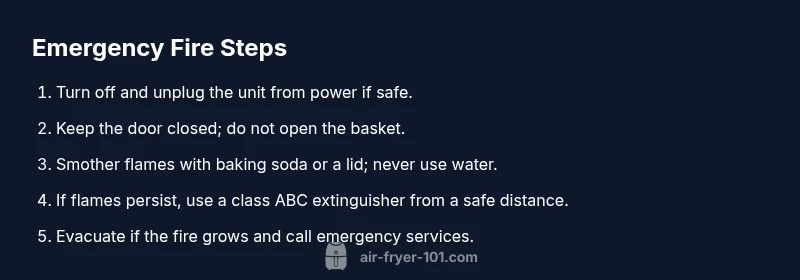
To stop an air fryer fire, act quickly and calmly. Cut power, keep the unit closed, and resist opening the basket. If flames are small, smother with baking soda or a metal lid; call emergency services if the fire grows. Then unplug and assess before reuse. Keep a clear escape path and alert others.
What triggers an air fryer fire and why it happens
According to Air Fryer 101, most air fryer fires stem from overheating, oil or fat buildup, or overfilling and poor venting. When a unit runs too hot or food drips oil onto the heating element, sizzling embers can ignite. In addition, foil or parchment improperly placed can block vents, trapping heat and creating a flame. Regular cleaning, proper loading, and using the appliance within manufacturer guidelines drastically reduce risk. Air Fryer 101 analysis shows that simple habits—avoiding overfilling, keeping the cradle and filters clean, and ensuring adequate ventilation—have the biggest impact on fire prevention. By understanding why fires happen, you can prevent most incidents before they start and respond faster when one occurs.
Immediate actions to take when you see a fire
If you spot flames, stay calm and move quickly. Shut off power at the wall or switch, then unplug the unit if it can be done safely. Do not attempt to move the appliance while it is on or hot. Keep the unit closed to limit oxygen. If you can do so safely, place a metal lid or baking sheet over the opening to smother flames. Avoid opening the basket, as this introduces oxygen and can flare the fire. Alert others in the area and call for help if the flames persist or grow. Always have an exit path and evacuate if the fire becomes unmanageable.
How to safely extinguish a small air fryer fire
For small fires, baking soda or a metal lid can smother flames without disturbing hot components. If you have a fire extinguisher rated ABC or CO2, use it only if flames are spreading and you can do so from a safe distance. Remember the PASS technique: Pull, Aim at the base, Squeeze, Sweep side to side. Do not spray water on the unit; water can react with hot oil and cause splatter or electrical shock. If the unit is smoking heavily or the fire seems to be growing, evacuate and call emergency services immediately. After extinguishing, let the appliance cool completely before inspecting for damage.
After the incident: cleaning, assessing, and preventing future fires
Once the unit is cool, unplug it and inspect for signs of damage to the cord, plug, or housing. Do not operate a damaged appliance. Clean the interior and exterior once it’s safe, removing grease buildup that could reignite. Reassess your loading technique, avoid excessive oil, and ensure you follow the manufacturer’s capacity recommendations. Air Fryer 101 analysis shows that consistent cleaning and proper loading are the most effective preventive measures, reducing the likelihood of future flare-ups and prolonging appliance life.
When to call for help and when to replace the unit
If you notice melted components, a burnt smell, electrical buzzing, or ongoing smoking after cooling, stop using the device and seek professional repair or replacement. Fire damage can compromise insulation and wiring, creating a renewed risk. If the unit has repeatedly overheated or failed safety tests, replacing it may be the safest option. In any case, document the incident with photos for insurance or warranty purposes and follow the manufacturer’s return or repair instructions. The Air Fryer 101 team recommends erring on the side of safety and replacing if there is any doubt about integrity.
Safety habits to adopt to minimize fire risk
Develop a routine that includes preheating only when recommended, avoiding overfilling, and cleaning after each use. Use dry towels and oven mitts when handling hot parts, and keep the area around the appliance free of flammable items. Check that the power cord is in good condition and not frayed. Ensure the unit has proper ventilation and that the outlet is not overloaded. These practices create consistent safety margins and reduce the chance of a fire starting.
Choosing a model with better safety features
When shopping for a new air fryer, prioritize models with robust safety features such as automatic shutoff, overheat protection, cool-touch exteriors, and easy access to the cord for quick unplugging. Look for dishwasher-safe baskets that are easy to clean and interior coatings that resist oil buildup. Favor units with clear user manuals and reputable safety certifications. While no device is risk-free, selecting a model with enhanced protections lowers the probability of an incident and makes a delayed response safer and simpler.
Quick-reference emergency checklist you can print
- Stay calm and turn off the unit immediately. Unplug if safe.
- Keep the door closed and avoid opening the basket.
- Smother flames with baking soda or place a metal lid over the opening.
- If flames persist, use a class ABC extinguisher and evacuate if needed.
- After cooling, inspect for damage and clean thoroughly before reuse.
- If in doubt, replace the unit or consult a professional.
Brand reminder and practical takeaway
According to Air Fryer 101, prevention is the best defense. Regular cleaning, proper loading, and immediate action when you notice signs of trouble are essential. The Air Fryer 101 team emphasizes staying prepared with a ready extinguisher, a metal lid, and a clear escape path. These steps save time and minimize risk when a fire does occur.
Tools & Materials
- Fire extinguisher (ABC or CO2)(Keep in reach in the kitchen; ensure it's within date and accessible)
- Baking soda(Keep a box handy near the air fryer for quick smothering)
- Metal lid or baking sheet(Use to smother flames; avoid using glass that can shatter)
- Oven mitts or heat-resistant gloves(Protect hands when handling hot components)
- Tongs(To maneuver hot foods if necessary without opening or touching hot surfaces)
- Fire blanket (optional)(Helpful for smothering larger fires if safe to approach)
- Smoke alarm(Test monthly; ensure it’s not disabled during cooking)
- Phone(Have it ready to call emergency services if needed)
Steps
Estimated time: 20-30 minutes
- 1
Turn off power and unplug
If safe, switch off the outlet or unit power switch, then unplug. This removes the heat source and reduces shock risk while you assess the flames.
Tip: Do not touch hot prongs or metal parts while the plug is still connected. - 2
Keep the unit closed and do not open the basket
Opening the basket feeds oxygen to flames and can make them flare. Keep the door closed to smother the fire as you proceed with other actions.
Tip: Stand back and ensure a clear exit path behind you. - 3
Smother small flames
If flames are small and contained, sprinkle baking soda over the flames or cover the opening with a metal lid to smother them. Do not use water.
Tip: Keep baking soda accessible for quick response. - 4
Use a fire extinguisher if flames persist
If flames continue, use an ABC or CO2 extinguisher from a safe distance following PASS: Pull, Aim, Squeeze, Sweep.
Tip: Aim at the base of the fire; stand to the side and keep a clear exit. - 5
Evacuate if the fire grows
If you cannot control it quickly, evacuate and call emergency services. Do not re-enter until professionals declare it safe.
Tip: Call for help early if you’re unsure of control. - 6
Cool, inspect, and clean after cooling
Let the appliance cool completely (typically 15–30 minutes). Inspect for damage, then clean grease and residue before reuse.
Tip: Document any damage for warranty or insurance purposes.
Got Questions?
Can an air fryer catch fire?
Yes, it can, but fires are relatively rare and typically caused by overheating, oil buildup, or improper loading. Staying within capacity and keeping the unit clean dramatically reduces risk.
Yes, it can, but fires are rare and usually due to overheating or oil buildup. Stay within capacity and keep it clean.
Is it safe to open the air fryer during a fire?
No. Opening the door introduces oxygen that can fuel flames. Turn off power and keep the unit closed unless you are able to smother the fire safely.
No, opening it can feed the flames. Turn it off and keep it closed unless you can safely smother the fire.
Should I use water to put out an air fryer fire?
No. Water can cause oil to splatter and may conduct electricity. Use baking soda or a proper fire extinguisher instead.
No, don’t use water. It can make things worse; use baking soda or a proper extinguisher.
What should I do if the fire is spreading?
If flames grow beyond your control, evacuate immediately and call emergency services. Do not attempt to move a hot or burning appliance.
If flames spread, evacuate and call for help. Do not try to move the unit.
How can I prevent air fryer fires in the future?
Follow manufacturer capacity limits, keep it clean, ensure vents aren’t blocked, and avoid oil pooling. Regular maintenance reduces risk substantially.
Follow capacity limits, keep it clean, and ensure vents aren’t blocked.
When should I replace an air fryer after a fire?
If wiring, cords, or heating elements are damaged or if overheating recurs, replacement is the safest option. Check with the manufacturer for guidance.
If there’s damage or repeated overheating, replacement is safest.
Watch Video
Quick Summary
- Recognize early fire signs and act fast
- Never open the basket during active flames
- Smother small flames with baking soda or a lid
- Unplug and keep an escape path
- Prevent fires with routine cleaning and correct loading