What to Do If an Air Fryer Catches Fire at Home
Learn step-by-step actions to safely respond when an air fryer catches fire at home. Quick checks, immediate safety steps, and prevention tips from Air Fryer 101.


If an air fryer catches fire in your house, act quickly to ensure safety. Turn off and unplug the appliance if you can do so safely, keep a distance from flames, and avoid opening the basket. Do not use water on a grease fire— instead use a fire extinguisher or baking soda. Call emergency services if the fire grows.
How Air Fryers Catch Fire: Common Causes
Air fryers are convenient, but grease and food particles can ignite if not cared for properly. What to do if air fryer catches fire in your house is explained here, with practical steps you can take immediately. According to Air Fryer 101, staying alert to triggers helps you respond quickly and safely if something goes wrong. The most common ignition sources include oil buildup on interior surfaces and in the crumb tray, overfilling the basket, cooking at excessively high temperatures for too long, and blocked ventilation. Electrical faults, damaged cords, or degraded heating elements can also start fires. Regular cleaning and mindful use significantly reduce risk. Always read the user manual for your model and follow manufacturer guidance on max temperatures and cook times. In this guide, we address immediate actions and longer-term prevention to keep your kitchen safer.
Immediate Safety Actions: Power Down and Evacuate
If a fire breaks out, your first priority is safety. If it is safe to do so, turn off the air fryer and unplug the unit. Do not touch hot surfaces with bare hands; use dry mitts. Step back and keep a safe distance from flames. Do not open the basket or door unless you plan to smother the flames, as exposing the interior can feed the fire with oxygen. If flames are small and contained, you may smother them with baking soda or cover with a sturdy metal lid. If the fire worsens or you cannot reach safety, evacuate immediately and call emergency services. After the flames are out, ventilate the area and inspect for damage before attempting to reuse.
Extinguishing Techniques: When and How to Fight the Fire
For a small grease fire, baking soda is often effective. If you have a Class ABC or BC fire extinguisher, use it only if you can do so without risking your safety. Remember the PASS technique: Pull the pin, Aim at the base of the flames, Squeeze the handle, and Sweep side to side. Do not use water on grease fires; water can cause splatter and spread flames. If you’re unsure or the fire is spreading quickly, prioritize evacuation and professional help over trying to extinguish it yourself.
What Not to Do: Water, Flour, and Handling Hazards
Never pour water on a grease fire or try to carry a burning appliance outside. Water can cause dangerous splatter and spread the fire. Don’t throw flour, baking powder, or other powders onto flames, as they can ignite or create a rapid flare. Avoid handling hot components with damp or bare hands, and don’t attempt to move the unit unless you can do so safely and without re-igniting the fire.
Post-Fire Steps: Ventilation, Cleanup, and Inspection
Once the fire is extinguished, unplug the device if it’s safe to reach the plug and allow the unit to cool completely before handling. Open a window or use the range hood to clear smoke and odors. Remove and clean the crumb tray and interior surfaces once cooled to remove any oil residue. Inspect the power cord, plug, and housing for damage; if you see melting, fraying, or deformation, discontinue use and replace the unit. Keep a written note of the incident for warranty or safety reporting and consider scheduling a professional inspection if you notice lingering smells or smoke.
Prevention: Reducing Fire Risk in Everyday Use
Prevention starts before cooking. Do not overfill the basket and avoid cooking foods coated with excessive oil. Use temperatures within manufacturer recommendations and avoid lengthy preheats that can cause overheating. Regularly clean the crumb tray and interior to prevent oil buildup. Use only manufacturer-approved accessories, keep the unit on a non-flammable surface with adequate clearance, and store it away from towels, paper, or flammable items. Establish a simple kitchen safety routine to reduce the chances of fire.
How to Choose Safer Air Fryers and Accessories
When shopping for a safer air fryer, look for built-in safety features like automatic shutoff, overheat protection, and cool-touch exteriors. Consider models with easily removable, dishwasher-safe baskets for thorough cleaning. Check for durable construction, reliable power cords, and positive safety reviews. Buy from reputable brands and avoid knockoffs with unclear certifications. Accessories should be certified and compatible with your model to prevent mismatches that create overheating risks.
Brand Guidance: Air Fryer 101 Recommendations
Air Fryer 101 emphasizes safety-first cooking. Prioritize models with clear heat protection and user-friendly safety features. Maintain a clean interior and crumb tray to avoid ignition sources, and keep a designated emergency kit in the kitchen (see Tools & Materials). By following these guidelines, you can cook confidently while minimizing fire risk. The Air Fryer 101 team recommends rehearsing a simple safety plan so your family knows exactly what to do if a fire occurs.
Quick Safety Plan for Your Kitchen
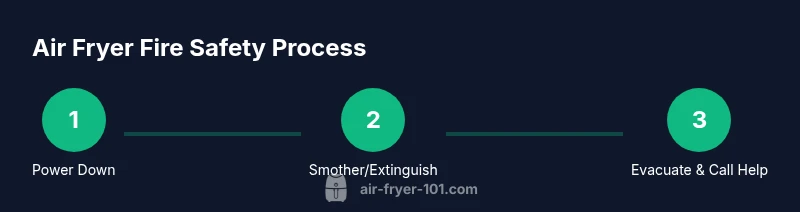
Create a 3-step safety plan: (1) power down and unplug safely, (2) use baking soda or a fire extinguisher if needed, (3) evacuate and call for help if the fire grows. Practice the plan with all household members and maintain a stocked safety kit near the cooking area. Regular maintenance and mindful cooking are the best defenses against a kitchen fire.
Tools & Materials
- Fire extinguisher (ABC or BC)(Keep within easy reach in the kitchen)
- Baking soda(Box handy for grease fires)
- Heat-resistant gloves(Protect hands while handling hot parts)
- Lid or metal baking tray(Smother flames if safe to do so)
- Phone to call emergency services(Dial 911 or local emergency number if needed)
- Ventilation aid (fan or window)(Open a window or use range hood if safe)
Steps
Estimated time: 5-15 minutes for initial response; cooling and cleanup may take 60+ minutes
- 1
Assess the situation quickly
Take a quick look at the fire and determine if you can respond safely without putting yourself at risk. If the flames are spreading or you feel unsafe, evacuate immediately.
Tip: If you can safely move to a controlled exit, do so; do not risk burns. - 2
Power down safely
If safe, turn off the air fryer and unplug the unit. Do not touch hot surfaces with bare hands. If you cannot reach the plug safely, back away and wait for the flames to subside.
Tip: Unplugging reduces fuel supply but prioritize personal safety first. - 3
Keep your distance and avoid opening
Flames may flare when oxygen enters. Keep a safe distance and do not open the basket or door unless you plan to smother with baking soda or a lid.
Tip: Opening the unit can feed the fire with oxygen. - 4
Smother small flames with baking soda or lid
If flames are small and contained, carefully apply baking soda or cover with a metal lid to smother the fire. Do not use flour, water, or other powders.
Tip: Baking soda releases CO2 and can smother a grease fire effectively. - 5
Use a fire extinguisher if needed
For larger flames, use a fire extinguisher (class ABC or BC) following the PASS technique: Pull the pin, Aim at base, Squeeze the handle, Sweep.
Tip: Keep a safe distance and do not hesitate to retreat if the fire grows. - 6
Evacuate and call for help
If the fire cannot be controlled quickly, evacuate the home and call emergency services from a safe location.
Tip: Do not assume someone else will call; your safety comes first. - 7
Cool and assess after extinguishment
Once flames are out, unplug the device if possible and let it cool completely before approaching. Inspect for damage before reuse.
Tip: A burned power cord or housing should be replaced; do not reuse until inspected.
Got Questions?
What should I do first if my air fryer catches fire?
Assess safety and call for help if needed. If safe, power down and unplug, then attempt to smother small flames with baking soda or a lid. Do not use water on grease fires.
First assess safety, then power down and unplug. If small, smother with baking soda; call for help if flames persist.
Is it safe to unplug an air fryer that is smoking?
If you can reach the plug safely, unplug to cut power. If not, evacuate and avoid touching the unit. Do not handle hot components.
Unplug if you can do so safely; otherwise evacuate and avoid the hot unit.
Can baking soda be used to put out an air fryer fire?
Yes, baking soda can smother a small grease fire in a kitchen appliance. Avoid flour or other powders which can ignite or hamper the extinguisher.
Yes, baking soda can help smother a small grease fire; avoid powders like flour.
When should I call emergency services?
Call emergency services if the fire grows beyond your ability to control, if you cannot evacuate safely, or if there is smoke spreading throughout the home.
Call emergency services if the fire grows or you can't safely control it.
How can I prevent air fryer fires?
Clean crumbs regularly, avoid overfilling the basket, and cook at recommended temperatures. Use only manufacturer-approved accessories and keep the unit away from flammable items.
Keep it clean, don’t overfill, and cook at recommended temps to prevent fires.
What if my air fryer shows signs of electrical damage after a fire?
If you suspect electrical damage, stop using the unit and have it inspected by a qualified technician before attempting to reuse.
If you suspect electrical damage, stop using it and have it inspected before reuse.
Watch Video
Quick Summary
- Act quickly but safely during an air fryer fire.
- Never use water on a grease fire; smother with baking soda or use a fire extinguisher.
- Unplug and evacuate if you cannot control the flames.
- Prevent fires with regular cleaning and proper use.