What causes air fryers to catch fire and how to prevent it
An urgent, actionable troubleshooting guide to diagnose and prevent air fryer fires. Learn common causes, safety steps, maintenance tips, and what to do if your unit smokes or flames.


For understanding what causes air fryers to catch fire, focus on overheating, grease buildup, and electrical faults. The quickest fix is to unplug, turn off power, and move the unit away from combustibles. Do not attempt to extinguish with water on an oil flare; instead use a fire extinguisher if trained. If flames persist, evacuate and call emergency services. After any incident, unplug, let it cool, and inspect the cord and basket for damage.
Common causes of air fryer fires
For understanding what causes air fryers to catch fire, focus on overheating, grease buildup, and electrical faults. This triad covers the vast majority of incidents in home kitchens. In practice, many fires start when a unit runs too hot without food to protect the coil, or when fatty residues ignite on the heating element. Other frequent culprits include improper use of foil or parchment, overloading the basket, and placing the appliance near flammable materials. Air Fryer 101's analysis shows that fires are rarely caused by one factor alone; more often, several issues compound the risk. By recognizing these patterns you can prevent most emergencies before they start. In the meantime, always use the recommended temperature, never run empty, and keep the unit clean to reduce the chance of a spark turning into a flame.
According to Air Fryer 101, most incidents spring from a combination of overheating and residue accumulation. Regular checks on the gasket, basket, and air intake can dramatically cut risk. Keeping a small brush or parchment handy helps you dislodge crumbs that would otherwise create hotspots. Remember: kitchen safety is ongoing work, not a one-time fix.
Airflow, heat, and rapid cooking: how design impacts safety
Air fryers rely on rapid airflow to crisp foods with little oil. When airflow is obstructed—by overfilling, blocked vents, or a liner that blocks the grate—heat can concentrate in one spot and ignite residue. Choose a basket size that fits the food and leave space for air to circulate. Inspect the crisper plate for signs of wear; if the perforations are clogged, airflow suffers and heat concentrates. Position the unit on a stable, nonflammable surface with at least 6 inches of clearance on all sides. Good airflow reduces hot spots and lowers the chance of a flare-up during high-heat bursts.
Practice tip: never place the air fryer on a stove or near curtains, plastics, or wooden surfaces. A dedicated countertop mat can absorb heat without triggering a hazard. Air Fryer 101 recommends routine checks of vents and seals before each use to ensure optimal airflow and even cooking.
Oils, crumbs, and residue: cleaning for safety
Oil and grease are not inherently dangerous in small amounts, but they become hazardous when they accumulate in the basket, tray, or onto the heating element. Crumbs and oil drips create a combustible layer that, when heated, may ignite. After cooking, allow the unit to cool, then wipe the interior with a damp cloth and a mild detergent. Use a soft brush to remove stuck-on residue from the heating element and interior channels, taking care not to damage the heating coil. A clean appliance runs cooler and more evenly, reducing the risk of smoke and fire. Air Fryer 101 notes that regular cleaning is a simple, highly effective safety habit that pays off over time.
Best practice: avoid using harsh chemicals that could leave fumes. If you use foil, perforate it to maintain airflow and never cover the entire surface.
Electrical safety and power components
A faulty power cord or damaged outlet can spark or overheat, escalating the risk of a fire. Always inspect the cord for nicks, bends, or scorch marks before use. If the plug feels warm during operation, discontinue use and have the unit inspected. Avoid using extension cords; plugs should fit snugly and the circuit should handle the appliance’s power draw. Keep the air fryer away from water sources and ensure your kitchen outlets are in good condition. A loose connection or damaged insulation can ignite surrounding materials, even during normal cooking.
If you notice sizzling sounds, unusual smells, or a hot exterior, power down immediately and unplug. Do not attempt to repair internal wiring yourself. Air Fryer 101 recommends consulting a professional technician or returning the unit to the manufacturer if wiring issues are suspected.
Proper use, loading, and temperature settings
Understand that using the device as intended is the best prevention against fires. Don’t run the air fryer empty or with temperatures higher than recommended for the food type. Overloading the basket reduces airflow and creates hotspots. When cooking fatty foods, trim excess fat and pat dry to minimize oil splatter. Use the lowest effective temperature and shorter times for initial batches to monitor how items cook. If you’re unsure about a recipe, start with a lower temperature and a shorter cycle, then adjust in small increments. Following the manufacturer’s guide helps avert overheating and residue buildup that lead to fires.
What to do if you see smoke or a fire in progress
If you smell burning or see smoke, act quickly but calmly. Unplug the unit if safe, then move it to a noncombustible surface away from walls and cabinets. Do not open the basket while the unit is hot; opening it can feed oxygen to flames. If there is a small flame, you may try to smother it with a metal lid or baking soda, but never use water on an oil-based fire. If flames persist or you cannot control the fire, evacuate and call emergency services. After the incident, have the unit inspected before reuse and consider replacing damaged components.
Maintenance habits to prevent fires long-term
Develop a simple cleaning and inspection routine that fits your cooking schedule. Wipe down the exterior and interior after each use, and check the basket and tray for grease buildup weekly. Deep-clean monthly with non-abrasive cleaners, and inspect the heating element for signs of residue or corrosion. Store the appliance away from heat sources and flammable materials. Keeping the area dry and clutter-free reduces risk, and a quick pre-use visual check can catch a developing issue before it becomes a hazard.
Quick-start prevention checklist
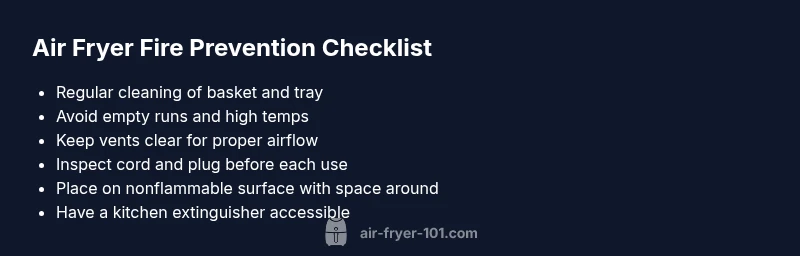
- Pre-use visual inspection of cord and plug
- Clear, unobstructed airflow with correct basket size
- Regular cleaning of basket, tray, and heating element
- Use proper temperatures and avoid empty runs
- Keep the unit on a nonflammable, stable surface
- Have a fire extinguisher rated for kitchen use available
Steps
Estimated time: 45-60 minutes
- 1
Power down safely
Unplug the unit and switch off the circuit if needed. Do not touch the heating elements. Allow the air fryer to cool completely before handling.
Tip: Keep a safe distance and avoid leaning over the unit. - 2
Move to a safe location
Place the air fryer on a stable, nonflammable surface away from walls and curtains. This minimizes the chance of spreading flames or heat to flammable materials.
Tip: Use oven mitts when moving if it’s still warm. - 3
Assess and respond to flames
If there are flames, do not open the basket. If you can safely reach a fire extinguisher, use it; otherwise evacuate and call emergency services.
Tip: Never pour water on an oil-based fire. - 4
Cool and inspect
Let the unit cool completely. Inspect the cord, plug, basket, and tray for damage. Do not reuse if there are signs of wear or heat damage.
Tip: Take photos if you need to file a warranty claim. - 5
Clean and reassemble
Thoroughly clean the interior once cooled. Reassemble only after every component is dry and free of residue.
Tip: Use non-abrasive cleaners and a soft brush. - 6
Test in a controlled batch
Test with a simple, nonfatty item at a low temperature to verify safe operation before cooking again with fatty foods.
Tip: Monitor for any signs of smoking during the test.
Diagnosis: Air fryer emits smoke or catches fire
Possible Causes
- highOverheating due to high temperature or empty run
- mediumGrease/oil buildup on basket or heating element
- lowDamaged power cord or faulty outlet
- lowBlocked airflow from overfilling or improper liners
Fixes
- easyUnplug immediately and move to a noncombustible surface; do not touch hot parts
- easyIf safe, turn off power and let the unit cool; inspect basket and interior for residue; clean before reuse
- mediumIf flames are present, evacuate and call emergency services; use a kitchen extinguisher only if trained
- hardCheck cord and outlet for damage; replace if frayed or burned; consult a professional if unsure
Got Questions?
Is preheating an air fryer safe or can it cause fires?
Preheating can be safe when done as per manufacturer instructions. Avoid running it empty at very high temperatures. Always monitor the unit during preheating to catch any unusual smells or smoke early.
Preheating is okay if you follow the manual and watch the unit closely.
Can I cook with oil in an air fryer without increasing fire risk?
Air fryers use little oil by design, but excess oil or fatty foods can ignite if they overheat or splatter near the elements. Pat food dry and avoid overflowing oil in the basket.
A small amount of oil is usually fine, but don’t overcrowd or over-oil the food.
What should I do if my air fryer starts smoking?
Unplug immediately if safe, move to a noncombustible surface, and don’t open the basket. If flames appear, use a fire extinguisher or evacuate and call emergency services.
If it starts smoking, unplug and keep clear of flames. Call for help if needed.
Does a damaged cord mean I must discard the entire unit?
Yes, a damaged cord or plug increases fire risk and should be replaced or professionally assessed before further use.
Damaged cords mean you should stop using it until repaired.
Are aluminum foil or parchment paper safe in air fryers?
Foil can be used if it doesn’t block airflow or touch the heating element. Perforate foil or use parchment with holes to maintain airflow and reduce fire risk.
Keep foil light and perforated, or use perforated parchment.
What should I do if a fire starts and I cannot control it?
If the fire cannot be controlled quickly, evacuate and call emergency services. Do not take unnecessary risks.
If it’s getting large, evacuate and call for help.
Watch Video
Quick Summary
- Identify common fire causes: overheating, grease buildup, and electrical faults.
- Maintain clean, unobstructed airflow for safe operation.
- Never use water on an oil fire; call for help if flames persist.
- Implement a routine maintenance plan to prevent future incidents.