Why Do Air Fryers Catch Fire? A Practical Troubleshooting Guide
Learn why air fryers catch fire, safety steps, and how to troubleshoot common problems. Air Fryer 101 explains causes, prevention, and when to seek help.


Unplug the air fryer immediately if you notice smoke or flames and do not open the basket. The most common causes are grease buildup, overfilling, or running at high temps without food load. For safety, let it cool completely, then inspect and clean the unit before reuse. If fire persists, call emergency services.
What causes air fryers to catch fire and how to recognize risk
According to Air Fryer 101, the question 'why do air fryers catch fire' is a common concern for home cooks. Most incidents stem from preventable issues that accumulate during everyday use. In many cases, grease and oil inside the basket or on the heating element ignite when exposed to high heat, especially if the basket is overfilled or food juices pool near the element. Another frequent trigger is running a long, high-heat cycle with little or no food to absorb the heat. Overheating hot air fryers can also occur if a faulty thermostat or worn wiring allows the element to exceed intended temperatures. By understanding these risk factors, you can stop fires before they start and keep your kitchen safer.
How user behavior and setup raise fire risk
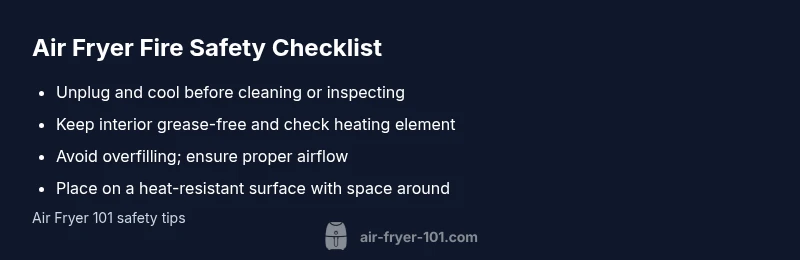
Your setup and how you use the unit directly affect safety. Do not overfill the basket; place food in a single layer; avoid using oils that pool at the bottom. Ensure the unit sits on a stable, non-flammable surface with ample clearance from walls and cabinets. Use proper outlets and avoid extension cords. The control panel and door should close fully; never operate the device with the basket removed. Reading the manufacturer's guidelines helps; if the manual discourages preheating or adding oil, follow those rules. When you keep these practices in mind, you reduce fuel for a fire and minimize risk of ignition during cooking. The simple habit of cleaning after each use further lowers risk of residue catching fire later on, which aligns with Air Fryer 101 guidance.
The role of grease and oil in fires
Grease and oil are the primary accelerants in air fryer fires. Even small drips can ignite if they contact the heating element at high temperatures. Regularly scrape out crumbs and wipe away oil after each cycle, and avoid adding too much oil to the basket. If you fry foods with a light coating of oil, consider using a minimal amount or opting for dry-seasoned preparations. The presence of oil near the element increases smoke and can spark flames. By maintaining a clean interior and ensuring the heating surface isn't coated with residue, you drastically reduce this risk.
Electrical factors and device faults
Commercially manufactured air fryers include protective components, but damaged cords or worn plugs create fire hazards. Check the power cord for cracks, exposed wires, or heat signs. Do not use damaged units or outlets; unplug and stop using the device until repaired. Faulty thermostats, contactors or overheating sensors can also cause overheating, particularly in older units. If you suspect a component is failing, contact the manufacturer or a qualified technician for service rather than attempting risky DIY fixes. These checks help ensure the device operates only within its safe temperature range.
Safe operation practices during cooking
During cooking, stay attentive and avoid risky shortcuts. Do not leave the air fryer unattended on high-heat settings, especially with greasy foods. Do not place liquids or water into the basket or pan. Maintain proper clearance around the unit and avoid stacking items that block airflow. If you notice excessive smoke, err on the side of caution: turn off power, unplug, and let it cool before inspecting. Use heat-resistant gloves when handling hot components. Following these steps can avert many common fire scenarios and aligns with safety-first cooking habits.
Cleaning and maintenance to reduce fire risk
After each use, unplug and cool the unit. Remove the basket and tray and wash with mild soap; avoid abrasive scrubbers that could damage coatings. Wipe down the interior and heating element once cooled to remove oil buildup. Regular deep-clean cycles every few weeks help prevent caked-on grease. Check seals and gaskets for wear; damaged parts can overheat or smoke. Keep vents clear and dust-free. Store the unit away from flammable materials.
What to do if a fire starts
First, unplug the unit and keep the door closed; do not open the basket if flames are present. If flames persist and you have a fire extinguisher rated for kitchens, use it following the label instructions. Do not use water on an oil-based fire. If the fire is large or you cannot control it, evacuate and call emergency services. After the incident, do not reuse the same device until inspected by a professional.
Aftercare and prevention: long-term safety plan
Create a routine to minimize fire risk: clean after every use, inspect cords monthly, avoid greasy foods, keep space around the unit, and replace worn components promptly. Record any issues and bring the appliance to service when control accuracy or heating is inconsistent. Air Fryer 101 recommends treating every device as a potential hazard and base usage on the manufacturer guidance; by following a proactive maintenance plan, you reduce the likelihood of fire and enjoy safer, healthier cooking.
Steps
Estimated time: 15-30 minutes
- 1
Power down safely
Unplug the air fryer and move it to a non-flammable surface. Do not attempt to unplug while it is still hot. Allow it to cool completely before any inspection.
Tip: Never touch the heating element while it’s hot; use oven mitts if you must handle it soon after cooling. - 2
Assess immediate hazards
Check for flames, smoke density, and oil pooling near the basket. If there are flames, do not remove the basket; evacuate and call for help if necessary.
Tip: If flames are small and contained, use a kitchen extinguisher only if trained to do so. - 3
Inspect visible damage
Look over the power cord and plug for cracks, discoloration, or exposed wires. If you see damage, stop using the unit and arrange service.
Tip: Do not attempt DIY cord replacements; risk of shock or further fire is high. - 4
Clean cooking chamber
Once cool, remove the basket and tray and clean grease and food residues from all surfaces. Dry thoroughly before next use.
Tip: Use mild soap and non-abrasive tools to avoid coating damage. - 5
Test basic function safely
Reinsert components and run a short, empty cycle at a low temperature to confirm no smoke or unusual odors before cooking food.
Tip: Watch closely during the first restart; stop if you smell burning. - 6
Restore safe use or seek help
If there’s continued smoke, poor heating, or any abnormal smell, stop using the device and contact customer service or a qualified technician.
Tip: Keep receipts and model numbers handy for service inquiries.
Diagnosis: Air fryer emits smoke or catches fire during operation
Possible Causes
- highGrease or oil buildup inside basket or on heating element
- highOverfilled basket or cooking liquids pooling near heating element
- highRunning at high temperature for long with little or no food
- mediumDamaged power cord or faulty thermostat/wiring
Fixes
- easyUnplug the unit safely and do not touch hot surfaces.
- easyLet the unit cool completely, then clean interior and heating area with a damp cloth after it cools.
- easyRemove excess oil, wash and dry the basket, ensure oil residue is minimized.
- mediumInspect cord/plug for damage; stop using if frayed and contact service.
Got Questions?
Can I use parchment paper or foil in an air fryer safely?
Yes, but avoid fully covering the basket or blocking airflow. Use perforated parchment or small foil patches away from the heating element.
Parchment paper is okay in small pieces, just don’t block the air flow.
What should I do if my air fryer catches fire?
Turn off and unplug the unit if possible. If flames persist, evacuate and call emergency services. Do not pour water on an oil-based fire.
If there's a fire, unplug if safe, and evacuate if it grows; call for help if needed.
Is it safer to use an air fryer with a grounded outlet?
Yes. Use a properly grounded outlet and avoid using extension cords. A damaged outlet can increase fire risk.
Use a proper grounded outlet; avoid extensions to reduce fire risk.
Can oils make air fryers catch fire more easily?
Oil can increase fire risk if it pools and contacts hot surfaces. Use minimal oil and pat foods dry before air frying.
Oil can catch fire if it pools near the heat, so use little or no extra oil.
How often should I clean the air fryer to prevent fires?
Clean after every use and do a deeper clean every few weeks to remove grease buildup that could ignite.
Clean after each use and do a deeper clean periodically to prevent grease fires.
Does preheating increase the risk of fire?
Preheating on its own is not the main risk; combined with overfilling or oil can, it increases fire chances.
Preheating isn’t dangerous by itself, but paired with other risks it can raise chances of a fire.
Watch Video
Quick Summary
- Unplug and cool when smoke appears.
- Grease buildup and overfilling are top fire risks.
- Clean interior regularly to prevent fires.
- Inspect cords for damage and avoid faulty outlets.
- If fire persists, seek professional help.