Deal with Air Fryer Fire: Essential Safety Guide for Home Cooks
Learn step-by-step safety actions to safely respond to an air fryer fire, extinguish it without water, and prevent future incidents—from immediate actions to post-incident checks with Air Fryer 101.


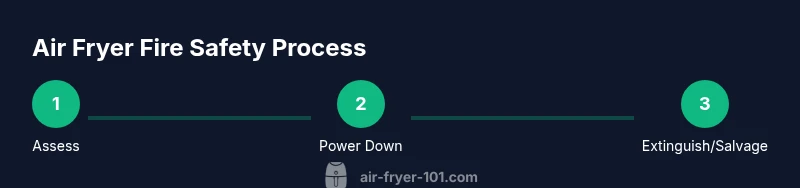
To deal with an air fryer fire, stay calm and act quickly: turn off the unit, unplug if safe, and leave the door closed. Do not reach in or spray water. If flames persist, smother with baking soda or use a Class B/C kitchen fire extinguisher. Evacuate people and call emergency services if the fire grows.
Immediate actions if an air fryer fire starts
If you notice flames inside or around your air fryer, act quickly but calmly. The safest first move is to power down the unit and unplug it if you can reach the plug safely. Keep the appliance doors closed and do not attempt to open the basket or agitate the contents; this can feed oxygen to the fire. Stand back and ensure everyone in the kitchen is at a safe distance. If there are people nearby, alert them and evacuate if necessary. Do not use water to extinguish an oil-based fire, as water can spread flames and cause burns. When flames are small and contained, you may smother them with baking soda or use a kitchen-rated fire extinguisher if you are trained to operate it. If the fire continues to grow beyond the appliance, call your local emergency number immediately and evacuate the area. According to Air Fryer 101, the most effective response hinges on rapid power-down, safe distance, and knowing when to escalate to professional help.
Why air fryer fires occur
Air fryers are designed for high-temperature cooking using hot air, and grease or oil droplets from foods can ignite if they splash or collect in the cavity. Overfilling the basket reduces airflow, leading to overheating, while residue from previous cooks can ignite when overheated. Preheating with minimal or no food can dry residues, and damaged seals or worn gaskets can allow hot air to circulate unevenly, increasing risk. Air Fryer 101 Analysis, 2026, notes that most grease fires arise from trapped oil pooling, not electrical faults, so good cleaning and proper loading are key prevention steps.
Safe extinguishing options for small fires
If a fire is confined to the oil or food in the basket, your first choice should be to power down and unplug if you can safely reach the plug, then keep the door closed. Do not throw water on the flames. Smother the fire with baking soda, which deprives flames of oxygen. If you are trained and have a kitchen-rated fire extinguisher, you can use it following the manufacturer’s instructions, aiming at the base of the flames. After any extinguisher use, ventilate the area and monitor for rekindling. If flames spread beyond the unit, evacuate and call emergency services.
When to call emergency help
If the fire continues to grow after you have attempted to extinguish it, or if you cannot reach the plug safely, evacuate everyone from the kitchen and contact emergency services immediately. Do not attempt to move the appliance while flames are active. If you notice smoke or heat damage to nearby cabinets or the wall, treat it as a major incident and seek professional assessment. Air Fryer 101 emphasizes that escalation is prudent when safety is uncertain, not when you feel rushed.
Post-fire cleanup and inspection
Once the device is cool, unplug if you haven’t already and inspect for damage to the unit, power cord, and surrounding surfaces. Remove the tray and wipe loose debris with a dry cloth; avoid using water on electrical components until the device is completely dry. Discard any charred food remnants and check the air fryer’s seal and fan for deformation. Ventilate the kitchen to clear any lingering smoke. If the interior shows signs of damage, do not reuse the unit until inspected by a qualified technician.
Prevention: safe loading, venting, and preheating tips
Prevention starts before you start cooking: do not overcrowd the basket, pat food dry to reduce oil splatter, and avoid preheating with a heavy coating of oil. Use minimal oil or oil sprays designed for air fryers, and consider liners that won’t obstruct airflow. Regularly clean the basket, tray, and interior walls to prevent grease buildup. Ensure the device sits on a heat-resistant, nonflammable surface away from cabinets and curtains. These practices significantly lower fire risk and extend appliance life.
What to do if the air fryer starts smoking but not flaming
Smoldering or smoking without visible flames is a warning sign. Immediately power down and unplug if safe, open a window for ventilation, and move anything flammable away. Do not try to move the unit while hot. If the smoke continues after unplugging, wait for the device to cool and then inspect for oil leaks or food debris that may be causing the issue. Do not reuse until you confirm there is no underlying fault.
Quick safety checklist you can print
- Keep a kitchen-rated fire extinguisher accessible (Class B/C).
- Have baking soda ready for grease fires; never use water on oil fires.
- Always unplug if safe, and close the door to limit oxygen.
- Do not remove the basket while flames are present; wait for the unit to cool when possible.
- Check for damage before using again and seek professional service if in doubt.
Tools & Materials
- Kitchen-rated fire extinguisher (Class B/C)(Follow local instructions; know how to operate.)
- Baking soda(Keep in a handy, accessible container.)
- Heat-resistant oven mitts(Use when handling hot components.)
- Phone or call device(Call emergency services if flames escalate.)
- Clear path to exit(Ensure you can evacuate safely if needed.)
- Towel or dry cloth(For smoke or fan dust cleanup after cooling.)
Steps
Estimated time: 20-25 minutes
- 1
Assess the situation
Take a breath and quickly observe the flames, smoke, and spread. Decide whether you can safely act without risking burns or exposure to heat. If anything looks unstable, prioritize exit and call for help.
Tip: If you’re unsure, prioritize safety and evacuate. - 2
Power down safely
If you can reach the controls, switch the air fryer off. If you can safely unplug without reaching over flames, do so to cut off the power and stop electrical fuel for the fire.
Tip: Do not touch the plug if you’re wearing gloves that might slip. - 3
Keep the door closed and distance yourself
Leave the door closed to cut oxygen supply. Step back several feet and ensure others are at a safe distance. Do not attempt to move the unit while it's hot or flames are active.
Tip: Create a clear safety zone with physical barriers if needed. - 4
Smother or extinguish if safe
If flames are small and contained, sprinkle baking soda lightly over the flames or use a kitchen fire extinguisher following the instruction label. Do not aim at the heating element directly.
Tip: Aim at the base of the fire, not the top of the flame. - 5
Escalate only if flames persist
If the fire continues to grow or you cannot safely control it, evacuate immediately and call emergency services. Do not re-enter the area until authorities declare it safe.
Tip: Have a plan and rehearse it with household members. - 6
Inspect and reassess before reuse
Once cooled, inspect the device for damage, examine the cord, and assess the area for residual grease or heat damage. If you’re uncertain about safety, consult a professional before reuse.
Tip: Document any damage for service or warranty considerations.
Got Questions?
Is it safe to reopen the air fryer after a fire?
No. Do not reopen or reuse the appliance until it has cooled completely and you have inspected it for damage. If in doubt, have it checked by a professional before resuming use.
No, wait until the appliance is cool and inspected before reopening or resuming use.
Should I use water to put out an air fryer fire?
Water should not be used on grease fires or electric appliances. It can cause steam burns and spread the fire. Use baking soda or a kitchen-rated extinguisher instead.
Do not use water; use baking soda or a proper extinguisher instead.
Can I still use my air fryer after a fire?
It depends on the extent of damage. If you see melted components, scorch marks beyond the interior, or electrical damage, do not reuse until a technician confirms safety.
Only reuse after professional safety check confirms it’s safe.
What should I have ready in my kitchen to handle a fire?
Keep a kitchen fire extinguisher accessible, baking soda within reach, oven mitts, and a clear path to exit. Know how to operate the extinguisher before you need it.
Have a fire extinguisher and baking soda on hand, with a plan to evacuate if needed.
What if the air fryer starts smoking but not flaming?
Power down and unplug if safe, ventilate the area, and investigate the cause after cooling. Do not ignore ongoing smoke as it indicates a potential underlying issue.
Turn off, unplug if safe, ventilate, and inspect after cooling.
How can I prevent air fryer fires in the future?
Avoid overfilling the basket, pat foods dry, and clean grease buildup regularly. Use minimal oil and ensure good airflow. Store units away from combustibles and monitor during preheating.
Prevention is about loading correctly, cleaning, and proper usage.
Watch Video
Quick Summary
- Power down and unplug safely when possible.
- Do not open the basket or add water to flames.
- Smother small fires with baking soda or a kitchen extinguisher.
- Escalate to emergency services if flames persist.
- Inspect and clean after cooling to prevent recurrence.