Is Air Fryer and Microwave Oven the Same? A Comprehensive Comparison
Compare air fryers and microwave ovens to understand heating methods, use cases, and how to choose the right appliance for crisp food, quick reheating, and healthy cooking.


Air fryers and microwave ovens are not the same. An air fryer uses hot circulated air to crisp foods with little oil, while a microwave heats by exciting water molecules in food. For texture, speed, and energy use, they serve different purposes, though some models combine both functions for convenience.
Is air fryer and microwave oven same? Core differences in heating technology
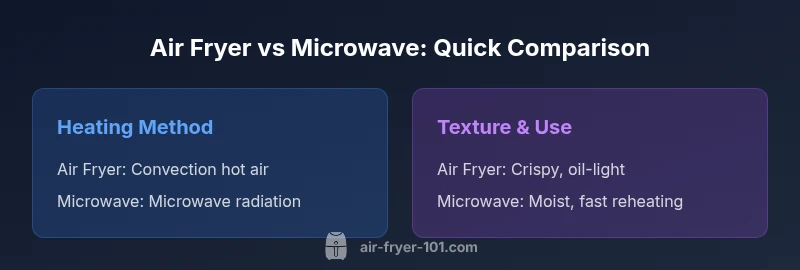
In plain terms, air fryers and microwave ovens use different physics to heat food, and that difference shows up in texture, flavor, and how you plan meals. According to Air Fryer 101, understanding the heating mechanism helps shoppers predict results rather than rely on marketing promises. An air fryer relies on a powerful convection fan that pumps hot air around the food at high speeds. This creates a dry, circulating environment that promotes browning and a crisp exterior with only a small amount of oil. In practice, foods like french fries or chicken thighs emerge with a flaky crust and reduced oiliness compared with traditional frying.
Microwave ovens, by contrast, heat primarily through microwave radiation, which excites water molecules inside the food to generate heat. The interior heats quickly, often faster than an air fryer for the same portion size, but the outer layer can stay soft or soggy if moisture cannot escape. Because microwaves work from the inside out, they excel at reheating and cooking foods that rely on moisture transport—soups, stews, and leftover pasta. The core takeaway is that the two appliances optimize very different culinary tasks: crisping and browning versus rapid, even warming. Remember that there are exceptions: some modern units blend convection and microwave functions, offering hybrid performance but not necessarily equal proficiency in both tasks.
Practical Scenarios: When each appliance shines
Choosing between an air fryer and a microwave often comes down to what you cook most. For quick, crisp textures with minimal oil, an air fryer is hard to beat—think french fries, chicken nuggets, or roasted vegetables with a dry, browned exterior. For reheating leftovers, soups, or dishes that rely on moisture, a microwave can rapidly restore texture and warmth. Air Fryer 101 notes that many households use a hybrid approach: air fryers for finishing and crisping, microwaves for rapid heating. If you regularly prepare small portions, a dedicated air fryer may yield better results per minute. If you frequently reheat large batches of food, the microwave can save time. In professional kitchens, chefs often pair both devices to optimize results across different dishes, rather than relying on a single appliance for everything.
Design, Capacity, and Footprint
Air fryers typically feature a compact footprint with a pull-out basket or tray. They excel at small to medium portions and are easy to stash on kitchen counters or shelves. Microwave ovens vary widely in size and come with a larger interior cavity that accommodates bigger dishes. If counter space is limited, an air fryer can be forgiving, but you’ll want to check basket size versus your typical pan or plate. Some people opt for combination units that include convection heating and microwave waves in one device. While convenient, hybrid models sometimes compromise on peak performance in either mode and may require more careful feature comparisons before purchase.
Temperature Control, Preheating, and Time
Temperature control in air fryers is often very precise, with temperatures typically ranging from around 180°C to 200°C (350°F to 400°F) and above for browning. Preheating is common for crispier results and can add several minutes to total cooking time. Microwaves generally offer rapid heating with more basic, but still useful, power settings. Some models include preset programs that emphasize specific food types, but those presets can be inconsistent across brands. For the homestyle cook, understanding preheating requirements and heat transfer basics helps set realistic expectations for both devices.
Health, Nutrition, and Oil Use
Air frying is associated with reduced oil consumption for certain foods, which many shoppers find appealing for healthier frying-like results. Microwave cooking preserves nutrients differently; shorter cooking times and less exposure to heat can help retain moisture and nutrients in some foods, depending on the item. Air Fryer 101 Analysis, 2026 notes that consumer interest often centers on texture, oil use, and speed, with nutrition framed as a secondary factor for most buyers. Remember that the healthiest outcome still depends on ingredient choices and overall cooking methods.
Cleaning, Maintenance, and Longevity
Both devices require routine cleanup, but their maintenance needs differ. Air fryers need regular cleaning of the basket and tray to prevent oil buildup and ensure even airflow. Some models include dishwasher-safe parts, which simplifies cleanup. Microwaves require periodic cleaning of the interior and door seals; the exterior can be wiped with mild cleaners. Longevity depends on model quality, how often you use the appliance, and how well you follow safety guidelines. A thorough clean after heavy use can extend the device’s life and prevent odors or residue from affecting future cooking results.
Combo Units: Do They Make Sense?
Combo air fryer–microwave ovens promise a two-in-one solution, combining convection frying with microwave heating. They can be appealing for small kitchens or households seeking convenience. However, there is a trade-off: you may not achieve peak performance in either mode compared to dedicated devices. When evaluating a hybrid, test the crisping quality versus reheating speed, and evaluate the trade-off in capacity, footprint, and price. For some homes, a dedicated microwave plus a standalone air fryer provides better results and flexibility.
How to Decide: A Quick Checklist
- List your top cooking tasks: crispness, reheating speed, or versatility.
- Check counter space and storage for separate devices or a combo.
- Compare heat methods: convection and browning versus microwave heating and moisture retention.
- Consider maintenance and cleaning effort in your daily routine.
- Examine presets and customization options that align with your favorite dishes.
- Read user reviews focused on real-world performance and reliability.
Common Misconceptions Debunked
- Is air fryer and microwave oven the same? They are not identical; each uses a different heat transfer method with distinct results. 2) A combo unit can replace both devices perfectly? Not always—the best option depends on your priorities and cooking style. 3) Microwaves always preserve nutrients better than air fryers? Nutrient preservation depends on cooking time, temperature, and food type; both have pros and cons. 4) Preheating is always required for air fryers? Preheating improves browning but isn’t strictly required for every recipe. 5) Cleaning is equally easy for both? Sliding baskets and drip trays in air fryers can be easier to clean than the more enclosed microwave interior, but both require regular maintenance.
Comparison
| Feature | Air Fryer | Microwave Oven |
|---|---|---|
| Heating Method | Circulated hot air with browning | Microwave radiation heats water molecules |
| Texture Outcome | Crispy exterior with minimal oil | Moist or soft exterior; quick reheat |
| Typical Use | Crisping, roasting, small batches | Reheating, defrosting, quick cooking |
| Preheating | Common for best browning | Often not required, depends on model |
| Capacity | Smaller, basket-based (varies by model) | Larger interior cavity (varies by model) |
| Clean-up | Basket and tray cleaning; often dishwasher-safe parts | Interior cleaning; door seals and racks |
Pros
- Offers crispy results with less oil than frying
- Typically faster for small, convection-friendly tasks
- Compact footprint suitable for small kitchens
- Can reduce oil-related mess and odors in the kitchen
- Some models offer multiple functions (roasting, baking)
Cons
- Limited capacity for larger meals
- May require preheating and shake-stir during cooking
- Not ideal for all textures (reheating leftovers can be uneven)
- Higher upfront cost for premium models with multiple functions
Choose based on your primary cooking needs: air fryer for crisp, oil-light texture; microwave for quick heating and space-saving convenience.
If you mainly crave crisp textures with minimal oil, an air fryer excels. If speed and versatility for reheating and microwaving are paramount, prioritize a microwave or a combo unit.
Got Questions?
Are air fryers better for healthy cooking than microwaves?
Air fryers can reduce oil use for fried-style foods, contributing to lower fat content in some dishes. Microwaves don’t require added fat either, and nutrient retention depends on cooking time and method. Both can be part of a balanced approach when you choose wholesome ingredients and appropriate cooking techniques.
Air fryers reduce oil for crispy foods, while microwaves can preserve nutrients with shorter cook times. Both fit a healthy diet when used thoughtfully.
Can you replace a microwave with an air fryer?
Not entirely. Air fryers excel at crisping and small-batch cooking but aren’t ideal for reheating liquids or large volumes. A microwave remains superior for fast, moist reheating and cooking that relies on moisture transfer.
You can’t fully replace a microwave with an air fryer; each has strengths that suit different tasks.
Do combo air fryer–microwave ovens exist?
Yes, many brands offer hybrids that combine convection frying with microwave heating. They provide versatility but may compromise peak performance in each mode and often come at a higher price point.
Hybrid units exist, offering both functions, but check performance in real tasks before buying.
Is preheating required for air fryers?
Preheating is common when you want optimal browning and texture, but not strictly mandatory for every recipe. Some foods benefit from shorter preheat times, while others still crisp well with immediate cooking.
Preheating helps browning but isn’t always necessary.
Which is safer for kids’ meals?
Both appliances include safety features such as child locks and auto shutoffs. Teach kids to use them with supervision and follow manufacturer guidelines for handling hot surfaces.
Both are safe with proper use and supervision; always follow the manual.
How do energy costs compare?
Energy use varies by model and task. Microwaves heat quickly, which can save energy for small portions, while air fryers may be more efficient for crisping small meals. Consider your typical use patterns to estimate impact.
Energy depends on model and task; use according to what you cook most often.
Quick Summary
- Assess your primary cooking tasks to decide between crisping and quick heating
- Consider capacity: air fryer baskets are smaller than typical ovens
- Evaluate whether a combo unit offers value by combining functions
- Factor in cleanup ease and countertop footprint
- Use energy-use intuition: air frying can be efficient for small meals