Difference Between Air Fryer and Microwave: An In-Depth Comparison
Explore the difference between air fryers and microwaves, including heating methods, texture outcomes, best uses, and practical buying tips. A balanced, expert comparison by Air Fryer 101 to help you choose the right tool for health, convenience, and budget.


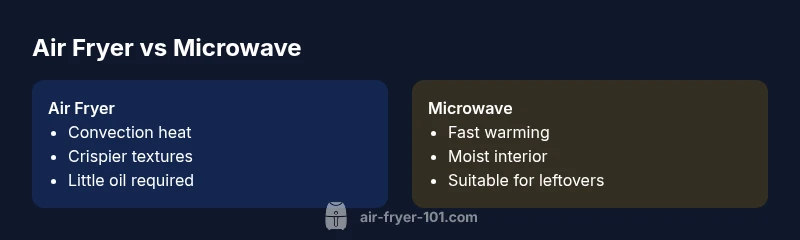
Air fryers and microwaves are both common in home kitchens, but they serve different purposes. An air fryer uses convection heat to circulate hot air around the surface of the food, creating browning and crispiness with little added oil. A microwave generates electromagnetic waves that excite water molecules inside the food, producing heat quickly from the inside out without browning. If you value texture and browning, the air fryer looks favorable; for speed and convenience, the microwave wins.
How the cooking method works: air circulation vs dielectric heating
The core difference between air fryers and microwaves is how they transfer heat to food. An air fryer uses a heating element plus a high-velocity fan to circulate hot air around the surface of the food, creating browning and crispiness with little added oil. A microwave generates electromagnetic waves that excite water molecules inside the food, producing heat quickly from the inside out without browning. This fundamental contrast shapes texture, flavor development, and cooking versatility. According to Air Fryer 101, the best approach starts with your goal: crisp texture and oil reduction, or speed and convenience. For health-minded home cooks, the air fryer often delivers drier heat and browning with modest oil, while the microwave excels at fast reheating and steaming without added fats. When shopping, consider your typical meals, kitchen space, and how often you value texture versus speed.
Texture outcomes and browning dynamics
Texture is the defining difference for most home cooks. Air fryers rely on dry heat and air circulation to push moisture away from the food’s surface, producing browning and a cushioned crisp. Microwaves heat primarily from inside, so foods tend to stay moist and soft unless you employ reheating tricks or browning accessories. The Air Fryer 101 Team emphasizes that browning is not simply about heat level; it's also about surface dryness and air velocity. Foods like potatoes, chicken wings, and vegetables can achieve a satisfying crunch in an air fryer with minimal oil. Conversely, foods that rely on moisture retention—such as stews or rice dishes—usually reheat more evenly in a microwave. Understanding these tendencies helps you decide whether you want a crispy exterior or a soft, evenly warmed interior. Expect aroma and texture to shift based on batch size, food thickness, and initial temperature.
Reheating efficiency and meal quality
Reheating performance is a frequent reason people own either device. Microwaves excel at quick warmth, especially for evenly shaped items or meals with multiple components that fit a flat tray. They’re convenient for leftovers, soups, and sauces where you want speed over texture. Air fryers, while slower to heat up, excel at reviving crisp textures in foods that benefit from surface browning—fries, nuggets, or roasted vegetables often regain their bite. Air Fryer 101 Analysis notes that energy use and time-to-heat depend more on portion size and moisture content than on the appliance alone; a small batch in an air fryer can be efficient, but larger or dense items may require more time than a microwave. For mixed meals, consider using both: crisp the main components in an air fryer and finish with a quick microwave reheat if needed.
Practical food categories: crispy snacks vs reheated meals
If your goal is crispiness and minimal oil, reserve the air fryer for snacks and small portions like french fries, chicken tenders, and vegetable chips. For fast, uniform reheating of meals with mixed textures, the microwave shines—think leftovers, pasta, rice bowls, and sauces. You can also use the microwave to steam vegetables quickly or melt cheese without browning. A balanced kitchen often includes both appliances: use the air fryer when texture is paramount and the microwave when speed drives the decision. Understand that some foods perform differently across appliances; experimentation is part of the learning curve, especially when you vary food thickness, moisture, or layering.
Energy considerations and preheating habits
Energy use is a practical concern for many households. Air fryers typically require a preheating period and rely on a fan-driven convection cycle, which can lead to efficient cooking for small batches but may feel slower for larger quantities. Microwaves heat food directly with microwave energy, delivering fast warmth with minimal preheating in most cases; for dense dishes, preheating is rarely necessary. From a sustainability standpoint, the overall footprint depends on batch size and how often you switch between appliances. Air Fryer 101 suggests planning meals around appliance strengths to minimize idle time and energy waste, while also considering the practical realities of kitchen workflow and counter space.
Safety, maintenance, and cleaning considerations
Both appliances require basic care to stay reliable. Air fryers have exposed heating elements and baskets, which may accumulate oil and food residues; regular cleaning after use helps maintain airflow and prevent flavor transfer. Microwaves have interior cavities that can get splattered; wipe after use and avoid metal containers to prevent arcing. Safety considerations include keeping vents clear and avoiding overcrowding baskets in the air fryer. Maintenance typically means following the manufacturer’s cleaning schedule and replacing worn seals or gaskets as needed. In day-to-day use, monitoring for unusual smells or inconsistent heating can help prevent issues before they escalate.
Decision framework: when to choose which appliance
A simple way to decide is to align the task with the appliance’s strengths. Choose the air fryer for foods you want crispy, browned, or lightly fried with little oil. Choose the microwave for quick reheating, even warming of multi-component meals, or when you need hands-off convenience. For mixed meals or if you want both crispiness and speed, a two-step approach can work: reheat gently in the microwave, then finish in the air fryer for crispiness. Your decision should also consider factors like kitchen space, budget, and how often you prepare fried-style dishes versus quick meals.
Quick-start guides: getting the best results in minutes
To get started, pick a few reliable test foods (frozen fries, chicken nuggets, reheated pasta). Preheat the air fryer as recommended by the manufacturer, lightly oil or spray as needed, and monitor for doneness. For microwaving, arrange food in a single layer on a microwave-safe plate, cover to reduce splatter, and check after short intervals. Keep a small log of outcomes to refine times and settings for your favorite dishes. With practice, you’ll build a practical sense of which appliance to pull from first in various scenarios.
Comparison
| Feature | Air fryer | Microwave |
|---|---|---|
| Cooking method | Convection heat with hot air circulation | Dielectric heating via microwave energy |
| Texture and browning | Crispy, browned exterior with little oil | Moist, evenly warmed interior; browning is limited |
| Best use cases | Crispy snacks, small portions, oil-conscious cooking | Fast reheating and melting, multi-component meals |
| Reheating performance | Excellent for reviving crunch and texture | Excellent for speed and even warmth |
| Time to heat | Longer preheat and cooking times for small batches | Very quick heating; minimal preheating |
| Ease of cleaning | Removable baskets; regular cleaning improves airflow | Easy interior to wipe; no moving parts exposed to air |
| Cost/price context | Varies by model; generally affordable for basic to mid-range | Varies by model; usually budget-friendly but can vary |
Pros
- Crispier textures with minimal oil
- Versatile for small batches and snacks
- Greater control over surface browning
- Longer lifespan for repeated crisping tasks with healthy cooking
Cons
- Takes longer to heat up and cook larger portions
- Requires counter space and proper air flow
- Not all foods brown well; some foods don’t benefit from air frying
- More appliance clutter if space is limited
Air fryer offers superior crisp texture for targeted foods; microwave excels in speed and convenience
Choose air fryer for texture-focused cooking and healthier crisping. Choose microwave for rapid reheating and multi-component meals. In many kitchens, using both optimizes outcomes.
Got Questions?
What is the main difference between air fryer and microwave?
The air fryer relies on hot air convection to crisp surfaces with little oil, while the microwave uses microwave energy to heat food quickly from the inside. The choice hinges on whether you want texture or speed.
Air fryers crisp with little oil; microwaves heat fast from inside. Choose based on texture or speed needs.
Can I replace my microwave with an air fryer?
For fast reheating and simple meals, the microwave is unmatched. An air fryer excels at crisping and browning. Many households benefit from keeping both to cover different cooking tasks.
Microwave for speed, air fryer for crispiness. Many kitchens use both.
Are there foods that perform better in one than the other?
Yes. Crispy items like french fries and chicken tenders perform best in an air fryer, while pasta, rice, and leftovers reheat more evenly in a microwave.
Crispy foods shine in the air fryer; reheating is faster in the microwave.
Do air fryers use less energy than microwaves?
Energy efficiency depends on batch size and the task. Microwaves heat quickly with little preheating, while air fryers waste less energy on oil-only tasks but may take longer for small servings.
Energy depends on what you cook and how much. Neither dominates in all cases.
What foods should I avoid in air fryers?
Avoid overly liquid-heavy sauces or foods that steam rather than brown. Crowding the basket can hinder air flow. Use proper air fryer accessories and avoid deep frying substitutes.
Steer clear of too-wet foods and overcrowding for best results.
Is preheating necessary for air fryers?
Many models benefit from a short preheat for best browning, but some foods cook well with minimal or no preheating. Check your manual and experiment with times.
Preheating helps some foods; not always required.
Quick Summary
- Prioritize crisp texture when oil reduction matters
- Use microwave for speed and convenience
- Pair both devices to cover diverse meals
- Plan around space, budget, and cleaning needs