Air Fryer vs Microwave Oven: Thorough Comparison 2026
A rigorous, objective guide comparing air fryer vs microwave oven to help home cooks choose for health, speed, and budget. Explore performance, energy use, and real‑world usage.


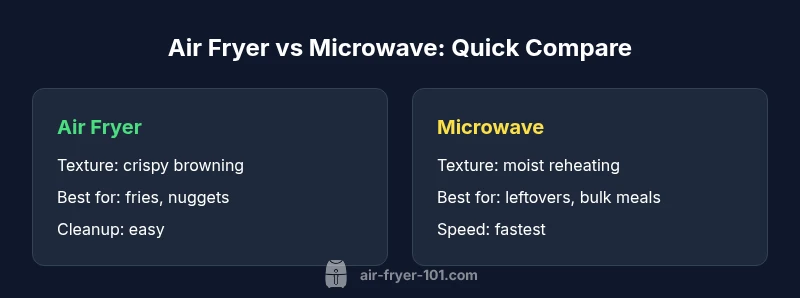
Air fryer vs microwave oven each serve different goals. The air fryer relies on convection to brown foods with minimal oil, delivering crisp textures; the microwave heats food rapidly using electromagnetic energy for speed and convenience. For texture and small batches, the air fryer often wins; for quick reheating and larger portions, the microwave shines. This guide compares performance, costs, and practical use.
Understanding Core Differences Between Air Fryer vs Microwave Oven
The choice between an air fryer and a microwave oven hinges on what you value most in everyday cooking: texture, speed, and overall versatility. Many shoppers start by asking whether they should replace or supplement their existing microwave with an air fryer. According to Air Fryer 101 analysis, the core difference lies in how each appliance transfers heat and how that heat interacts with food. An air fryer fans hot air around the food to create a browned surface with minimal oil, while a microwave uses microwaves to excite water molecules—producing rapid, even heating. For most households, the best approach isn’t choosing a winner overall; it’s recognizing where each tool excels and how to use them in tandem. The Air Fryer 101 team emphasizes that a balanced kitchen can benefit from both devices, depending on the meal you’re aiming to produce and the time you have available. In short, think of the air fryer as your texture specialist and the microwave as your speed specialist.
To anchor expectations, consider the kinds of meals you prepare most. If you frequently reheat leftovers while preserving moisture, a microwave’s strengths matter. If you’re chasing a crisp finish on healthier fries and proteins with little or no oil, the air fryer delivers a different kind of satisfaction. Across the board, your decision should align with your typical cooking scenarios, kitchen space, and budget. Air Fryer 101 analysis shows that practical balance often means owning both devices and using each where it shines.
Cooking Mechanisms: How Each Appliance Works
The fundamental mechanism is what separates air fryers from microwaves in the kitchen. An air fryer heats by circulating hot air around the food using a high-powered fan and typically a compact chamber with a basket. This setup mimics a countertop convection oven, producing a crisp exterior while keeping the interior moist in some cases. The design encourages browning and texture development with minimal added fat, which many health-conscious cooks appreciate. In contrast, a microwave oven uses electromagnetic waves to agitate water molecules inside food, which generates heat from within. This allows for extremely fast reheating and cooking of foods that are already cooked or are primarily moisture-based. Because microwaves interact with water content, foods with uneven moisture can heat unevenly, often leading to hot and cold spots if not stirred or rotated. The two technologies target different culinary outcomes, and that should guide your purchase and usage strategy.
Practical takeaway: don’t expect the air fryer to melt cheese the same way a broiler would, and don’t rely on the microwave to create a crispy crust without an external browning method. When used thoughtfully, both appliances can produce tasty results with less time and effort than traditional oven cooking.
Performance Benchmarks: Time, Texture, Nutrient Retention
Performance benchmarks for air fryers and microwaves vary by model and load, but certain trends hold across the board. Air fryers are typically faster than a traditional oven for small portions and can provide a crisp exterior in a fraction of the time, making them efficient for snacks, frozen bites, and small meals. The texture profile tends to favor browning, with a noticeable crust that adds sensory appeal. Microwaves, by contrast, deliver speed that cannot be matched for heating leftovers or warming large quantities of food. They excel at moisture retention for soups, stews, and sauces and are often more forgiving for reheating grains and pasta without drying out the edges. From an energy perspective, the air fryer’s energy use can rival that of a compact oven, especially for single-serving meals, while microwaves usually consume less energy per minute due to their shorter cooking cycles. Air Fryer 101 analysis notes the importance of batch size: small batches in an air fryer often yield better results than large batches, where overcrowding can impede browning. In summary: if texture and portion control are priorities, the air fryer delivers; if speed and capacity dominate, the microwave takes the lead.
Food Types by Appliance: When to Use Air Fryer vs Microwave
Different foods respond differently to each appliance. Air fryers excel with items that benefit from surface browning and a dry exterior, such as french fries, chicken tenders, vegetables, and roasted snacks. Frozen items often reheat well in an air fryer with a short final crisping phase. The microwave shines for reheating leftovers, steaming vegetables, soups, and dishes that rely on moisture and even heat distribution. For foods that require moisture and tenderness, microwaves can be preferable, while for foods where you want a crisp shell, an air fryer is typically superior. Don’t forget accessories: a metal rack is compatible with many air fryers but not with microwaves; silicone mats can help prevent sticking in air fryers, while microwave-safe containers prevent heat-related damage. A practical approach is to assign proteins and starches to the air fryer for browning and reserve reheating and moisture-rich dishes for the microwave. This division helps maximize texture, flavor, and overall dining satisfaction without buying extra appliances you won’t use daily.
Energy Use and Budget Considerations
Budgeting for kitchen appliances means considering upfront costs, ongoing energy use, and replacement cycles. Air fryers come in a range of prices, from compact units to larger family-size models with multiple features. While the initial outlay can be higher, the per-meal energy cost for occasional crispy meals can be favorable, especially if you regularly cook small portions. Microwaves offer lower upfront costs for many entry-level models and tend to have longer lifespans when treated well. In terms of energy, microwaves generally consume less energy per minute for quick tasks, but the total energy depends on the cooking time and the dish. If your meals are large in volume and require quick reheating, a microwave could be more economical on a per-meal basis. Air Fryer 101 analysis suggests evaluating typical weekly meals to estimate energy costs and choosing a model with a power rating that fits your cooking patterns. For many households, a balanced approach—one compact air fryer and a standard microwave—delivers both efficiency and flexibility while keeping costs reasonable.
Practical Tips to Maximize Each Appliance
Maximizing performance means using the right accessory and following best practices. For air fryers, preheating for a minute or two can help achieve even browning, but it is not always necessary for every dish. Avoid overcrowding the basket to ensure air can circulate freely, leading to uniform crisping. A light coating of oil or a spray can enhance browning on certain foods, though many items will brown nicely with dry heat alone. For microwaves, arrange food in a shallow, even layer and stir or rotate midway to prevent uneven heating. Cover foods with microwave-safe lids to retain moisture when needed, but remove lids during final crisping if you plan to use an air fryer afterward. Cleaning tips: wipe down the interior after use, wash removable baskets and trays, and use a mild cleanser to maintain performance. Regular maintenance prevents built‑up grease from affecting flavor and texture. Air Fryer 101 recommends establishing a simple cleaning routine and labeling baskets to prevent cross-usage between appliances, preserving performance and extending lifespan.
Common Pitfalls and How to Avoid Them
Several common mistakes can undermine results when using air fryers or microwaves. Overcrowding an air fryer basket leads to soggy or uneven browning, defeating the purpose of air frying. Using metal containers in a microwave is unsafe and can damage the appliance, so always pick microwave-safe options. Relying on the microwave for foods that rely on moisture without adequate stirring can cause hot spots. Conversely, relying solely on an air fryer for reheating linger on the same texture all the time might produce dryness if not monitored. A practical solution is to cook or reheat in stages, especially for larger items, and to rotate or flip food for even exposure. The key is to adapt to each device’s strengths and avoid forcing one appliance to perform tasks it’s not optimized for. With thoughtful planning, you can avoid waste, save energy, and enjoy better-tasting meals.
Real-World Scenarios and Sample Recipes
Let’s translate theory into practice with concrete tasks. Reheating a slice of pizza? The air fryer can reheat it to a crispy crust in minutes, while the microwave can warm it quickly with moisture preservation if a crisp finish is not a priority. Frozen chicken bites? Air frying yields a crisp exterior with less oil compared to traditional frying, making it a popular choice for weeknight snacks. Leftover fried rice or steamed vegetables reheat well in a microwave, especially when covered to retain moisture. For warming casseroles or pasta bakes, a microwave often delivers fast results, but finishing with a brief air fry session can restore crust and texture on top. These guidelines emphasize the complementary nature of the two devices rather than a single universal best option.
Choosing Between Models: What Features Matter Most
When shopping for either appliance, prioritize features that align with your cooking goals. For air fryers, consider basket size, wattage, preheating behavior, and whether the model includes a grill rack or crisper plate. Dishwasher-safe baskets simplify cleaning, while auto-shutoff and precise temperature control enhance safety and results. For microwaves, pay attention to wattage, preset programs, sensor cooking, turntable quality, and whether a steam or convection feature is included. Size and footprint matter if you have limited counter space, and the availability of easy-to-clean interiors can reduce maintenance effort. Budget-conscious shoppers should balance initial cost with anticipated usage patterns, since a higher-priced model can pay off with better performance and durability over time. This decision framework helps ensure you select a model that delivers practical value rather than overhyped features.
Comparison
| Feature | Air Fryer | Microwave Oven |
|---|---|---|
| Best for | Texture focus (crispy foods, small meals) | Speedy reheating and bulk meals |
| Cooking Method | Hot air convection with a basket | Electromagnetic heating for rapid inside-out warmth |
| Typical Time for a Small Batch | Shorter for browning and crisping a few servings | Shorter to heat leftovers quickly |
| Texture Quality | High browning potential, crusty exterior | Moist heat preservation is common |
| Best Food Types | Fries, chicken tenders, crispy vegetables | Leftovers, sauces, grains, and bulky meals |
| Capacity Range | Smaller to mid-size baskets | Larger plates with turntable or multiple racks |
| Energy Use (per session) | Efficient for small meals; higher for longer sessions | Typically lower per minute due to shorter cooking times |
| Ease of Cleaning | Removable baskets; dishwasher-safe options available | Turntable and cavity cleaning required; occasional wipe-down |
| Upfront Price Range | Entry models cost less; premium models offer more features | Budget-friendly options exist; mid to high range for feature-rich models |
| Maintenance & Longevity | Regular cleaning extends life; some components washable | Durable with proper care, but some features may wear with frequent use |
| Best For | Texture-first cooking and small households | Speed and large portions for busy days |
Pros
- Crispy texture with minimal oil and healthy cooking potential
- Speed for small portions and quick cranking of meals
- Compact footprints with versatile models
- Low mess and easy cleanup with basket-based designs
- Simple transition from oven-broiled finishes to air crisping
Cons
- Limited batch capacity for larger families
- Not all foods brown well or evenly in every model
- Higher upfront cost for feature-rich air fryers
- Microwave may outperform air fryer in some moisture-heavy dishes
Air fryer generally offers crisper results and efficient small-batch cooking, while microwave oven excels at fast reheating and large portions.
Choose air fryer for texture and reduced oil. Choose microwave for speed and bulk reheating. For most households, using both devices strategically provides the best balance of taste, time, and energy.
Got Questions?
What is the key difference between air fryer and microwave oven?
The air fryer bakes via hot air convection to brown and crisp foods with minimal oil, while the microwave heats quickly using electromagnetic waves to excite water molecules. Each appliance targets different cooking outcomes, so they complement rather than replace each other.
The air fryer browns with little oil, and the microwave heats fast using waves to heat moist foods. They serve different cooking goals.
Is air frying healthier than microwaving?
Air frying can reduce the need for added fats while producing crispy textures, but health impact depends on ingredients and portions. Microwaving preserves moisture and can minimize nutrient loss if used appropriately. Both can fit a healthy diet when used thoughtfully.
Air frying uses less oil for crispiness, microwaving preserves moisture and is fast. Both can be part of a healthy plan.
Can I replace microwave with air fryer for reheating leftovers?
Air fryers can reheat many leftovers with a crisp finish, but they may require longer times than a microwave. For moisture-heavy dishes, end with a short air-crisp phase or finish in the microwave, depending on texture goals.
Air fryers can crisp leftovers, but may be slower. If you want moisture, use the microwave first.
What foods are best suited for air fryer vs microwave?
Air fryers excel with fries, chicken tenders, vegetables, and snacks that benefit from browning. Microwaves are ideal for soups, stews, grains, reheating pasta, and bulky meals where speed matters.
Air fryers are great for crispy items; microwaves shine with soups and large reheats.
Do air fryers use less energy than microwaves?
Energy usage depends on model and task. Air fryers can be efficient for small meals, especially when crisping is desired, while microwaves typically use less energy for quick reheats. Compare wattage and typical cooking times to estimate total energy.
Energy depends on what you cook. Air fryers for small crisps; microwaves for fast reheats.
Is preheating required for air fryers?
Many air fryer recipes benefit from a brief preheat, but not all foods require it. Preheating helps achieve uniform browning, especially for thicker items, while light dishes may brown fine without it.
Preheating can help brown evenly, but not always necessary.
Quick Summary
- Use air fryer for crisp textures with little oil
- Use microwave for fast reheating and bulk meals
- Evaluate weekly meals to determine best mix of devices
- Prioritize feature sets that match your typical cooking tasks
- Maintain both appliances with regular cleaning for optimal results