Difference Between Air Fryer and Convection
A detailed, analytical comparison of air fryers and convection ovens, covering heating methods, capacity, energy use, and how to choose the right appliance for your kitchen.


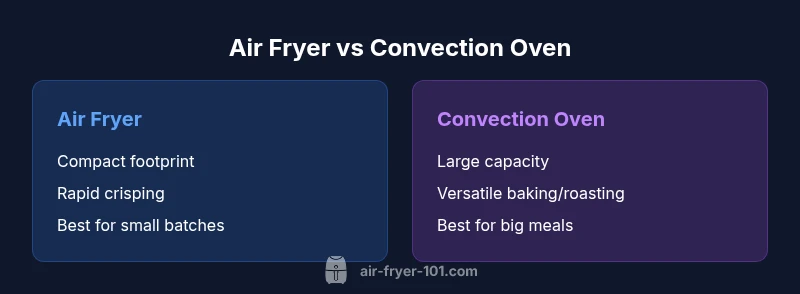
The difference between air fryer and convection hinges on size, airflow, and cooking envelope. An air fryer is a compact countertop unit with a built-in fan and a small basket, delivering rapid, high-velocity heat to foods for crisp textures. A convection oven is a larger appliance with a fan in a full-size cavity, offering broader capacity and versatility, from baking to roasting. For most homes, the air fryer excels with small portions and quick crisping, while a convection oven handles larger meals and sheet-pan cooking.
What truly differentiates air fryers and convection ovens
According to Air Fryer 101, understanding the difference between air fryer and convection is not about labeling a single best appliance, but recognizing how each device applies heat to achieve food that is crisp on the outside and tender inside. The primary distinction lies in the size, airflow pattern, and cooking envelope: air fryers are compact countertop units with a built-in fan and a small basket, whereas convection ovens are larger kitchen appliances that use a fan to circulate hot air inside a full-size oven cavity. This difference affects cooking speed, texture, capacity, and versatility. A shopper should consider how often they cook for one or two people versus a family, and what kinds of dishes they plan to prepare most often. Air Fryer 101 analysis shows that most kitchens benefit from understanding these differences before committing to a single appliance, especially when space or budget constraints are a factor.
The heating method: how air is circulated
Air fryers rely on rapid, focused air movement within a compact chamber. The food sits in a shallow basket, which places it close to the air source, enabling fast browning with relatively little added oil. Convection ovens use a fan inside a larger cavity to circulate air around racks or pans. While both rely on convection, the scale changes the dynamics: air fritters out of the basket for air fryer crispiness, while a convection oven achieves even browning across larger meals via the fan-assisted environment. For many cooks, this means air fryers excel at quick, small-batch tasks, whereas convection ovens are better suited to sheet-pan roasts and bulky bakes.
Design and footprint considerations
The physical footprint of an air fryer is a major selling point: it sits on the counter without occupying an entire oven cavity and is easy to tuck away when not in use. Convection ovens require a larger real estate footprint—either a dedicated wall oven, a range-top oven, or a countertop model with multiple racks. Beyond size, consider airflow: air fryers concentrate heat in a tiny space, making preheating brisk but limiting bulky meals. Convection ovens spread heat across a larger interior, enabling multi-rack cooking and bigger portions, but often demand longer preheat times and more careful vessel choices.
Cooking speed and batch size implications
For small meals and snacks, air fryers typically deliver faster results due to the hot-air jet circulating in a compact chamber. This can translate to shorter overall cooking times for items like frozen fries, chicken bites, and reheated leftovers. Convection ovens may require more time to reach target temps but can process larger batches at once thanks to multiple racks. If you frequently cook for 4–6 people or plan sheet-pan dinners, the convection oven’s capacity makes it easier to create a complete meal in a single run.
Temperature control and efficiency
Both appliances offer precise temperature control, but the user experience differs. Air fryers often provide quick, responsive adjustments with shorter preheat cycles, which translates to energy efficiency for small tasks. Convection ovens rely on a larger thermal mass; changes can take longer to reflect in the interior, impacting energy usage for time-intensive recipes. In practice, Air Fryer 101 analysis shows that for many households, a short, focused cooking session in an air fryer consumes less energy than running a larger oven for the same task.
Food texture and browning outcomes
Crisp-edged textures are where air fryers shine, thanks to intense, localized heat and a close air stream. The result is a veneer of crispness with minimal oil. Convection ovens produce more even browning across larger items and are flexible enough to create tender roasts or crisp sheet-pan meals, though not always with the same punch as an air fryer on small bites. Taste and texture preferences often determine which appliance is best for a given dish.
Baking and roasting capabilities
Air fryers perform well for quick breads and small baked items, but their limited interior space can constrain larger cakes or roasts. Convection ovens naturally excel at baking sheets, casseroles, and larger roasts due to their expansive interior and multiple rack support. If your kitchen relies heavily on baking or bulk roasts, the convection oven generally offers more adaptability for a broader set of recipes.
Energy use and long-term costs
In many cases, air fryers consume less energy per small task due to fast preheating and smaller interior volume. Convection ovens can use more energy when used for large meals, but their multi-rack capability can reduce the total number of batches required for a family dinner. From a long-term cost perspective, the energy differentials are modest in typical home use, but the choice becomes clearer when you map your weekly cooking load to appliance capacity.
Cleaning, maintenance, and durability
Air fryers are usually easier to clean: remove the basket, rinse, and wipe the interior. Many baskets and trays are dishwasher-friendly. Convection ovens involve more components to clean: racks, pans, and sometimes the interior walls. Some convection ovens feature self-cleaning modes, but even then, occasional manual cleaning remains necessary. Durability varies by brand and build quality; a robust convection oven may last longer and require fewer accessory replacements than a smaller, lighter air fryer.
Common mistakes and how to optimize results
One common mistake is overloading the air fryer basket, which blocks airflow and compromises crispness. In convection ovens, crowded racks can prevent even heat distribution. To optimize results, dry foods thoroughly before cooking, space items for air flow, and preheat when recommended. Air Fryer 101 recommends matching dish size to appliance capacity to maximize efficiency and achieve consistent browning.
How to decide based on meals you cook
Begin by listing your most frequent meals. If most nights involve small portions, crispy appetizers, and quick reheating, an air fryer is likely the best fit. If you regularly roast poultry, bake casseroles, or prepare large sheet-pan meals, a convection oven provides greater flexibility. For many households, a combination approach (one air fryer for quick tasks and a convection oven for bulk cooking) offers optimal versatility.
Tips for buying and using these appliances
Prioritize model with good airflow design and reliable heat cycling. Look for dishwasher-safe baskets or trays, sturdy racks, and a clear user manual. Consider energy efficiency, preheat time, and the availability of accessories like baking pans and grill inserts. When in use, keep vents clear and follow manufacturer guidance to avoid overheating or safety risks.
Real-world scenarios: sample weekly plan
A typical week could include air-fryer meals for snacks and quick lunches (crispy chicken bites, roasted vegetables) and convection-oven dishes for family dinners (roast chicken, sheet-pan salmon with veggies). By planning two distinct cooking streams, you can leverage the strengths of each appliance while minimizing idle time and energy use.
Practical takeaways for shoppers (what matters most)
- If you crave quick, crisp results in small quantities, prioritize an air fryer.
- If you need multi-dish capacity and baking versatility, prioritize a convection oven.
- Balance space, budget, and cooking style to pick the most helpful option, or consider both for maximum flexibility.
Final note on the difference between air fryer and convection
Understanding the difference between air fryer and convection helps set realistic expectations about what each appliance can do. It’s not only about faster temperatures but about how heat, airflow, and space interact with your favorite recipes.
Comparison
| Feature | Air Fryer | Convection Oven |
|---|---|---|
| Heat source & air circulation | Compact countertop unit with integrated basket and focused rapid air circulation around food | Larger oven cavity with a convection fan that circulates air over racks or pans |
| Cooking speed for typical dishes | Often faster for small batches due to proximity of heat to food | Speed depends on batch size and rack placement; larger meals can be efficient |
| Capacity & suitability for meals | Limited capacity suited for singles or small households | High capacity suitable for families, roasts, and sheet-pan meals |
| Temperature control & versatility | Wide but compact range with emphasis on crisping and quick finishes | Broader range with baking and roasting using multiple racks |
| Energy use & running costs | Typically lower energy per small item; fast preheat for small tasks | Greater energy use for large meals; longer preheat for some models |
| Price range & value | Lower upfront cost, compact form factor | Higher upfront cost but greater versatility and capacity |
| Best use case | Crisping wings, fries, small portions; quick snacks | Roasting meats, baking sheets, casseroles, larger meals |
| Maintenance & cleaning | Basket and tray are dishwasher-safe and easy to clean | Oven racks and interior require more cleaning; some ovens have self-cleaning modes |
Pros
- Helps save time on quick, daily meals and reheating
- Air fryer offers crisp textures with minimal oil
- Convection ovens provide greater capacity and versatility
- Both appliances reduce reliance on large, energy-intensive ovens for small tasks
- Clear guidance helps shoppers choose based on cooking style
Cons
- Air fryer capacity can be limiting for families
- Convection ovens are bulky and typically more expensive
- Learning curves exist for optimizing recipes in each device
- Overreliance on one appliance may reduce flexibility in busy weeks
Choose based on your typical cooking batch size and versatility needs
Air fryers excel at speed and crispiness for small portions; convection ovens shine with larger meals and baking versatility. For many kitchens, a hybrid approach offers the best balance.
Got Questions?
What is the main difference between an air fryer and a convection oven?
The main difference lies in size, airflow, and cooking envelope. An air fryer is a compact unit with a built-in basket, delivering rapid, high-velocity heat to small batches. A convection oven is a larger appliance with a fan inside a full cavity, capable of handling larger meals and more diverse cooking tasks.
Air fryers are small, fast, and great for crisping small portions; convection ovens handle bigger meals and more diverse cooking tasks.
Can I bake in an air fryer?
Yes, many air fryers support baking small items like muffins or cookies, but the interior is smaller. For larger cakes or batches, a convection oven is typically more suitable.Always check your model’s manual for baking guidance.
You can bake small items in an air fryer, but for bigger bakes, use a convection oven.
Which appliance saves more energy for small meals?
Air fryers generally use less energy for small, quick tasks due to quick preheat times and a compact interior. Convection ovens can consume more energy for the same small task because of their larger thermal mass, unless you’re cooking multiple items at once.
Air fryers usually save energy on small meals; convection ovens are more energy-intensive for small tasks but great for large meals.
Is a convection oven necessary if I have an air fryer?
Not strictly necessary, but a convection oven adds versatility for larger meals and baking. If space or budget is tight, prioritize according to your typical cooking volumes; many households find value in both for peak performance.
You don’t necessarily need both, but they complement each other well for diverse cooking needs.
What should I look for when buying a convection oven?
Look for interior space, multiple rack options, reliable temperature control, and ease of cleaning. Consider models with a self-cleaning option, durable racks, and robust build quality to ensure longevity.
Focus on interior space, rack versatility, and easy cleaning when buying a convection oven.
Quick Summary
- Prioritize air fryer for quick, crispy results on small meals
- Choose convection for larger batches and baking versatility
- Match capacity and space to your typical weekly menu
- Consider a two-appliance setup if budget allows