Air Fryer versus Convection Oven: A 2026 Comparison
A detailed, analytical comparison of air fryer versus convection oven, covering mechanism, capacity, cooking performance, energy use, and buying tips from Air Fryer 101.


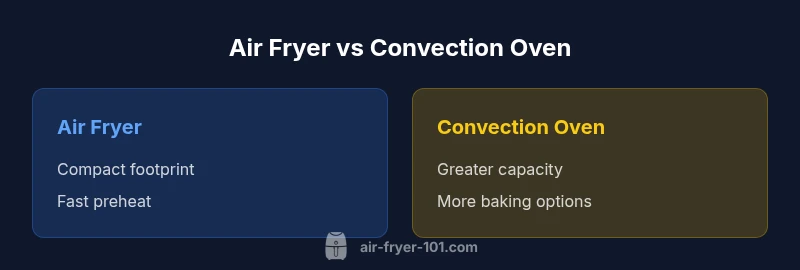
Air fryer versus convection oven: both cook with hot circulating air, but they target different needs. An air fryer excels in crispy snacks and small batches with minimal preheat and faster cook times. A convection oven offers more interior space, versatile functions, and better performance for larger meals. Choose air fryer for quick, health‑conscious snacks; choose convection oven for family meals and baking versatility.
Core Mechanisms of Air Circulation
Air fryers rely on a compact chamber with a high‑speed fan and an extra‑hot heating element to push hot air rapidly around food. This concentrated airflow creates a quick dry‑crust that mimics frying with far less oil. Convection ovens use a larger cavity and a built‑in fan but operate at a wider range of temperatures to support baking, roasting, and broiling. The key difference is scale: air fryers optimize speed and surface texture in small batches, while convection ovens optimize versatility and capacity for bigger cooks. According to Air Fryer 101, the efficiency of air fryers comes from concise airflow paths and shorter preheats, but you trade off volume for speed. In practice, this means you’ll see crisper edges on meals that fit the basket and frequent preheating when you start from cold. For health comparisons, this implies less oil for the same texture, but you still control fat through cooking method and ingredients.
Capacity, Footprint, and Use‑Case Fit
Air fryers typically occupy counter space equivalent to a small bread machine and handle batches ranging from a snack for one to a family‑sized plate for several people. Convection ovens sit in a larger footprint and often double as traditional ovens, allowing you to bake multiple trays simultaneously or roast a whole chicken. The practical difference is scale: air fryers win on compact kitchens and quick breakfasts or snacks; convection ovens win on family dinners, meal prep, and weekend roasts. If you routinely cook large roasts or bake pies, a convection oven provides more workable capacity. If your kitchen is small or you need a fast crisp on wings or fries, an air fryer is typically the better fit.
Cooking Performance: Crispness, Texture, and Even Heating
Crisp texture is the hallmark of air frying, achieved by direct contact with a perforated basket and steady airflow. Convection ovens can still crisp foods, but the texture depends on rack placement and tray design. For even heating, convection ovens excel when loaded with multiple racks and consistent spacing, while air fryers rely more on single‑batch airflow. In practice, you’ll notice air fryers produce uniform browning on evenly sized pieces, and convection ovens shine for foods that benefit from even heat across larger surfaces or multiple items at once. The test results show that the air fryer tends to create a crisp exterior quickly with less oil, whereas a convection oven provides more forgiving results that still look browned when you scale recipes.
Baking, Roasting, and Versatility: Beyond Crispy Snacks
While air fryers do a superb job on chicken tenders, vegetables, and small desserts, they are not a direct substitute for a full baking repertoire. Convection ovens support baking sheets, muffins, sheet‑pan meals, and more complex roasts. If your goal is to bake pastries with precise layers or to toast bread evenly, a convection oven maintains a wider temperature spectrum and more predictable results for multi‑dish meals. You can use the air fryer for quick reheats and small batches without preheating a larger oven. The trade‑off is that many air fryers limit the size and types of cookware you can use, whereas convection ovens accommodate standard bakeware.
Preheat Times, Temperature Control, and Consistency
Air fryers typically heat up faster due to their compact chamber, with some models preheating in under five minutes. However, you may need to stagger batches if you’re cooking for more people. Convection ovens often take longer to reach target temperatures, especially on fan‑assisted bake cycles, but they maintain more even temperatures across larger volumes. Consistency across batches tends to be higher with convection ovens when you keep racks properly spaced. In both cases, precise temperature control early in the cooking process yields the best texture and doneness, while avoiding overcooking on the outer layers.
Energy Use and Operating Costs
In general, air fryers use less energy per batch thanks to their smaller footprint and rapid cooking times. If you primarily cook small portions, this can translate into noticeable energy savings. Convection ovens, when used for larger meals, consume more energy in total but deliver versatility that reduces the need to heat multiple appliances. For households focused on efficiency, air fryers offer the strongest payback for snack‑level cooking, while ovens provide flexibility and potential energy efficiency when running full‑meal batches. The exact savings depend on usage patterns and model efficiency ratings.
Cleaning, Maintenance, and Longevity
Air fryers are typically easier to clean, with removable baskets and dishwasher‑safe components, though some models have baskets with nonstick coatings that require gentle care. Convection ovens involve multiple parts—racks, trays, and door seals—that can accumulate grease and baked debris, but they’re designed for longer lifespan with proper maintenance. Regularly wiping the interior, avoiding harsh cleaners on coatings, and following manufacturer cycles extend the value of both appliances. A key tip is to avoid overcrowding the air fryer basket, which can hamper airflow and reduce crispiness.
Durability, Warranty, and Long‑Term Value
Durability depends on build quality, materials, and how often you use the appliance. Air fryers with stainless steel housings and solid baskets tend to stand up well to daily use, while convection ovens rely on sturdy racks and thermostatic stability for years of service. Warranties vary by brand and model, with longer terms often linked to higher upfront costs but lower long‑term risk. When evaluating long‑term value, consider not only the purchase price but also energy efficiency, maintenance needs, and the availability of replacement parts.
Practical Buying Scenarios: Quick‑Decision Guides
If you cook for one to three people and value rapid crisping, an air fryer may fit best. If you regularly cook for a family or entertain guests, and you bake, roast, and reheat in large quantities, a convection oven that doubles as a full‑size oven is often the better choice. Consider your kitchen layout, storage space, and willingness to manage multiple appliances. In any decision, balance immediate convenience against long‑term versatility and energy use to choose the option that aligns with your typical meals.
Common Myths About Air Fryers and Convection Ovens
A common myth is that air fryers replace traditional ovens entirely. While they excel at small, crispy tasks, they don’t always accommodate large roasts or full‑sheet baking. Another myth is that convection always speeds things up; some recipes benefit most from wider heat distribution or slower cooking. Finally, some people assume air fryers require special oils; in practice, you can achieve good results with a light touch of oil or even without oil for certain foods. Debunking these myths helps you pick the right tool for the job.
How to Get the Best Results: Tips and Tricks
To maximize results, preheat if your model recommends it, particularly for air frying. Cut ingredients into uniform sizes for even browning, and arrange food in a single layer with space for airflow. For convection ovens, place trays in the center and keep distance between shelves. Use the appropriate bakeware for your appliance, and consider experimenting with temperatures 25–50°F (about 15–28°C) lower than standard recipes when using the convection setting. Finally, clean as you go to maintain airflow and performance.
The Bigger Picture: Kitchen Workflows and Health Considerations
Choosing between an air fryer and a convection oven also touches on kitchen workflows and health goals. An air fryer can simplify weeknight dinners by cooking faster with less oil, potentially lowering fat intake without compromising texture. A convection oven supports batch cooking, baking, and reheating for leftovers, contributing to a more energy‑efficient kitchen when used for full meals. Consider how often you’ll use the appliance for different types of meals, and align your choice with your health objectives, budget, and available storage.
Comparison
| Feature | Air Fryer | Convection Oven |
|---|---|---|
| Best For | Small batches, crispy snacks | Larger meals, baking and roasting |
| Capacity | 1–6 quarts typically | Full‑size oven cavity with racks |
| Preheat Time | Very fast to moderate | Longer preheat, depending on model |
| Energy Use | Lower per batch; efficient for snacks | Higher total energy for full meals |
| Versatility | Limited to air‑fryer tasks | Multifunction: bake, roast, broil |
| Cleanup | Removable baskets, easier cleanup | Racks and trays, more pieces to clean |
Pros
- Fast, crispy results with little oil
- Compact footprint suited for small kitchens
- Low preheat times for quick meals
- Easy to clean components in many models
Cons
- Small capacity; frequent batches for larger families
- Limited cookware compatibility in some models
- Not a complete substitute for a traditional oven
- Some models have higher upfront costs per performance
Convection oven offers greater versatility; air fryer excels at speed and crispiness for small batches
If you cook mostly for a few people and crave quick, crisp results, an air fryer shines. If you routinely prepare larger meals or bake, the convection oven provides broader capabilities and adaptability.
Got Questions?
What is the primary difference between air fryer and convection oven?
The primary difference lies in scale and purpose: air fryers optimize quick, crispy results in small batches, while convection ovens offer greater capacity and multi‑function cooking for larger meals. Both use a fan to circulate hot air, but the use case determines the best tool.
Air fryers are best for small, crispy jobs; convection ovens handle larger meals and baking.
Can you use metal cookware in both appliances?
Most air fryers require baskets or trays designed for the unit, often restricting metal cookware. Convection ovens can accommodate standard bakeware and metal pans, but you should follow the manufacturer’s guidance for each model.
Air fryers usually use their own baskets; convection ovens fit regular bakeware.
Is an air fryer healthier than a convection oven?
Both can produce healthier results with less oil, but health impact depends on ingredients and cooking method. Air fryers reduce oil usage for crispy snacks, while convection ovens support broader meal prep with mindful fat choices.
Air fryers can use less oil; ovens support broader healthy cooking options.
Can I bake pastries in an air fryer?
Air fryers can bake small pastries, but you may need to adjust time and temperature and use appropriate pans. Convection ovens are generally more suited for traditional baking with even results on larger trays.
You can bake small pastries, but for larger batches, use a conventional oven.
Which is cheaper to operate long term?
Costs depend on usage. Air fryers usually use less energy per batch and heat quickly, which benefits frequent snack cooking. For many meals, a convection oven that handles full batches can be more energy efficient overall if you replace multiple heating events.
Air fryers save energy per use; ovens can save energy when used for big meals.
Do air fryers replace a toaster oven?
Air fryers are not direct replacements for toaster ovens; they excel at crisping small items but have limited capacity. A toaster oven remains better for simple baking, toasting, and handling larger items.
Air fryers are great for crispy small bites, but not a full replacement for toaster ovens.
Quick Summary
- Air fryers: fast, crisp, small batches
- Convection ovens: capacity, versatility, larger meals
- Choose based on batch size and cooking needs
- Energy use depends on load and duration