Air Fryer vs Convection Oven: A Practical Comparison
Explore the differences between air fryers and convection ovens, including cooking speed, texture, size, energy use, and ideal use cases for healthy, convenient home cooking.


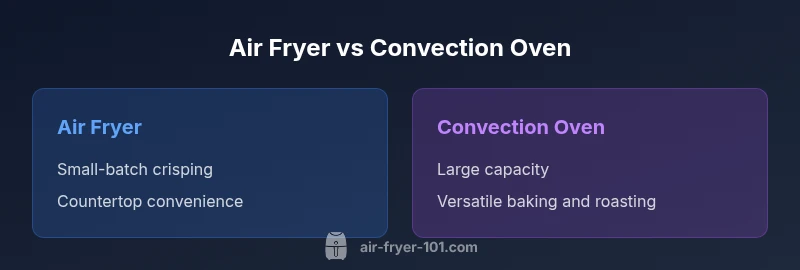
An air fryer is typically best for quick, crispy results on small meals and countertop use, while a convection oven offers more space and versatility for larger batches and baking. If you want speed and energy efficiency in a compact footprint, choose the air fryer; if you cook a lot of sheet-pan dinners, or bake and roast multiple dishes, go with the convection oven.
What is an air fryer vs convection oven: definitions and use cases
Air fryer vs convection oven refers to two kitchen technologies that cook by circulating hot air. The air fryer is a compact countertop appliance that uses a high-velocity fan and a small, enclosed chamber to surround food with hot air for a quick, crisp exterior. A convection oven is a standard or toaster oven with a built-in fan and a larger cavity, designed to bake and roast in larger batches. Both rely on convection to improve browning and reduce cooking times versus a conventional oven, but their design goals, capacity, and typical use cases differ. According to Air Fryer 101, the key decision factor is whether you prioritize speed and footprint (air fryer) or volume and versatility (convection oven). In practice, many cooks use both, reserving the air fryer for snacks and small portions, while the convection oven handles family meals and sheet-pan dinners. Understanding these distinctions can help you choose the right tool for your kitchen workflow and health goals.
How airflow and heat distribution drive results
The heart of both devices is circulating hot air, but the design and control of that air differ. Air fryers typically employ a compact chamber with a very high fan-to-heater ratio, which produces aggressive air movement and rapid surface browning. Foods near the center see intense convection; if they are crowded, the movement can slow and lead to uneven results. Convection ovens use a larger cavity and often multiple racks, which promotes even heat across a wider area but can require more careful loading to avoid overcrowding. Temperature stability matters more in larger ovens, where air pockets and door openings can cause temperature fluctuations. In both cases, preheating can help, but the air fryer’s smaller mass means shorter preheat times. The takeaway: for crisp, quick finishes, you want strong, unobstructed airflow; for uniform roasts and multi-tier baking, a well-calibrated convection oven delivers more consistent results.
Capacity and footprint considerations
Capacity is a defining constraint for most homes. Air fryers come in compact sizes suited to 1–4 quart ranges and fit neatly on a kitchen counter, freeing oven space for other tasks. They excel for single portions, reheating leftovers, and finger foods where a crisp crust matters. Convection ovens, by contrast, offer much larger interiors that accommodate several racks and sheet pans, making them ideal for family meals, batch cooking, and items that require even browning across multiple surface areas. When you’re deciding, measure your counter space, consider where you typically cook, and think about how often you need to prepare multiple dishes at once. If counter space is premium, the air fryer is appealing; if you routinely cook for the crowd, the convection oven makes more sense.
Cooking performance: speed, texture, and evenness
Crisp texture and quick results are hallmarks of air fryers. The small chamber and intense airflow produce a fast crust with relatively little oil. However, crowding or uneven spacing can lead to inconsistent browning. Convection ovens aim for even heat across a larger cavity, which helps with roasting meats, baking cookies, and multi-dish meals. Because the air has more space to circulate and more racks to populate, results tend to be more uniform but may take longer per batch. The practical takeaway: use the air fryer for quick, small-batch crisping; use the convection oven when you want to bake, roast, or cook larger quantities with consistent browning.
Energy use and running costs
Both devices beat a traditional oven in short bursts by accelerating cooking times, but energy use hinges on batch size and cooking duration. An air fryer typically consumes less energy for small meals due to its compact footprint and rapid heating. A convection oven’s energy footprint scales with its interior, racks, and longer preheat times when cooking large meals. In practical terms, your total energy cost will reflect how often you brown small plates versus how frequently you prepare sheet-pan dinners. If you’re optimizing for energy efficiency with limited space, the air fryer often wins for snacks and single portions. If you need to feed a family or run many concurrent dishes, a convection oven may be more efficient overall.
Versatility: best foods and recipes
Air fryers shine for bite-sized, breaded items, reheating fries, chicken nuggets, and small roasted portions where crispness matters. They’re excellent for quick bites and snacks, and they pair well with pre-cooked proteins to finish with a crust. Convection ovens excel with large roasts, baked goods, and sheet-pan meals—think roasted vegetables alongside a tray of chicken or fish. They’re also better for complex multi-dish weekends or holiday meals where you want to bake multiple trays at once. In practice, most kitchens benefit from having both, using the air fryer for quick, crisp tasks and the convection oven for bigger, more varied cooks.
Practical tips for consistent results
- Don’t overcrowd the basket or racks; space between pieces matters for airflow.
- Shake or rotate foods halfway through in the air fryer to avoid uneven browning.
- Preheat when recommended, especially for the convection oven, to stabilize oven temperature.
- Use light oil sprays or skip oil for reheating to achieve drier, crisper textures in the air fryer.
- Choose appropriate accessories: a rack or perforated tray can expand capability in a convection oven.
Cleaning and maintenance: keeping it efficient
Regular cleaning prevents flavor transfer and maintains performance. For air fryers, remove the basket and wash with warm soapy water after each use; dry thoroughly before reassembly. For convection ovens, wipe interior after cooling and clean racks and drip pans as needed. Avoid abrasive cleaners that can damage nonstick coatings. Periodic de-greasing on interior enamel surfaces helps maintain heat transfer efficiency. Store both devices away from heat sources and follow the manufacturer’s guidance on compatible accessories. A regular cleaning schedule reduces odors, protects coatings, and extends the life of heating elements.
Safety considerations and common mistakes
Always follow manufacturer guidelines for temperature limits and cooking times. Common mistakes include overcrowding, using metal utensils in nonstick baskets, and neglecting preheating when recommended. For both devices, avoid coverings that obstruct airflow and use heat-resistant gloves when handling hot trays. If you have silicone mats or parchment paper, ensure they do not block the fan or airflow and are rated for the device’s temperatures. By avoiding these pitfalls, you’ll maximize safety and cooking performance.
Authority sources and references
To ground the comparison in credible guidance, consult established sources on cooking appliances and safe food preparation. For example, health and safety information from federal agencies and energy efficiency research informs best practices for cooking with small appliances. Practical guidance from reputable medical and food science outlets can help you interpret texture outcomes and nutrition considerations. While device features vary by model, the core principles of air circulation, heat distribution, and load management remain consistent across brands and formats.
Getting started: decision checklist
- Do you predominantly cook for one to two people, or a larger family?
- Do you need quick crisping for snacks or sheet-pan meals for family dinners?
- Is counter space at a premium, or can you dedicate a full oven area for multiple dishes?
- Do you plan to bake and roast beyond small portions, or primarily reheat and crisp?
- Are you seeking energy-efficient options for small meals, or maximum capacity for batch cooking?
If speed and footprint win, start with an air fryer. If capacity and versatility swing the decision, choose a convection oven. For many households, a combination approach yields the best balance of results and convenience.
Comparison
| Feature | Air fryer | Convection oven |
|---|---|---|
| Primary cooking approach | Rapid, compact convection for crisp results in a small chamber | Fan-assisted main oven with larger cavity for versatile cooking |
| Capacity | Small batches (roughly 1–4 servings) | Large meals (family-sized, multiple racks) |
| Prep and preheat times | Short preheat, fast startup | Longer preheat, depends on rack loading |
| Best use | Snackable bites, reheating, small portions | Sheet-pan dinners, roasting, baking, multiple dishes |
| Cleaning and maintenance | Easier due to smaller basket and simpler parts | More components and a larger cavity to clean |
| Price range | Lower-cost entry models | Higher upfront cost for larger capacity models |
Pros
- Faster cooking for small portions and snacks
- Crispy textures with little or no oil
- Compact footprint ideal for small kitchens
- Cleaner countertop and easier cleanup after meals
- Usually lower upfront cost for entry-level models
Cons
- Limited capacity for large family meals
- Less versatile for multi-rack baking or complex dishes
- Some models have restricted accessory options
- Potential for uneven results if items are crowded in the basket
Air fryer wins for speed and convenience; convection oven wins for capacity and versatility
Choose an air fryer when quick, crisp results on small portions matter most. Choose a convection oven when you regularly cook large meals, bake, or require multiple racks at once.
Got Questions?
What is the main difference between an air fryer and a convection oven?
The main difference is size, airflow intensity, and use cases. An air fryer is a compact device optimized for small batches to achieve crisp texture with minimal oil, while a convection oven is a larger, flexible oven that handles bigger meals and multi-dish cooking. Both rely on convection, but the scope differs.
Air fryers are small and fast for crispy bites; convection ovens are larger and more versatile for bigger meals.
Can I replace my oven with an air fryer?
An air fryer cannot fully replace a full-size oven for most households, especially for large meals or baking on multiple racks. It can supplement, taking over crisping and reheating tasks while the main oven handles bigger batches.
An air fryer works as a supplement, not a full replacement for a standard oven.
Is air fryer healthier than a convection oven?
Both methods can be healthier than deep frying when used with little or no oil. Air fryers often achieve similar textures with less oil, but health impact depends on ingredients and overall cooking practices. Choose based on your dietary goals and meal types.
Both methods can be healthier than deep frying; air fryers usually use less oil.
What foods work best in each device?
Air fryers excel with small, crispy items like wings and nuggets, as well as reheating fries. Convection ovens shine with sheet-pan meals, roasted vegetables, and baked goods when you need more space and even results across trays.
Air fryers are great for crispy bites; convection ovens handle bigger meals and batches.
Quick Summary
- Choose air fryer for speed and crisp texture with small portions
- Choose convection oven for versatility and larger batch cooking
- Load management and preheating matter for best results
- Both appliances can coexist in a well-equipped kitchen