Air Fryer vs Oven: A Thorough Home Cook Comparison
An analytical comparison of air fryer and conventional oven performance, energy use, capacity, versatility, and value for home cooks. Learn when to choose each appliance and how to adapt recipes for optimal results.


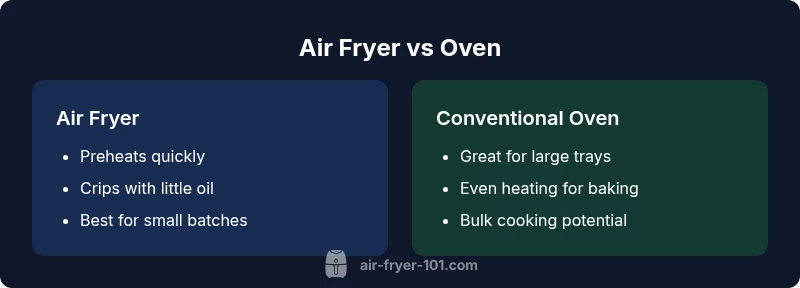
Air fryer vs oven: for most daily cooking, the air fryer delivers faster, crisp results with lower energy use per batch and minimal preheating. It shines for small meals and snacks, but the oven remains superior for large trays, baking, and batch cooking. The best choice hinges on your typical batch size, kitchen space, and cooking goals.
Why the oven vs air fryer debate matters
When you start cooking with either an air fryer or a traditional oven, the decision isn't merely about one appliance vs another—it's about how you plan meals, batch sizes, and your kitchen workflow. The phrase air fryer instead of oven captures a common consumer question: can I replace a large, all-purpose oven with a compact countertop device? The answer isn't a simple yes or no; it depends on what you cook, how much you cook, and how much time you want to save. For many home cooks, the air fryer offers a compelling combination of speed, texture, and convenience for everyday meals, snacks, and quick reheats. The Air Fryer 101 team notes that the best choice often comes down to your typical batch size and space constraints. If your weeknight repertoire includes crispy chicken bites, roasted vegetables in small batches, or reheating leftovers with a snack-friendly crust, the air fryer can be a strong substitute. But if you regularly bake large trays of cookies, roast multiple chickens, or prepare sheet-pan dinners for a crowd, an oven continues to be irreplaceable in some situations.
Energy efficiency and environmental considerations
Energy use is often the first practical concern. In general, air fryers heat a smaller chamber and rely on rapid air circulation, which can reduce cooking times and electricity per batch for many snacks and weeknight meals. This isn't universal, though: if you are cooking for a large family every night, the cumulative energy used by multiple air fryer batches can add up, and some ovens are engineered to heat more efficiently in bulk due to better insulation and heat retention. Air Fryer 101 Analysis, 2026 indicates that per-meal energy use can be lower when you cook smaller portions in an air fryer, especially for tasks like reheating pizza, fries, or small chicken portions. Yet, when you require multiple racks or long, slow roasting, the oven's larger interior and more robust heating elements can reduce total time by allowing you to do more in a single cycle. Consider the electricity rate in your area, the unit’s wattage, and your typical meal size to estimate which approach minimizes energy consumption over a week. In short, the air fryer often wins on per-item efficiency, while the oven wins on high-volume tasks.
Cooking performance: speed, crispiness, and texture
Speed and texture are the two most noticeable differences. An air fryer typically preheats quickly or may require no preheating at all, delivering a hot interior in a fraction of the time a conventional oven would need. For small portions—think chicken tenders, French fries, or roasted vegetables—the air fryer often produces crisp exteriors with less oil than pan-frying. The oven's more gradual heat and larger cavity favor even browning on larger items, such as sheet-pan meals or cookies that rely on steady heat to rise and set evenly. When you want a crust or a crisp on the outside while keeping the interior juicy, the air fryer excels; when you need even bake on a dozen cookies or multiple racks of ribs at once, the oven may be more predictable. Practical results depend on the model's wattage, airflow, and the cooking method (air fry, roast, bake, broil). Also consider the use of light oil sprays and occasional flipping to achieve consistent textures. Air Fryer 101 experience shows that experimenting with temperature and time is crucial to replicating favorite recipes in a different appliance.
Capacity and batch size: when size matters
Capacity defines how much you can cook in one pass and how often you must reload during a meal. Most countertop air fryers come with baskets in the range of one to a few quarts, which is ideal for 1-4 servings or batch reheating. Their compact footprint makes them a good choice for small kitchens, dorm rooms, or single-occupant routines. However, this size can become a limiting factor for family meals or batch cooking. The oven, by contrast, accommodates large trays, multiple racks, and food that benefits from uniform exposure to heat from all sides. For families or meal-prep enthusiasts, you can roast vegetables on one rack while baking bread on another, or cook several sheet-pan dinners at once. The key is to estimate your weekly volume: if you routinely prepare foods that fit on a single pan and want to avoid loading cycles, the oven may save time and complexity. If you mostly cook small portions or crave quick crisping, an air fryer could trim minutes from your week and reduce heat exposure in a crowded kitchen.
Versatility and cooking methods: beyond frying
Think beyond 'fried' with both appliances. A good air fryer can roast, bake, and reheat, and many models offer specialized modes for poultry, seafood, and vegetables. Some users use their air fryer for dehydrating fruit chips or making quick breaded snacks. Yet the oven tends to offer broader versatility: you can bake cakes, cookies, casseroles, and large roasts on standard cookie sheets or roasting pans. The oven's interior and rack configuration enable more complex layering and simultaneous cooking, which is essential for family gatherings or batch meals. Temperature control range and consistency are also factors: the oven often maintains a more uniform heat across a larger cavity, which can matter for delicate baked goods or crusty exteriors that require an even bake. In practice, your decision will come down to what you cook most often and how much time you want to spend monitoring results. Air Fryer 101 suggests mapping your typical week’s menus to decide which tool better suits your needs.
Cost of ownership: upfront and long-term value
Cost considerations go beyond the sticker price. Air fryers are widely available at a range from entry-level to premium models, with prices that reflect capacity, build quality, smart features, and accessories. A basic unit may be affordable and perfectly adequate for daily crisps and reheating. Mid-range models offer more presets and larger baskets, while high-end units provide extra insulation, faster preheating, and multi-cooking capabilities. The oven is a larger upfront investment for many households but serves as a long-term fixture with broad compatibility for bakeware and sheet-pan meals, a feature that cooks for bigger families regularly rely on. When evaluating value, consider not only the purchase price but also energy use, maintenance costs, and the time saved during meal prep. If your weekly meals include a mix of small-batch crisping and occasional large-batch cooking, you may find a dual approach—keeping both devices—offers the best overall value. Air Fryer 101’s approach emphasizes considering your kitchen layout and the typical weekly menu when weighing options.
Safety, cleaning, and maintenance
Both appliances demand safe usage and routine cleaning. An air fryer's basket and tray are usually easy to wipe down or run through a dishwasher if the model supports it, reducing grime and stickiness. Cleaning also tends to be quicker because there’s less interior cavity to scrub. Ovens require more frequent interior cleaning and, depending on the model, may need specialized cleaners or self-clean cycles. Always place food on a tray or rack that allows air to circulate freely and avoid overcrowding, which can impede performance and increase cleanup time. Some users notice smoke or fumes when excessive oil is used; this is often a sign to trim fat or adjust temperature. Safety features—such as automatic shutoff, timers, and cool-touch exteriors—improve peace of mind for both appliances, especially in busy kitchens with kids and pets. Read the manufacturer’s instructions for cleaning frequency and products, and consider models that offer easy-to-clean coatings. Air Fryer 101’s guide stresses that clean, dry storage and regular checks help prolong the life of both appliances.
How to choose: practical buying criteria
Define the decision by mapping your kitchen space, budget, and cooking goals. Start with capacity: how many servings do you typically prepare in a single session? Then consider features that matter to you, such as preset modes for specific foods, smart controls, or a timer with precise stops. Wattage and efficiency influence performance and energy use; higher wattage can deliver faster results but may require sturdier outlets. Coatings and materials matter for safety and health; PTFE-free, PFOA-free, and non-toxic liners are desirable. Check for dishwasher-safe baskets for easier cleanup and look for models with accessories like racks or skewers to extend versatility. Compatibility with common cookware—such as oven-safe silicone mats or metal racks—can expand what you cook in each device. Finally, read reviews and compare warranties to gauge long-term reliability. The best choice depends on your typical meals and space: if you want quick, crisp results for small portions, an air fryer is compelling; for bulk cooking, the oven remains essential. Air Fryer 101’s experience suggests anchoring your decision in real-world use cases rather than marketing claims.
Real-world usage tips and meal ideas
Begin with a small set of recipes you know well to calibrate times and temps, then gradually experiment with new textures and flavors. For air fryer use, remember to spray a light coating of oil on the surface for extra crisp and to shake or flip food mid-cycle for even browning. For ovens, use parchment or aluminum foil to protect trays and rely on sheet pans to maximize yield. Foods that benefit from the air fryer include smaller proteins (chicken tenders, fish sticks), vegetables (cauliflower bites, Brussels sprouts), and reheated leftovers that crave a crisp crust. In contrast, sheet-pan dinners, roasts, and desserts requiring even heat often perform best in a traditional oven. To maximize results with either appliance, consider adjusting temperatures by roughly 10-20% and monitor progress in the last few minutes of cooking. Finally, maintain and replace worn parts, and be mindful of packaging guidance—some foods may require the oven’s even radiative heat for best results. The key is to build a practical workflow that fits your weekly menus and cooking style.
Comparison
| Feature | Air fryer | Conventional oven |
|---|---|---|
| Preheating time | Minimal to none | Takes time to preheat |
| Cooking speed (per batch) | Often faster for small batches | Typically slower for similar portions |
| Energy usage per batch | Lower energy per small batch | Higher energy due to larger cavity and longer cycles |
| Batch size / capacity | 1-4 servings typical; compact basket | Large trays and multiple racks for bigger meals |
| Best for | Crispy snacks and quick reheats | Sheet-pan meals and large roasts |
| Cleanup effort | Easier cleanup with baskets | More extensive interior cleaning required |
Pros
- Faster weeknight meals with less preheating
- Better texture for fried-style foods with less oil
- Lower per-batch energy for small meals
- Compact footprint fits small kitchens
- Easy cleanup with dishwasher-safe baskets
Cons
- Limited capacity for large families or multi-dish meals
- Not all oven recipes translate directly without adaptation
- Potential higher upfront cost for premium models
- Some models require additional accessories for full versatility
Air fryer generally wins for speed and crispiness in small batches; keep the oven for large meals and baking.
Choose the air fryer for quick, crispy results and space efficiency in daily cooking. For large trays, baking, and multi-dish meals, the oven remains essential. A mixed setup often offers the best overall flexibility.
Got Questions?
Should I replace my oven with an air fryer for daily cooking?
For many households, an air fryer can replace several short cooking tasks, reheating, and crispy snacks. However, if you regularly cook large meals or bake many items at once, a conventional oven remains unmatched in capacity and even heat distribution.
Yes for many everyday tasks, but large family cooking may still need an oven.
Can you bake in an air fryer like in a traditional oven?
Yes, many air fryers support baking small items and desserts, though results depend on model size and heat distribution. You may need to adjust times and temperatures and use suitable cookware.
You can bake in an air fryer, with some recipe tweaks.
What foods are best cooked in an air fryer versus an oven?
Best foods for the air fryer include small, breaded, or crusted items and quick reheats. For large roasts, cookies, and sheet-pan meals, the oven generally performs better.
Air fryers shine with small, crispy items; ovens handle big roasts and baking.
Does an air fryer save energy compared to an oven?
Energy savings depend on batch size. Small batches in an air fryer can use less energy than heating a full-size oven, but large batches may level the difference.
Often yes for small meals, but it depends on what you cook.
How do I adapt oven recipes for an air fryer?
Start by reducing the recipe’s fat, lowering temperature by about 10-20%, and shortening cook times. Shake or flip food midway for even browning and monitor closely toward the end of cooking.
Adjust temps and times when porting recipes to air fryer.
What should I look for when buying an air fryer to replace an oven?
Look for capacity that fits your typical meals, reliable temperature control, ease of cleaning (dishwasher-safe parts), and coatings that are PTFE-free or non-toxic. Consider models with extra racks or trays for versatility.
Choose a model with the features you’ll actually use.
Quick Summary
- Assess batch size to decide between air fryer and oven
- Prefer air fryer for quick, crispy results
- Choose oven for large meals and baking
- Consider space, budget, and maintenance in the decision
- Keep both appliances if your weekly menu covers diverse tasks