Why Is My Air Fryer Rattling? Fast Fix Guide for 2026
Experiencing a rattling air fryer? Air Fryer 101 walks you through quick causes, safe DIY checks, and when to seek help. Stay cooking quietly and safely with our step-by-step troubleshooting.


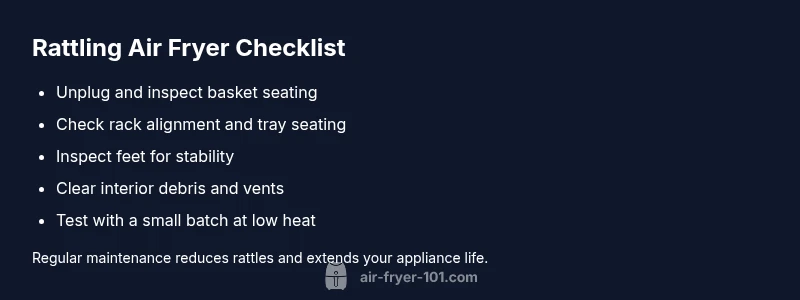
A rattling air fryer is usually caused by loose parts like the basket, rack, or feet. First, unplug and inspect seating of the basket and rack, then tighten any loose feet. Clear debris from the interior and vent. If the noise persists after these quick checks, stop using it and contact support.
Understanding the symptom: why is my air fryer rattling
If you're hearing a rattling sound during operation, you're not alone. The most common culprits are loose or misaligned internal components such as the basket, rack, or tray. A rattling noise can also come from unstable feet or a loosely seated pan. This guide prioritizes safety first and aims to help you diagnose whether the noise is harmless vibration or a sign of a component needing adjustment. Remember, addressing the issue early can prevent wear and keep your appliance cooking efficiently. The goal is to restore smooth operation without compromising safety or performance.
Common culprits you’ll want to inspect first
The majority of rattling noises come from easily fixable sources. Start with the simplest checks:
- Loose basket or tray: Ensure the basket slides and locks securely in its slot.
- Misaligned rack: Make sure the rack sits flat and fully inserted.
- Wobbly feet: Inspect the base for level contact with the countertop and tighten or replace if needed.
- Debris in the chamber: A small crumb or piece of packaging material can rattle against the fan housing. Inspect and remove any foreign objects.
- Door latch and seal: A poorly seated door can create extra vibration; ensure it latches properly. These checks cover 80% of rattling issues and can be done with the unit unplugged and cooled.
Safe inspection steps you can perform before cooking
Safety first: unplug the unit and allow it to cool completely before touching any interior parts. Remove the basket and tray and inspect seating in their respective slots. Gently wiggle the components to feel for any looseness. If you notice a significant gap or wobble, re-seat or replace the component before the next use. Finally, wipe down the interior and exterior to remove crumbs that could shift during operation.
Diagnostic cues and how to interpret different sounds
Not all rattles indicate the same problem. A light, occasional rattle when the basket moves is often normal if components are properly seated. A persistent metallic clank usually points to a loose rack or a damaged mounting. A buzzing or humming noise can be motor-related or a fan issue. Distinguish between loose parts (fixable with reseating) and potential wear (requiring replacement or service).
How to fix common causes (non-invasive) and what to expect
Address the most frequent issues with simple steps: reseat the basket and rack, adjust feet to level the unit, and remove debris. If the noise continues after these steps, you may be looking at a wear issue or a loose motor mount, which requires professional help. In most cases, improving seating and cleaning channels the problem away and restores quiet operation.
Safety considerations and when to seek professional help
If you notice exposed wiring, hot spots, burning smells, or the rattling continues after all basic checks, stop using the appliance immediately and contact the manufacturer’s support or a qualified technician. Do not attempt to disassemble the motor housing or fan. Ongoing noise could indicate a fault that could compromise safety or cause further damage if ignored.
Maintenance routine to prevent rattles in the future
Create a simple maintenance habit: after every few uses, unplug and inspect seating, clean the interior and vents, and verify feet are stable. Maintain a regular cleaning schedule to prevent crumbs from shifting during operation. Store the air fryer on a stable, level surface away from edges to minimize vibration transfer. Consistent checks reduce the likelihood of future rattles.
What to expect after fixes: testing and next steps
After performing seating, cleaning, and stability checks, plug in and test the unit with a small batch at a low temperature. Listen closely for changes in sound, and confirm that the basket remains securely in place during operation. If the rattling is gone, gradually increase to normal cooking settings. If not, proceed with the diagnostic flow or contact support for further guidance.
Steps
Estimated time: 30-40 minutes
- 1
Power down and unplug
Turn off the air fryer and unplug from the outlet. Allow the unit to cool completely before touching interior parts. This step ensures your safety while inspecting components.
Tip: If it’s cooled, place it on a dry surface to avoid moisture contact. - 2
Remove basket and tray, inspect seating
Take out the basket and slide-in tray, then reseat them firmly in their slots. Ensure they click into place and move freely without wobble.
Tip: Check both sides of the basket rails for even seating. - 3
Check the rack and base for looseness
Inspect the rack for alignment and verify the base feet are stable. Tighten screws or replace feet if they wobble.
Tip: Use a soft cloth to avoid scratching surfaces while tightening. - 4
Clear interior and vent area
Look for crumbs or packaging debris that could rattle or block vents. Remove debris with a soft brush or cloth.
Tip: Never insert metal tools into the fan area. - 5
Reassemble and test for sound
Reinsert the basket and tray, ensure the door sits flush, and give a quick test run at a low setting to listen for changes.
Tip: If you hear a new or louder sound, stop and recheck components. - 6
If noise persists, consult support
If rattling continues after checks, contact customer support or a qualified technician for assessment.
Tip: Note model number and observed symptoms to speed up service.
Diagnosis: Air fryer rattling during operation
Possible Causes
- highLoose or misaligned basket, tray, or rack
- mediumWorn or uneven feet or base causing vibration
- lowForeign object inside vent or fan housing
- lowDamaged or loose fan blade or motor mounting
Fixes
- easyPower off and unplug, then inspect basket and rack for proper seating
- easyCheck the feet and base for stability, tighten or replace if wobbling
- easyRemove any loose debris from interior and exterior, clear vent area
- mediumIf parts appear damaged or rattling persists, discontinue use and contact support or a technician
Got Questions?
Why does my air fryer rattle even when I just turned it on?
Startup rattling usually means a loose component or misalignment. Check basket seating, rack alignment, and feet for stability before use. If the noise continues, there may be a more serious mounting issue that requires service.
Startup rattling often means a loose part. Check seating and stability, then test again. If it persists, seek service.
Is a rattling air fryer dangerous to use?
A minor rattling from loose but non-electrical parts is usually not dangerous, but it signals you should stop using the unit until the issue is fixed. If rumbling comes from the motor or fan area, discontinue use and contact support.
Rattling from loose parts isn’t usually dangerous, but stop using it until fixed. If you hear motor noises, contact support.
Can rattling affect food or performance?
Yes, excessive vibration can affect airflow and cooking results. It can also wear components faster. Fix seating, clean vents, and verify stability to restore performance.
Rattling can change how air flows and cook evenly. Fix the seating and clean the vents to keep performance steady.
What should I check first if my air fryer rattles?
First unplug and inspect the basket seating and tray alignment. Then check the feet for level contact and remove any debris inside the chamber that could rattle.
First unplug, then check seating and feet. Clear debris that could rattle.
If the noise doesn’t stop, what’s the next step?
If basic checks don’t resolve it, stop using the unit and contact the manufacturer’s support or a qualified technician for assessment.
If it still rattles after checks, contact support or a technician.
Are there safety precautions I should follow during maintenance?
Always unplug before inspecting, avoid disassembly of the motor housing, and wear protective gloves if there’s sharp metal edges. If unsure, seek professional help.
Unplug before inspecting and don’t open the motor housing. If unsure, get help.
Watch Video
Quick Summary
- Unplug and inspect seating first; it's the most common fix.
- Loose basket or rack is the leading cause of rattling.
- Regular cleaning and stable placement prevent future noises.
- Seek professional help for damaged parts or persistent rattling.