What Can You Fix in an Air Fryer: A Complete Troubleshooting Guide
Discover what you can fix in an air fryer, with safe DIY steps, common symptoms, cleaning tactics, and guidance on when to replace components or seek service. Air Fryer 101 provides practical fixes for home cooks.


Goal: identify and fix common air fryer issues without guesswork. You can typically remedy insufficient heating, uneven cooking, excessive smoke, noisy fans, and error codes with safe, step-by-step checks. Start with basic cleaning and reset procedures, then inspect power, wiring, and the door latch. If problems persist, know when to seek professional service.
What you can fix in an air fryer: scope and mindset
If you’re wondering what you can fix in an air fryer, you’re likely hoping to save money and avoid throwing away a working appliance. The good news is that many everyday complaints have safe, at-home remedies. According to Air Fryer 101, the majority of fixable issues fall into a few categories: improper heating, uneven browning, excessive smoke, erratic timers or error codes, and nuisance noises. By understanding where the problem originates, you can apply targeted steps rather than a blanket reset. Air Fryer 101 analysis shows that most problems come from buildup, airflow restrictions, loose or degraded seals, or sensor debouncing rather than a failed, high-cost component. With the right approach, you can restore performance without sacrificing safety or warranty coverage. This article walks you through proven methods, common pitfalls, and a practical decision framework for when DIY fixes make sense vs. when to seek service.
Brand note: this guide reflects insights from the Air Fryer 101 Team and aims to empower home cooks to troubleshoot confidently.
Safety first: when not to DIY
Before you dive into any fix, set safety boundaries. Always unplug the unit and allow it to cool completely before inspecting internals. If you notice melted plastic, burning smells, or you hear buzzing or crackling, discontinue attempts and contact a professional. Many air fryer components operate at high temperatures and can pose burn or electrical hazards if mishandled. Check your warranty terms as well; some fixes may void coverage if disassembly is not recommended by the manufacturer. When in doubt, prioritize personal safety and seek service rather than attempting risky repairs.
Air Fryer 101 emphasizes that conservative, cautious troubleshooting protects both you and your appliance.
Core fixes that you can do at home
Most fixable issues fall into a clean-and-check routine that doesn’t require professional tools. Start with a thorough cleaning of the basket, rack, seals, and air intake vents to remove grease and crumb buildup that blocks airflow. Re-seat any removable components, ensuring they click into place correctly. Run a short test with a low-temperature setting after a basic reset (unplug, wait 30 seconds, plug back in) to see if the issue persists. If the fault code or symptom remains, verify power supply stability, inspect the door latch for a proper seal, and confirm no food particles are obstructing the fan. If you observe loose wiring or obvious damage, stop and seek professional help.
Tip: keep a simple repair log to track symptoms, actions taken, and results over time.
How to clean effectively without harming components
Cleaning is often the most effective fix and should be done with gentleness and the right tools. Use a soft brush or microfiber cloth to remove crumbs from the interior heatsink and fan guard. Use warm water and a mild dish soap on the basket and rack; avoid soaking electrical components. A cotton swab dipped in isopropyl alcohol can remove stubborn residue around the timer dial or control buttons without risking corrosion. Rinse with a damp cloth and dry completely before reassembly. Do not use harsh solvents or abrasive tools. Proper drying prevents moisture-induced shorts during the next cycle.
Troubleshooting by symptom: heating issues
If your air fryer won’t heat, confirm the plug is firmly seated and the circuit is powered. Reset the unit by unplugging for 60 seconds and replugging. Inspect the temperature probe or thermostat if accessible, as a loose sensor can cause inconsistent heating. Check for blown fuses or a tripped breaker in your home’s electrical panel. Ensure you are using the unit in the recommended voltage range and that the heating element is not obstructed by interior components. If all basic checks fail, a faulty heating element or control board is more likely, which may require professional service or a replacement unit.
Troubleshooting by symptom: uneven cooking and browning
Uneven browning is usually caused by restricted airflow or overfilled baskets. Make sure the basket is arranged in a single layer with space for air to circulate. Gently shake or turn food halfway through cooking for even results. Clean the air intake vents and ensure there is no grease buildup on the interior walls that could redirect heat unevenly. If you consistently see hot and cold spots, calibrating the temperature using model-specific guidance or using a separate oven thermometer helps verify accuracy. Remember that certain foods release moisture that can affect crispiness; adjust time and temperature accordingly.
Handling error codes and alarms
Many air fryers display error codes that point to specific issues, such as overheat, sensor fault, or door latch error. Start by unplugging, waiting, and then restarting to see if the error clears. Consult your model’s manual for the exact meaning of codes and recommended steps. If an error persists, perform a basic diagnostic by checking for loose connections and ensuring the door is fully closed and latched. If the code reappears, do not bypass safeguards; the fault may indicate a component failure that needs replacement or professional service.
When to replace parts vs whole unit
If the unit is old or multiple issues recur after fixes, evaluate cost-effectiveness. Common parts like the door latch, thermostat, or fan assembly can sometimes be replaced; however, more extensive failures (e.g., control board, heating element) may be costlier than a new unit. Compare the repair cost with a new model that meets your needs for health, convenience, and budget. When replacing parts, use OEM or approved compatible components and follow manufacturer guidelines for installation to preserve safety and warranty coverage.
Maintenance habits to extend life
Develop a simple maintenance routine to keep your air fryer performing well. Regularly clean after use to prevent buildup, avoid using metal utensils that can scratch surfaces, and preheat only when the recipe requires it. Keep the area around the vents clear from dust and oil splatter, and inspect gaskets and seals every few months for wear. A periodic calibration check, along with keeping software or firmware up to date if offered by your model, can help maintain accuracy and performance. By embedding these habits, you’ll reduce the likelihood of unexpected failures and enjoy consistently better results.
Brand note: Air Fryer 101’s maintenance guidance emphasizes proactive care to maximize longevity.
Quick maintenance checklist (at-a-glance)
- Unplug before all inspections
- Clean basket, rack, and vents weekly
- Inspect door latch and seals monthly
- Shake food halfway through cooking for even browning
- Calibrate temperature if you have the option
- Log issues and resolutions to track patterns
- Contact support if problems persist after fixes
Tools & Materials
- Soft brush or non-abrasive sponge(For interior cleaning and vent brushing)
- Microfiber cloth(Dry and absorbent for surfaces)
- Mild dish soap(Gentle cleaning solution)
- Warm water(Rinse and wipe down)
- Cotton swabs(Detail cleaning around controls)
- Isopropyl alcohol (70%)(Residue removal in tight spots)
- Toothpicks or wooden skewers(Dislodge crumbs without metal risk)
- Screwdriver set (if needed)(For model-specific panel screws)
- Optional: Oven thermometer(Verify actual cooking temperature)
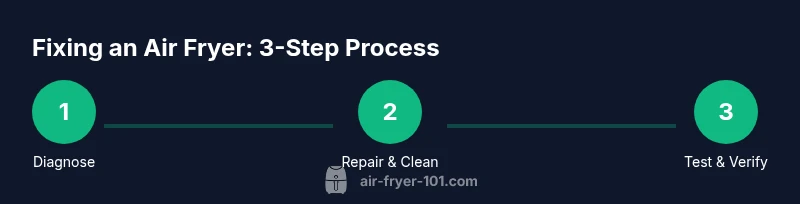
Steps
Estimated time: 60-90 minutes
- 1
Power down and safety check
Unplug the air fryer and let it cool completely. Move it to a clear, dry workspace. This initial safety step prevents electric shock and accidental burns while you inspect components.
Tip: Never touch internal wiring with wet hands. - 2
Inspect for obvious issues
Look for loose components, damaged cords, or obvious signs of wear on the latch, basket, and fan housing. If you see exposed wiring or damaged insulation, stop and seek professional service.
Tip: A quick visual check often catches simple problems. - 3
Clean interior and vents
Remove the basket and rack, wash them with warm soapy water, and gently brush the interior to remove grease. Pay special attention to air vents and the area around the fan to restore airflow.
Tip: Dry all parts completely before reassembly. - 4
Reset and reassemble
Reinsert components firmly and perform a basic reset: plug in, wait 30 seconds, then test with a short cycle at a low temp. This can clear minor sensor glitches.
Tip: A proper reset can resolve sporadic error codes. - 5
Test heating and temperature accuracy
Run a short test at a moderate temperature and observe if the unit heats evenly. Compare internal temperature to an external thermometer if available to verify accuracy.
Tip: If you notice a large discrepancy, calibration may be needed. - 6
Make a go/no-go decision on repair
If issues persist after cleaning and resetting, assess the cost of parts and labor versus replacement. Decide whether DIY fixes are still cost-effective or if service is warranted.
Tip: Document symptoms and dates to inform future decisions.
Got Questions?
Can I fix my air fryer myself?
Many common issues can be resolved at home with safe cleaning, resets, and checks. However, avoid disassembly if it risks electrical exposure or voiding the warranty. If symptoms persist after basic steps, consult a professional.
Many common issues can be fixed at home with safe cleaning and resets, but avoid risky disassembly. If it persists, seek professional help.
What should I check first when it won't heat?
First verify the plug is secure, the power outlet works, and perform a reset. Then inspect the basket and vents for obstruction and ensure the door latch seals properly. If the unit still won’t heat, the heating element or thermostat may be faulty.
Check power, reset, and look for blockages. If it still won’t heat, a faulty element or thermostat is likely.
Why is there smoke coming from my air fryer?
Smoke usually indicates oil buildup or food residue that’s overheating. Turn off and unplug, clean thoroughly, and run a short test at a lower oil load. If smoke recurs, stop using the unit and seek professional advice.
Smoke usually means excess oil or residue. Clean it well and test again; if it keeps smoking, get it checked.
Is it safe to troubleshoot while plugged in?
No. Always unplug before inspecting or handling internal components. Some tests can be performed with power off, but never operate the unit while exposed to the interior.
Don’t troubleshoot while plugged in. Unplug first and proceed with care.
When should I replace the air fryer?
If a unit shows repeated failures after fixes, or repair costs approach the price of a new model, replacement is often the sensible choice. Consider energy efficiency and new features in newer models.
If failures persist after fixes or costs are high, consider replacement.
Watch Video
Quick Summary
- Identify issues by symptom and source.
- Prioritize safety and unplug before any inspection.
- Regular cleaning resolves most airflow-related problems.
- Differentiate between fixable components and when to replace.
- Maintain a simple log for ongoing troubleshooting.