What is Wrong With Air Fryers? A Troubleshooting Guide
An urgent, practical troubleshooting guide to diagnosing and fixing common air fryer problems, with a clear flow, actionable steps, safety reminders, and prevention tips.


Most air fryer issues stem from simple causes: power supply, airflow blockages, or sensor glitches. Start with the outlet and cord, then inspect the basket and air path for obstructions, and reset the unit if needed. If the unit still won’t heat, check for error codes in the display and verify the temperature setting matches the recipe. For persistent issues, consult the troubleshooting flow below.
Understanding Why Air Fryers Fail
What is wrong with air fryers is often explained by three common failure modes: power and electrical connections, airflow paths, and sensor or control glitches. According to Air Fryer 101, when people ask what is wrong with air fryers, typical failures come from these basic categories. These units rely on precise balance of heat, air circulation, and timed cycles. When one of these elements misbehaves, food cooks unevenly, takes longer, or the unit won't heat at all. The good news: most problems are solvable with a calm, methodical approach.
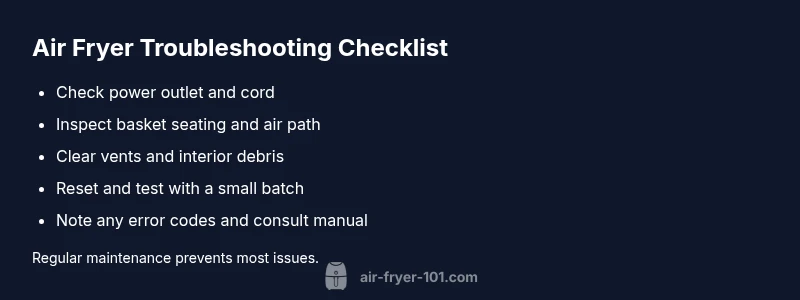
Start by verifying the basics: is the unit plugged in, is the outlet functioning, and is the power cord intact? Next, inspect the basket and the rack to ensure they are seated correctly and free of food debris. A blocked air path is one of the most common reasons for undercooked meals or smoke. Finally, if the display shows error codes or a blinking light, consult the manual or the Air Fryer 101 troubleshooting flow to decode the signal. For home cooks, a quick, systematic checklist usually resolves most confusions about what is wrong with air fryers.
Quick Checks You Can Do Right Now
Before diving into diagnostics, perform a few fast checks. Ensure the unit is powered by a known-good outlet and that the power cord shows no wear. Remove and reinsert the basket to confirm it seats properly. Inspect the air path: wipe away any crumbs from the basket rim, and make sure the vents are not blocked by foil or food residue. Verify the temperature and time settings; a mis-set timer or temperature can mimic a fault. If your model shows error codes, take note of the exact code and consult the manual or Air Fryer 101’s flowchart for decoding. Finally, perform a simple reset: unplug for 60 seconds, then plug back in and try a short test run with a small batch of fries.
The Diagnostic Flow: Symptom to Diagnosis
A systematic flow helps pinpoint the exact fault without guesswork. Start with the symptom: not heating, uneven cooking, excess smoke, or a blinking error indicator. For each symptom, map to a likely cause: power issues, airflow obstruction, sensor/glitch, or control-board fault. For example, Not heating → check power and outlet; Uneven cooking → inspect airflow and basket seating; Smoke → clear vents and reduce cooking temperature if needed. If you identify a likely cause, move to a corresponding fix. If the symptom persists after the basic fixes, escalate to professional help or manufacturer support.
This symptom-to-diagnosis approach reduces wasted time and helps you decide when you should seek professional repair rather than continuing to trial-and-error.
Common Causes: Power and Connectivity
Power and connectivity problems are among the easiest to diagnose. A loose plug, damaged cord, or a faulty outlet can cause intermittent heating or no heat at all. Check that the unit is plugged into a grounded outlet and that the cord has no visible frays. If you have a surge-protected strip, plug the fryer directly into the wall to rule out strip-related issues. Some models require a minimum amperage or a dedicated circuit; if your kitchen shares a circuit with a high-draw appliance (like a microwave), consider moving the air fryer to a different outlet. Also verify that the built-in safety features (like a door latch) engage properly. A quick outlet test with another device can save you a lot of guesswork.
Airflow and Vent Obstructions
Airflow is critical for even cooking and proper temperature. A clogged air path, overfilled basket, or debris around the vents can reduce performance and escalate smoking or smell. Always give the basket, rack, and interior a quick wipe-down after use. Do not block the exterior vents with foil or food packaging. If you notice reduced air movement, remove the basket and torn rack, then rinse and dry thoroughly. Ensure the crisper basket is seated correctly and that no stray crumbs prevent the fan from turning. For some models, cleaning the exhaust vent and the interior chamber walls can restore airflow and help re-establish normal cooking performance.
Sensor Errors and Electronics Basics
Modern air fryers use sensors to regulate temperature, time, and airflow. If a sensor misreads, you may see temperature fluctuations, unexpected stops, or error codes. Some issues mimic a failed element when, in reality, the controller is receiving corrupted data due to dust, moisture, or residue on sensors. A careful cleaning of the control panel (with a dry microfiber) and around sensor ports can fix false readings. If error codes persist after cleaning, consult the user manual or manufacturer support—replacing sensors or the control board may be necessary on certain models. Remember that electronics can fail, and attempting DIY electrical repairs is not advised.
Step-by-Step Overview (What to Do First)
This section provides a concise overview of the fixes you’ll perform in the dedicated step-by-step guide. The fixes cover power checks, a safe reset, airflow verification, and a controlled test cook. You’ll also see safety reminders and when to seek professional help. Treat this as a road map rather than a one-shot solution; most issues resolve with discipline and careful execution.
Step-by-Step Fixes for the Most Common Causes
In this portion we provide a structured sequence to address the most common faults, starting with the easiest fixes and moving toward more involved actions. You’ll learn to test, verify, and re-test until you confirm the issue is resolved. If a step does not solve the problem, proceed to the next one and, if necessary, return to the previous step to re-check assumptions. Safety first: unplug before any disassembly, never submerge the base, and avoid using metal utensils on non-stick coatings.
Safety Notes and When to Seek Professional Help
If you notice sizzling, burning plastics, or smoke that persists after basic cleaning and vent clearing, power down immediately and unplug the unit. Do not run the appliance with damaged cords, damaged plugs, or a distorted housing. For non-heat-related issues, such as persistent error codes after cleaning and resets, contact the manufacturer’s support line or a certified technician. Some fixes require internal parts replacement that should only be performed by a professional.
Prevention and Maintenance to Avoid Future Issues
Regular maintenance is the best defense against recurring problems. Clean the basket and interior after every few uses; wipe the door seals and exterior with a damp cloth; inspect the cord for wear; and ensure the vents stay clear. Schedule a monthly light cleaning to prevent dust buildup in the electronics compartment. Keep the unit on a heat-resistant surface and away from water or steam sources. A simple maintenance ritual saves time and reduces the likelihood of common failures.
Steps
Estimated time: 20-30 minutes
- 1
Check power and outlet
Unplug the air fryer and inspect the power cord for wear. Plug into a known-good wall outlet and test with a different device to confirm the outlet works.
Tip: If using a power strip, plug directly into the wall to rule out strip issues. - 2
Reset the unit
Unplug the fryer for at least 60 seconds. Reconnect and run a quick test with a small batch to observe any changes in heating and airflow.
Tip: Make sure the basket is properly seated before starting. - 3
Inspect airflow path
Remove the basket and rack; clean crumbs from the basket rim and vents. Reinsert and ensure nothing blocks the fan or exhaust.
Tip: Never overfill the basket; leave space for air to circulate. - 4
Check sensors and display
Wipe sensors and the control panel with a dry microfiber to remove dust or grease. Note any error codes and consult the manual or Air Fryer 101 flowchart.
Tip: Document error codes for faster support. - 5
Test with a known item
Cook a small, simple item (e.g., fries) at a standard temp (around 180-200°C) for a short time to verify heating and airflow.
Tip: Avoid heavy sauces that may smoke. - 6
Decide on next steps
If the unit still misbehaves, contact manufacturer support or a qualified technician; avoid attempting internal repairs yourself.
Tip: Keep proof of purchase and model number handy.
Diagnosis: Not heating or inconsistent heating
Possible Causes
- highPower issue (outlet, cord, circuit)
- mediumAirflow obstruction (blocked vents, overfilled basket)
- lowSensor or control-board glitch
Fixes
- easyTest the outlet with a different device; inspect and replace damaged cord if needed; try a different outlet on a separate circuit
- easyUnplug, then unplug the unit for 60 seconds and plug back in; remove and properly reseat the basket to restore airflow
- mediumClean sensor areas and control panel; check for firmware updates if available; consult manual for error codes
Got Questions?
Why won't my air fryer heat up?
Most often this is due to a power issue, a loose connection, or an airflow obstruction. Start by checking the outlet and cord, then verify the basket is seated and vents are clear. If the problem persists, consult the troubleshooting flow for next steps.
If your air fryer won't heat, check power and airflow first, then reset the unit. If it still won't heat, follow the official troubleshooting steps.
My air fryer is smoking during use—what now?
Smoking usually indicates excessive oil, food debris on the bottom, or blocked vents. Turn off and unplug, remove food, clean the interior and vents, and reduce oil. Rerun with a dry basket and moderate temperature.
If you see smoke, switch it off, unplug, and clean the interior and vents before trying again.
What do error codes mean on air fryers?
Error codes point to specific issues like sensor faults or temperature calibration. Refer to the manual or Air Fryer 101 flowchart to decode the code and follow the recommended fix.
Error codes guide you to the exact fault; check the manual for decoding and steps.
Should I preheat an air fryer every time?
Preheating helps achieve consistent initial heat and cooking times, especially for frozen foods. If your model has a preheat setting, use it, otherwise run a brief 2–3 minute warm-up before adding food.
Preheating helps with consistency; use the preheat function if available.
Is professional repair necessary for all issues?
Not all issues require pros. For persistent electrical faults or post-warranty sensor failures, contact manufacturer support. For cosmetic problems, DIY maintenance is usually fine, as long as you avoid disassembly of electrical components.
Some problems need a pro, especially electrical faults; otherwise, maintain and clean regularly.
How often should I clean my air fryer to prevent problems?
Clean after every few uses or at least once a week with light food residue. Wipe the exterior and interior surfaces, remove and wash the basket, and clear vents to keep performance steady.
Regular cleaning keeps performance stable and prevents blockages.
Watch Video
Quick Summary
- Follow a step-by-step diagnostic approach
- Prioritize power, airflow, then sensors
- Unplug and reset for quick fixes
- Know when to seek professional help