How to fix air fryer: Troubleshooting and repair
Learn to diagnose, repair, and maintain your air fryer at home with a practical, step-by-step troubleshooting guide from Air Fryer 101. Safe, reliable, and budget-friendly tips for common issues and preventives.


You will learn how to fix air fryer issues at home by diagnosing common heating, control, and sensor problems, applying safe troubleshooting steps, and using the right tools. This guide covers safety, non-invasive repairs, and prevention tips to keep your unit running efficiently without costly service visits. From unplugging for safety to testing the heating element and inspecting connectors, you’ll gain confidence to handle routine fixes.
The value of DIY air fryer troubleshooting
Repairing an air fryer at home can save time and money, and it helps you understand how your appliance works. According to Air Fryer 101, many common problems stem from simple causes—loose cables, built-up grease, or a tripped safety circuit—rather than a faulty motor. A methodical approach lets you safely identify issues without voiding warranties. This article equips home cooks with a practical framework to fix typical failures and to maintain peak performance. When you know what to check first, you reduce the guesswork and avoid unnecessary disassembly. Air Fryer 101 analysis shows that most repairs happen because components were not re-seated correctly or because debris blocked airflow. With patient, systematic steps, you can regain full function without expensive service calls.
A quick note on safety: always unplug the unit before you touch any internal parts, and work on a heat-safe surface. If the model’s manual warns against opening the housing, skip internal repairs and contact manufacturer support. The goal is to empower you to fix straightforward issues while preserving warranties and avoiding hazards. This guide focuses on common, non-destructive fixes you can confidently perform using basic tools.
Before you start: safety first
Before you reach for tools, confirm three essential principles: power off, cool-down, and a clean work area. Start by unplugging the air fryer and allowing the unit to cool completely. Wear heat-resistant gloves when inspecting or handling hot components, and place the appliance on a stable, non-slip mat to prevent accidents. Keep liquids away from electrical parts, and never work with a damaged cord or plug. If your unit is under warranty, check coverage and follow vendor instructions to avoid voiding service. This prep work reduces risk and helps you identify genuine faults rather than temporary quirks.
Diagnosing the most common issues
Many air fryer problems fall into a few predictable categories: lack of heat, uneven cooking, timer or display glitches, unusual smells, and the nuisance of excessive smoke. Start with the simplest explanations: a clogged air intake or exhaust path, residual oil buildup on the heating element, or a loose basket connection. Check the door latch and safety interlocks, as a misaligned latch can prevent heating or accurate timer operation. If the unit powers on but won’t heat, inspect the power cord and outlet for signs of wear and test the outlet with another device to rule out a circuit issue. When in doubt, document symptoms with dates and model numbers to guide future troubleshooting and, if needed, warranty assistance.
A practical repair workflow (overview)
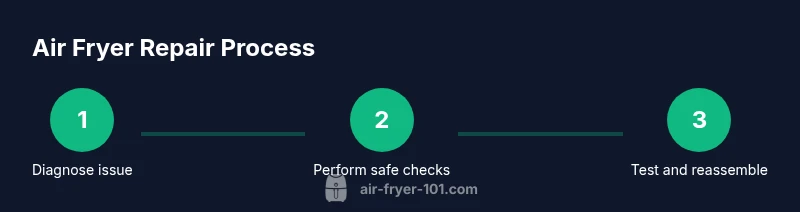
Here is the practical approach you can apply across many models: isolate the fault, verify power and control signals, inspect connectors and harnesses, clean and reseat components, test after reassembly, and document results. This workflow emphasizes safety and non-destructive checks first, reserving component replacement for clearly identified failures. Keeping a small toolkit and a spare set of basic parts on hand makes it easier to address issues quickly without trips to the store. Air Fryer 101 emphasizes that most fixes are about cleaning, reseating, and verifying proper operation rather than replacing major parts.
The goal is a predictable test routine that yields reproducible results. If you encounter a fault you cannot safely diagnose (for example, a suspected short in the control board), stop and contact a qualified technician or the manufacturer. This reduces the risk of electric shock and further damage to the unit.
Maintenance habits to prevent future faults
Prevention matters as much as repair. Regular cleaning of the basket and seals reduces grease buildup that can cause overheating and foul smells. Create a simple maintenance schedule: after every few uses, wipe down the interior with a damp cloth, check seals for wear, and inspect the air intake and exhaust paths for blockages. Periodically remove and clean the heating element area with a soft brush to dislodge crumbs and oil. Keeping the vents clear ensures consistent airflow and even results. Also inspect the power cord for fraying and avoid bending it sharply. These small practices extend the life of your air fryer and keep performance steady over time.
When to replace vs repair: cost, warranty, and model age
Not every fault is worth repairing, especially on older models or devices with high repair costs. If the heating element is degraded or you observe repeated, escalating faults after multiple repairs, replacement may be more economical in the long run. Check your warranty terms and service eligibility; many manufacturers cover defects for a limited period, which can offset repair costs. Compare replacement costs with anticipated repair prices, factoring in the unit’s age, energy efficiency, and redundancy in your kitchen setup. A compact, energy-efficient model may offer better value over time, while a high-end unit could justify professional servicing when covered by warranty.
Quick-start test after a repair: a practical checklist
With repairs completed, perform a controlled test to verify function without risking damage or overexposure. Reconnect all covers, plug in, and run a short cycle at the lowest temperature with no food to confirm airflow and heating. Listen for abnormal noises and smell. If the unit passes the dry run, test with a small, simple item such as a few frozen fries or a snack to verify browning and timing accuracy. Record results and adjust cooking times if needed. If issues persist, revisit the diagnosis or seek professional help.
Common model considerations and safety reminders
Model variations mean some steps may differ slightly. Refer to your user manual for model-specific warnings, especially regarding disassembly and sensor locations. Never bypass safety interlocks, and never operate the device with the interior exposed or with damaged wiring. If you cannot locate a stuck switch or suspect a faulty control board, consider warranty-supported repair or replacement instead of risky DIY fixes. Finally, use caution when handling hot components and avoid contact with exposed heating elements.
Tools & Materials
- Phillips-head screwdriver(Size #1 or #2 depending on model screws)
- Flat-head screwdriver(For specific internal fasteners)
- Digital multimeter (optional)(Test continuity on wires and sensors)
- Replacement fuse (if applicable)(Only if your model allows external fusing)
- Heat-resistant gloves(Protect hands during handling hot parts)
- Non-abrasive cleaner(Mild soap, water, microfiber cloth)
- Soft brush or toothbrush(For cleaning coils and vents)
- Replacement basket or tray (optional)(If the original is worn or deformed)
Steps
Estimated time: 45-75 minutes
- 1
Power off and cool down
Unplug the air fryer and place it on a heat-resistant surface. Allow the unit to cool completely before touching any internal parts. This step prevents electric shock and protects you from hot surfaces while inspecting components.
Tip: Always start with safety; a cold unit reduces burn risk during inspection. - 2
Inspect the power cord and outlet
Check the cord for visible damage, kinks, or scorch marks. Test the outlet with another device to confirm it’s supplying power. Replace a damaged cord or move to a known-good outlet if necessary.
Tip: Never use a damaged cord; voltage irregularities can cause further harm. - 3
Remove the basket and clean interior
Take out the basket and wipe away any grease or crumbs from the basket, walls, and door seals. Use a soft brush to dislodge particles from the heating area. Ensure the interior is dry before reassembly.
Tip: Grease buildup around the heating element is a common cause of overheating and poor performance. - 4
Check connections and interior components
Gently reseat any loose harnesses or connectors you see. Look for damaged insulation or frayed wires. If you notice a burned smell or discolored electronics, stop and consult a professional.
Tip: Only disconnect and reconnect what you can see without forcing components. - 5
Test the control and heating pathway
With the unit unplugged, check the control board and wiring for visible issues. If you have a multimeter, perform a basic continuity test on wires leading to the heating element. Reassemble after confirming connections.
Tip: Continuity tests help identify broken wires that aren’t visually obvious. - 6
Perform a dry run to verify operation
Plug the unit back in and run a short cycle at a low temperature with no food to listen for normal airflow and steady heating. Observe for any unusual noises or smells.
Tip: A dry run helps confirm the fix without risking food waste. - 7
Test with a simple cook
Cook a small batch of potatoes or frozen fries to verify browning and time accuracy. Compare results with your typical recipes; if results are inconsistent, retest the heating pathway and adjust as needed.
Tip: If browning is uneven, recheck the basket alignment and airflow path. - 8
Document results and plan further steps
Record symptoms, actions taken, and outcomes. If issues persist, consult the manual, contact customer support, or consider a replacement if the unit is aging or out of warranty.
Tip: Keep a repair log to help future troubleshooting and warranty claims.
Got Questions?
Why won't my air fryer heat up?
Possible causes include a tripped outlet, a loose power cord, dirty heating element, or a faulty control board. Start with power and cleanliness checks, then inspect connectors and wiring. If none of these fix the problem, consider professional service or warranty support.
If your air fryer won’t heat, start by checking power, cord, and cleanliness. If the issue persists, contact support or review your warranty.
Is it safe to repair an air fryer at home?
Basic maintenance and non-invasive repairs are generally safe if you follow safety steps: unplug before work, avoid water near electrical components, and do not disassemble critical safety features. For complex circuitry or damaged heating elements, seek professional help or manufacturer support.
Home repairs are okay for simple fixes if you unplug first and avoid risky internal work; call a professional for complex issues.
How do I know if I should replace or repair?
Evaluate repair cost against the unit’s age, efficiency, and warranty. If faults recur after repairs, or the unit is older with diminishing performance, replacement may offer better long-term value.
If repairs keep failing or the unit is aging, replacing it often makes more sense.
What maintenance prevents most issues?
Regular cleaning of the basket and interior, checking seals, and ensuring the vents remain clear are the best preventive measures. Also inspect the cord for wear and store in a dry place to avoid moisture-related damage.
Keep it clean, check seals, and keep vents clear to prevent many common problems.
What should I do if I smell burning or see smoke?
Immediately unplug the unit and inspect for grease buildup near the heating element or exhaust. Do not operate until you’ve cleared debris and checked for wiring damage. If unsure, stop and contact support.
Unplug it, check for grease near the heating element, and don’t use if unsure about damage.
Can thermostat or timer issues affect heating?
Yes. Malfunctioning controls can prevent heating or misrepresent cooking times. Reset the controller as a first step and verify with a controlled dry run. If the display is erratic, professional service may be needed.
A faulty control can stop heating. Try resetting and test with a dry run; seek service if problems continue.
Watch Video
Quick Summary
- Proper safety protocols enable safe at-home fixes
- Most issues stem from dirt, loose connectors, or wiring faults
- Follow a non-destructive diagnostic workflow first
- Maintenance reduces future failures and extends lifespan
- Know when to replace vs. repair based on age and cost