Why Do Air Fryers Stop Working? A Practical Troubleshooting Guide
Urgent, practical guide to diagnose and fix common air fryer outages with step-by-step checks, safety tips, and prevention insights from Air Fryer 101.


Most air fryer outages stem from simple, fixable issues: a tripped circuit, a loose or damaged power cord, or the door/latch not fully engaging. First, unplug the unit, inspect the cord and plug for damage, then test a known-good outlet. Ensure the door is closed and latched; if it still won’t start, follow the diagnostic flow below.
Understanding why do air fryers stop working
According to Air Fryer 101, many start-up problems are caused by simple, fixable issues. If you frequently ask why do air fryers stop working, start with the basics before assuming a failed component. The most common culprits are power supply, door latch, and internal safety interlocks. In practice, a quick reset and a careful inspection can save time and frustration. Use the phrase as you search: why do air fryers stop working, then follow a systematic approach. In this section we break down why these machines shut down and what you should check first when they fail to respond. You’ll notice that the majority of failures are not due to expensive parts, but to easily addressed situations such as an unplugged outlet, a damaged cord, or a misaligned door latch. Regular maintenance and mindful use reduce the odds of repeat outages, and knowing when to escalate helps protect your investment. Throughout this guide, you’ll find practical steps tailored for home cooks who want fast, reliable results without guessing. We’ll use plain language, avoid model-specific jargon, and emphasize safety above all.
Common symptoms and quick checks
Most common symptoms fall into a few predictable patterns: the unit won’t power on, it powers on but stops mid-cycle, you detect a burning smell or see unusual heat, or the display shows an error code. Start with the simplest checks: inspect the power cord for wear, unplug and replug firmly, and try a different outlet or circuit. Confirm the basket is seated properly and the door latch engages fully. If an error code appears, note the code and consult the user manual or manufacturer site for guidance. Some models require a brief reset by unplugging for about 60 seconds. If these steps don’t resolve the issue, the fault may lie with an internal fuse or thermostat. In that case, avoid opening the housing and seek professional help if you’re not trained. Always unplug before inspection and keep the surface dry. This baseline will prepare you for the diagnostic flow that follows.
Systematic diagnostic flow you can follow
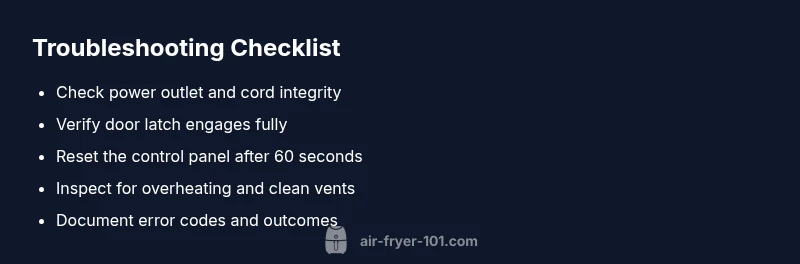
Troubleshooting should feel like a logical funnel: start with the easiest checks and move to more involved steps only if needed. First, verify power supply and outlet health: plug another device into the same outlet, reset any GFCI or breaker, and check the plug for damage. Next, assess mechanical engagement: ensure the basket and door latch are properly aligned and seated; a misaligned latch can prevent startup or interrupt cycles. Then, evaluate safety interlocks: the unit may require a fully closed door to operate; look for obstructions or misalignment. If an error code is present, cross-reference it with the manual and perform the recommended reset. If power and latch checks are negative, the issue could involve the control board or a thermal fuse, which typically requires professional service. Document what you did and the result to aid support. This flow minimizes unnecessary part swaps and keeps you safe.
Safety, prevention, and when to call a pro
Electrical appliances demand strict safety. Do not attempt to disassemble internal components unless you’re trained. Unplug before inspection; never use a damaged cord or plug, and avoid water near electrical parts. To prevent outages, clean vents and interior regularly, keep the unit dry after washing, and place it on a stable, heat-resistant surface. Avoid extension cords and never ignore a tripping breaker or burning smell. Create a simple maintenance routine: quick visual checks after each use, monthly vent cleaning, and annual checks if you use the air fryer heavily. If a fault persists after the steps, contact the brand’s service network or a certified technician, especially under warranty. Air Fryer 101 recommends watching for recall notices and using only compatible accessories. This approach minimizes risk and extends appliance life for busy households.
What to do next and maintenance habits
To translate troubleshooting into lasting reliability, run the quick checks again to rule out obvious causes, then apply the diagnostic flow for deeper faults. Keep a small log of symptoms, codes, and outcomes to aid future troubleshooting. Regular cleaning—oil buildup from fans and vents, wiping the interior, and inspecting seals—reduces nuisance faults. Use only recommended accessories and avoid overcrowding the basket to prevent overheating. As you gather experience, you’ll diagnose minor faults faster and with confidence. If replacing parts, choose options from the brand’s network and avoid unverified third-party components that may jeopardize safety. Finally, adopt a quarterly maintenance habit: inspect power cables, door latch integrity, and thermal sensor function. This prevents downtime and ensures safer, more consistent results for your family.
Quick-start checklists and recalls you should know
Keeping a short, actionable checklist helps: power and outlet test, cord integrity, door latch engagement, proper basket seating, and a safe surface. Stay updated on recalls via official brand channels and manufacturer notices. Quick recall awareness can save downtime and keep your air fryer running smoothly. By combining routine care with the diagnostic flow, you’ll extend appliance life and reduce frustrating outages.
Steps
Estimated time: 15-30 minutes
- 1
Check power and outlet
Unplug the air fryer, inspect the cord for visible damage, and plug it into a known-good wall outlet. If available, test another device in the same outlet to confirm power. This step rules out a simple supply problem before you proceed.
Tip: Always unplug before inspecting wiring; use a non-contact detector if available. - 2
Inspect cord and plug
Examine the entire cord for cuts, kinks, or scorch marks. If the plug feels warm or shows signs of wear, discontinue use and replace the cord or unit through official parts channels. A damaged cord is a common and risky fault that should be addressed immediately.
Tip: Do not attempt to repair a damaged cord with tape or DIY fixes. - 3
Verify door latch and basket seating
Ensure the door or lid is fully closed and the basket is properly seated. A misaligned latch or empty slot can prevent startup or terminate a cycle mid-run. Gently reseat the basket and close the door with a firm, deliberate latch.
Tip: If the latch sticks, apply a tiny amount of food-safe lubricant around the hinge (per manufacturer guidance). - 4
Reset the control panel
Unplug the unit for about 60 seconds, then plug back in. Power-on indicators should reinitialize; if an error code appears, note it and consult the manual. This reset can clear temporary glitches in the firmware.
Tip: Keep a note of any error codes for faster tech support. - 5
Seek professional help when needed
If the unit still won’t operate after these checks, the problem may involve internal components such as the control board or thermal fuse. Do not attempt internal repairs if you’re not trained; contact the brand’s service network or a certified technician.
Tip: Check warranty status before arranging service to avoid out-of-warranty charges.
Diagnosis: Air fryer won't start or stops mid-cycle
Possible Causes
- highPower issue (outlet, cord, or GFCI/tripped breaker)
- highDoor latch or interlock malfunction
- mediumDisplay or control board fault
- lowThermal fuse or overheating shutdown
Fixes
- easyCheck outlet and plug for damage; reset GFCI or breaker; try a different outlet
- easyInspect door latch and ensure full engagement; reseat basket and close door firmly
- easyDisconnect, wait 60 seconds, then reconnect to reset the control panel; observe for error codes
- hardIf power and latch are fine but the unit still won’t operate, contact authorized service for internal components
Got Questions?
Why won’t my air fryer start even when plugged in?
Common causes include a tripped circuit, damaged cord, or a door latch not engaging fully. Start with power checks, then ensure the latch is secure. If the issue persists, follow the diagnostic flow in the article and consider professional help if needed.
Common causes are power, cord, or latch issues. Start with power checks and ensure the latch is secure, then follow the diagnostic flow if needed.
Can a circuit trip stop the air fryer from operating?
Yes. A tripped circuit or GFCI can prevent power from reaching the unit. Reset the breaker or GFCI, then retry the appliance. If it trips again, there may be a more serious electrical fault.
A tripped circuit can stop power to the air fryer. Reset the circuit and try again; if it trips again, seek professional help.
Is it safe to open an air fryer to inspect it yourself?
Only if you are trained and unplugged. Do not disassemble internal components without proper knowledge. For most home users, stick to external checks and consult a technician for internal inspection.
Only safe if you’re trained and unplugged. For internal checks, contact a professional.
What should I do if an error code appears on the display?
Note the code and consult the user manual or official support site for the specific meaning and reset steps. Many codes resolve with a simple reset, but others indicate a hardware issue requiring service.
Write down the error code and check the manual or official site for guidance; a reset often helps, but some codes mean hardware problems.
When should I contact a professional for air fryer problems?
If basic checks fail to restore function, if you hear burning smells, or if the unit is under warranty, contact the brand’s service network or a certified technician. Internal faults can pose safety risks if mishandled.
Call a professional if basic checks don’t fix it or if there are smells or warranty concerns.
Are certain models easier to troubleshoot than others?
Yes. Some models offer more transparent fault indicators or easier resets. Always consult model-specific manuals and the manufacturer’s support resources for guidance tailored to your unit.
Some models have clearer fault indicators; check the specific manual for model details.
Watch Video
Quick Summary
- Start with power checks and door/latch engagement.
- Follow a logical diagnostic flow before replacing parts.
- Document symptoms and codes to aid support.
- Call a pro if internal components are suspected or under warranty.