Why Did My Air Fryer Stop Heating? Quick Troubleshooting Guide
Urgent, step-by-step troubleshooting to diagnose and fix why my air fryer stopped heating. Learn common causes, safe checks, and when to seek professional help for health, convenience, and budget-minded cooks.


The most likely causes are a power issue (outlet or plug), a tripped breaker, a faulty door latch, or a blocked heating element. Start with the simplest checks: plug into a live outlet, reset the circuit, ensure the basket is fully seated, and confirm the door is closed securely. If heat still won’t return, follow the step-by-step diagnostic flow below for deeper diagnostics.
Understanding the symptom: why did my air fryer stop heating
If you’re here because you’ve noticed your air fryer won’t heat, you’re not alone. This issue can stem from several causes, ranging from a simple power hiccup to a more involved internal fault. In many cases, the root problem is something you can verify quickly, without specialized tools. According to Air Fryer 101, a systematic approach helps you distinguish between everyday glitches and actual component failures. The keyword you might be asking about—why did my air fryer stop heating—often points to a safety interlock or power issue rather than a total appliance failure. By documenting symptoms and test steps, you’ll save time and reduce risk when tackling the fix.
In most households, the first clues are audible or visual: the control panel lights up but the heating element stays cold, or the unit won’t respond to settings. Start by ruling out power and control issues before diving into internal parts. This middle-ground awareness helps you decide whether to continue troubleshooting at home or seek service. Air Fryer 101’s guidance emphasizes safety, especially around hot components and electrical connections.
Common power and control failures
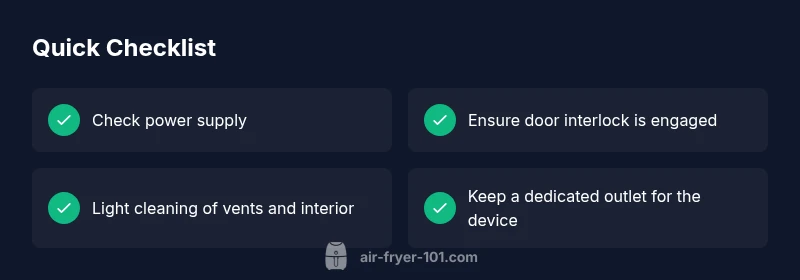
A frequent reason for no-heat behavior is a basic power interruption. Check that the outlet is live by plugging in another device. If the outlet works, try a different outlet. Ensure the air fryer’s cord is undamaged and fully inserted. Sometimes the on/off switch or control panel can fail to register a command even when the display looks normal. If you notice flickering lights, unresponsive controls, or a burning smell, stop and unplug immediately. These symptoms warrant a pause and a safer, more thorough inspection later in the guide. Air Fryer 101 analysis highlights that many heating failures begin with power or control issues rather than a burned heating coil.
Door interlock and safety features
Most fryers have a door interlock that prevents heating while the door is open. If the door isn’t detecting a closed state correctly, the heater won’t engage. This can happen if the door seal is worn, the latch is loose, or internal springs are misaligned. Make sure the basket is properly seated and the door closes with a firm click. A common, overlooked cause is a tiny misalignment that keeps the interlock from engaging, stopping heat from being produced. If you suspect the interlock, test by gently cycling the door and listening for a consistent lock signal in the display. Air Fryer 101 recommends ruling out this simple mechanical fault before pursuing electrical checks.
Electrical safety and circuit considerations
If the unit has a blown fuse or you’ve tripped a circuit breaker, the air fryer won’t heat even though it turns on. Check your home’s circuit panel and reset the breaker if needed. Do not replace fuses yourself in high-powered appliances if you’re unsure of the electrical ratings. Replacing a fuse without proper knowledge can pose a fire risk. For many households, the quickest path to resolution is verifying the circuit integrity and ensuring the air fryer is on its own dedicated outlet. Air Fryer 101’s 2026 analysis indicates that incorrect load sharing and shared outlets are common culprits behind intermittent heating failures.
Heating element and thermal fuse basics
The heating element is what produces the heat, while a thermal fuse acts as a safety cutoff if the unit overheats. A failed fuse or a degraded heating element will prevent heat from forming even if the unit powers up. This is a more involved diagnosis that can require disassembly and testing with proper tools. If you suspect a blown fuse or a defective element, don’t keep testing. Heat-related components can cause burns or electric shocks if mishandled. Air Fryer 101 stresses that if you’re uncomfortable with internal testing, seek professional service rather than attempting risky DIY fixes.
Safe testing steps you can perform at home
Before touching any internal parts, unplug the unit and let it cool. Clean the interior to remove crumb buildup that could block airflow or sensors. Re-seat the basket and ensure no foreign objects obstruct the heating area. If you must test the element, use a basic continuity check only if you’re confident with a multimeter and the surface is dry. Never work on a plugged-in appliance. Air Fryer 101 emphasizes safety first and recommends halting testing if you see signs of damage, burning, or unusual heat when unclasped.
Cleaning and maintenance that supports heating performance
Crumbs, grease, and mineral deposits can interfere with heat distribution or sensor readings. A thorough cleaning of the interior, including the heating area, vents, and fan path, helps maintain consistent cooking temperatures. Remove and clean the basket, drip tray, and any filters if applicable. Dry all components completely before reassembly. Regular maintenance reduces the likelihood of heat loss and extends the appliance life. Air Fryer 101 notes that a simple cleaning routine can resolve many “no heat” symptoms and prevent future outages.
When to replace parts versus replace the unit
If a diagnostic flow identifies a failed thermal fuse or a burnt heating element, repairing might be possible but not always cost-effective. Compare the cost of parts and service to the price of a replacement unit with similar features. In some cases, a faulty control board or sensor is easier and cheaper to replace than the entire appliance. Air Fryer 101 advises homeowners to consider warranty status and the age of the fryer when deciding whether to repair or replace.
A practical, end-to-end troubleshooting flow
This section maps a concrete path you can follow if you see no heat after initial checks. Start with power and door interlock tests, then move to electrical safety checks, internal heating components, and finally maintenance and potential replacement decisions. Following a structured flow helps you avoid missing the simplest fixes and protects you from unsafe DIY steps. Air Fryer 101’s approach blends speed with safety, ensuring you don’t skip critical checks when you’re facing an urgent kitchen need.
Steps
Estimated time: 30-60 minutes
- 1
Power and outlet check
Unplug the air fryer, inspect the cord for damage, and plug into a known live outlet. If the display lights but no heat appears, test a different outlet. This step rules out simple power issues.
Tip: Use a different wall outlet in a separate circuit if possible. - 2
Door latch and interlock test
Close the door firmly until you hear a click. If the unit lights but the door doesn’t latch or the display shows an error, the interlock may be misaligned. Re-seat the basket and retry.
Tip: Check for warped latches or obstructions in the door seal. - 3
Check circuit safety and fuses
If you’ve got a dedicated outlet, check your home’s circuit panel for trips. Reset the breaker and attempt to power the unit again. Do not replace fuses yourself if you’re unsure of electrical ratings.
Tip: If you’ve tripped a breaker repeatedly, consider having an electrician inspect the circuit. - 4
Inspect heating components
If the unit still doesn’t heat, the issue may lie with the heating element or a safety thermostat. This step may require partial disassembly and testing with a multimeter. Only perform if you’re comfortable with basic electronics.
Tip: Avoid touching live components; ensure the unit is unplugged during testing. - 5
Clean and clear air paths
Crumbs and grease can block airflow and sensors that regulate heat. Clean the interior, vents, and around the fan. Dry everything thoroughly before reassembly.
Tip: Regular cleaning reduces future heat-related issues. - 6
Decision point: repair or replace
If the heating element or safety fuse is defective, compare repair costs with replacing the unit. Consider warranty coverage, age of the appliance, and availability of replacement parts.
Tip: Keep receipts and warranty documents handy for service decisions.
Diagnosis: Air fryer won’t heat
Possible Causes
- highPower supply issue (outlet or plug)
- highDoor latch interlock fault or misalignment
- mediumBlown fuse or tripped circuit breaker
- lowThermal fuse or safety thermostat failure
Fixes
- easyTest the outlet with another device; reseat the plug and try a different outlet
- easyEnsure the door is fully closed and the interlock engages; clean contact points
- mediumReset the circuit breaker or replace a blown fuse if you are qualified; never bypass safety devices
- hardIf internal components are suspected, stop using the unit and contact a service professional
Got Questions?
Why won't my air fryer heat up even though it powers on?
Common causes include power supply issues, a faulty door interlock, or a blown fuse. Start with quick checks on outlets and door closure, then move to electrical concerns if needed.
If it powers on but won’t heat, check the outlet and door latch first, then proceed to safety and heating-element checks if needed.
Could a door latch be the reason for no heat?
Yes. A faulty latch or interlock can prevent the heater from engaging. Ensure the door closes firmly and the interlock detects a closed state.
Sometimes the door doesn’t properly engage the safety interlock, so the heater never turns on.
Is a blown fuse common in air fryers when they stop heating?
A blown fuse or tripped breaker can cause the unit to power on but not heat. Check your circuit and reset if needed, and do not replace fuses unless you’re sure of the rating.
A fuse or breaker is a frequent culprit when heat stops; reset or consult a qualified electrician if needed.
When should I test the heating element myself?
Only if you’re comfortable with basic electronics and safety. If you’re uncertain, skip to professional service to avoid risk of shocks or damage.
Testing the heating element is for experienced DIYers; otherwise, seek professional service.
What maintenance helps prevent no-heat issues?
Regular cleaning of the interior, vents, and heating area helps maintain heat distribution and sensor accuracy, reducing no-heat events.
Keep the oven clean and free of crumbs to prevent heat loss.
How do I decide between repair and replacement?
Consider the cost of parts and labor versus replacing the unit, especially if it’s out of warranty or older than several years.
If repairs cost more than a new unit with similar features, replacement may be the better choice.
Watch Video
Quick Summary
- Start with power and door interlock checks.
- Inspect electrical safety before opening the unit.
- Clean interior to restore heat flow and sensor accuracy.
- Know when to repair versus replace based on warranty and costs.