Why Your Air Fryer Isn't Heating: Quick Troubleshooting
Air Fryer 101 explains why your air fryer won't heat and guides you through a fast, step-by-step troubleshooting process to restore optimum cooking performance.


The most common reasons an air fryer stops heating are a blown thermal fuse, a tripped circuit breaker, or a faulty heating element. Start by ensuring the outlet is live, the power cord is intact, and the door latch is fully closed. If it still won’t heat, reset the unit, inspect the wiring, and call for professional service if needed.
Quick Reality Check: Why Heating Might Fail
According to Air Fryer 101, the most common heating faults come from electrical supply, door latch, or heating element failure. Start with the simplest checks: confirm the outlet is live, the power cord isn’t damaged, and the unit is plugged in securely. If the door isn’t fully closed, the heater won’t engage for safety. Keeping these basics in mind helps you triage effectively before opening the appliance. This foregrounds where to focus your time and reduces unnecessary disassembly.
- Look for obvious signs: loose power cord, tripped breaker, or a door that doesn’t click shut.
- Listen for unusual noises or buzzing, which can signal a failing thermal fuse or loose internal connections.
- Note any error codes or blinking lights that model-specific manuals reference.
Immediate Checks You Can Do (No Tools Required)
A fast, 5-point test often resolves 80% of heating issues. First, verify the circuit isn’t tripped and try a different outlet. Re-seat the basket and ensure the air fryer is fully closed. Unplug for 60 seconds and plug back in to reset internal controllers. If your unit has a digital display, note any error codes and consult the manual. Finally, confirm there’s no visible obstruction in the air path and that the food isn’t jammed against the heating element. These checks are safe, immediate, and usually effective would-be quick fixes.
Electrical Basics: Power, Outlets, and Cords
Power delivery is fundamental to heating. A surge, a GFCI-protected outlet, or a damaged cord can prevent the heater from engaging. Inspect the cord for nicks, kinks, or exposed wires. If possible, plug the unit directly into a wall outlet rather than using an extension cord. Avoid outlets with a history of tripping or buzzing noises. If the plug or cord shows wear, replace them before any further testing, as they’re common sources of intermittent heating.
Heating Element, Thermostat, and Sensor Failures
The heating element or thermostat can fail due to normal wear, mineral buildup, or a manufacturing defect. Signs include no heat despite a warm exterior or inconsistent cooking temperatures. Some models include a high-limit thermal fuse that may open to prevent a fire if the unit overheats. If you notice a burnt smell, visible residue, or if the unit feels unusually hot without emitting heat, stop using it and seek professional assessment. Regular cleaning helps minimize mineral buildup that can affect performance.
At-Home Diagnostic Flow: Symptom to Solution
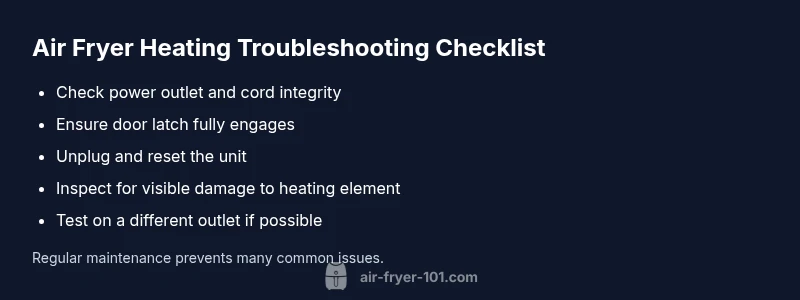
When your air fryer won't heat, start with a symptom checklist: (1) Is there power at the outlet? (2) Is the door latch fully engaged? (3) Is the cord undamaged? (4) Are there any visible signs of damage or unusual behavior inside? Based on these observations, you can triage toward likely causes such as power supply issues, door latch faults, or a faulty heating element. Air Fryer 101 analysis shows that electrical supply and sensor-related faults account for the majority of heating problems. The flow helps you separate quick, safe fixes from problems that require service. If you reach the limits of safe at-home troubleshooting, don’t delay contacting a professional.
Safety, Resets, and When to Call a Pro
Never operate a unit that shows signs of damage, burning smells, or buzzing sounds. Unplug the appliance before inspecting the exterior and interior components. If a simple reset and power-cycle doesn’t restore heat, testing the outlet with another appliance can rule out supply issues. For suspected heating element failure or faulty thermistors, contact a certified technician. Regular maintenance and avoiding moisture buildup in the interior extend life and reliability.
Prevention Tips for Consistent Heating
To keep heating consistent, clean the unit regularly to prevent mineral and grease buildup on the element and sensors. Dry any moisture after washing, and avoid using cookware that blocks air flow. Schedule periodic inspections if you rely on your air fryer daily. A quick preheat routine and proper basket placement also help maintain even temperatures across cooking cycles.
Steps
Estimated time: 30-60 minutes
- 1
Unplug and let cool
Power down the unit and unplug it. Allow 5-10 minutes for internal components to settle before inspection.
Tip: Use insulated gloves if touching interior parts. - 2
Inspect power cord and plug
Check for cuts, kinks, or exposed wires. If damaged, replace the cord or have a technician service the unit.
Tip: Never operate with a damaged cord; avoid temporary repairs. - 3
Test outlet with another device
Plug a known-good device into the same outlet to confirm current. If the outlet is dead, address the circuit first.
Tip: Switch to a different wall outlet to rule out a local issue. - 4
Check door latch and basket seating
Ensure the door latch engages fully and the basket is seated correctly. An incomplete seal prevents heat from triggering.
Tip: Remove and reseat the basket to confirm proper alignment. - 5
Reset the controller
Unplug for 60 seconds, then plug back in. If your model shows a reset option, use it as directed.
Tip: Avoid pressing multiple buttons during reset to prevent errant codes. - 6
Check for visible element damage
Look for scorching, melted connectors, or broken coils. Do not operate if you see damage.
Tip: If you suspect the heating element is damaged, stop using the unit immediately. - 7
Re-test heating
Set a low temp and run a brief test to confirm heat engages consistently.
Tip: Document any irregular temps or delays for service notes. - 8
Call a professional if unresolved
If the unit still won’t heat after these steps, professional diagnosis is recommended to avoid safety risks.
Tip: Professional service preserves warranty and safety.
Diagnosis: Air fryer won't heat
Possible Causes
- highPower issue
- mediumDoor latch fault
- lowHeating element failure
Fixes
- easyCheck outlet and plug; try a different outlet
- easyReset the air fryer by unplugging, waiting 60 seconds, and plugging back in
- easyInspect door latch alignment and clean contacts
Got Questions?
Why won't my air fryer heat even when it's plugged in?
Common causes include a tripped breaker, a faulty heating element, or a blown thermal fuse. Check the outlet and arc faults first, then inspect the door latch.
Most heating issues come from power, element, or fuse. Start with basic checks.
Could a door latch cause heating problems?
Yes. If the latch doesn’t engage securely, the unit may think the door is open and refuse to heat for safety.
Door latch problems can stop heating; ensure it's fully closed and engages.
Should I use a different outlet or avoid extension cords?
Plug the unit directly into a wall outlet to eliminate extension cord resistance and potential surge issues. Extension cords can cause power drop and heat problems.
Use a direct wall outlet to rule out power issues.
When is it time to replace the heating element?
If visual damage, burning smells, or no heat occurs after testing, the heating element or thermostat may be at fault and require replacement.
If there’s damage or persistent failure, replacement is often necessary.
Can mineral buildup affect heating performance?
Yes. Mineral deposits can insulate the element and reduce heat transfer. Regular cleaning helps prevent this.
Minerals can block heat; clean the interior routinely.
Is resetting the device enough to fix heating?
Resetting clears temporary faults, but it won't fix hardware damage. If reset doesn’t resolve heating, seek service.
Reset helps, but hardware issues need professional help.
Watch Video
Quick Summary
- Check power first before removing panels
- Most issues are electrical or latch-related
- Reset, inspect, and re-seat components regularly
- Call a pro if heating still fails after safe tests