How to Know If Your Air Fryer Is Broken: Urgent Troubleshooting
This urgent guide helps home cooks diagnose whether your air fryer is broken, identify common failure points, perform safe at-home checks, and know when professional service is required.


If your air fryer won’t heat, trips the outlet, or makes unusual noises, it’s often a sign of a simple power issue, a dirty filter, or a faulty thermostat. Start by unplugging, checking the outlet and cord, and inspecting the basket latch. If the problem persists, follow the diagnostic flow and step-by-step fixes below.
Quick sanity-checks before diagnosing
Before you dive into more involved checks, perform a few quick steps that resolve many issues or reveal the exact fault. First, unplug the air fryer and count to ten, then plug it back in to reset the electronics. Try a known-good outlet to rule out circuit issues. Inspect the power cord for cuts, nicks, or exposed wires. If your model uses a detachable basket, ensure it is seated correctly and the door latch engages fully. Clean crumbs from the crumb tray and vents; crumbs can impede airflow and skew temperature readings. If you smell burning plastic or see obvious damage, stop and unplug immediately. These basic checks handle the vast majority of fast-failure cases and help you decide whether the fault is user-serviceable or requires professional service. This approach also minimizes unnecessary parts replacement and downtime. According to Air Fryer 101, starting with power and seating checks resolves most heat-related complaints quickly.
Common symptoms and what they mean
Air fryers can exhibit a handful of telltale signs that point to specific problems. Not heating at all almost always points to a power issue or a blown fuse, but it can also be a faulty heating element or thermostat. Overheating, frequent tripping of the thermal fuse, or a burning smell typically indicates an internal overheating problem or a short in the control board. Uneven cooking, buzzing, or grinding noises usually signal a blocked fan, loose motor, or crumb buildup around internal components. If you see error codes on the display, consult your model’s manual for exact meanings. If the door won’t latch or the unit won’t start when the door is closed, the door switch or latch mechanism is likely at fault. Air Fryer 101 notes that many of these symptoms share root causes, so start with simple checks and work toward more involved diagnostics.
At-home checks you can safely perform
Safety first: always unplug before inspecting. Start with the simplest checks:
- Inspect the power cord for visible wear or damage; replace if frayed.
- Try a different outlet and check your circuit breaker for trips.
- Ensure the basket and tray are correctly seated and that the door latch is fully engaged.
- Clean the crumb tray, vents, and fan housing; crumbs can block airflow and skew temps.
- If your unit has an internal filter or screen, remove crumbs and wipe with a dry cloth.
- With the unit unplugged, gently spin the internal fan (if accessible) to verify it turns freely; listen for rubs or grinding. If you still don’t get heat after these checks, it’s time to move to symptom-specific diagnosis. A lot of faults originate from door switches or simple electrical faults, not from the heating element itself. According to Air Fryer 101, most safe at-home checks resolve or reveal a non-surgical fault.
In-depth diagnosis by symptom (flowchart-style)
If you’re faced with a single symptom, here’s a practical way to diagnose without guessing:
- Symptom: Not heating at all
- Likely causes: Power issue, tripped circuit, door latch switch, faulty thermostat
- Quick checks: Outlet test, cord integrity, latch engagement
- Symptom: Noisy operation or buzzes
- Likely causes: Obstructed or loose fan, crumb buildup, misaligned basket
- Quick checks: Clean interior, reseat basket, spin the fan manually if possible
- Symptom: Overheating or burnt smell
- Likely causes: Overheating fuse, blocked vents, damaged wiring
- Quick checks: Clean vents, inspect wiring, test in a different outlet
- Symptom: Error codes on display
- Likely causes: Control board fault, sensor issue, model-specific codes
- Quick checks: Reset unit, consult manual for codes, contact support if codes persist This diagnostic flow emphasizes starting with simple checks and escalating logically. Air Fryer 101 emphasizes documenting symptoms and times, which helps you communicate clearly with support if needed.
Step-by-step fixes for the most frequent faults
Below is a practical, at-home fix guide focused on the most common faults people encounter. Use these steps in order, and stop if you encounter a fault that requires professional service.
- Power and reset the unit
- Unplug, wait 60 seconds, plug back in, and perform a quick test run with a minimal load.
- If the unit still won’t heat, try a different outlet and verify the circuit isn’t overloaded.
- Pro tip: Keep the unit away from water and heat sources during testing.
- Verify door latch and switch
- Close the door firmly and ensure the basket sits correctly; many models won’t start unless the latch is engaged.
- If your model has a mechanical switch, listen for a distinct click when closing. If you don’t hear it, the switch may be faulty.
- Pro tip: Don’t force-close the door; misalignment can indicate a worn latch.
- Clean and inspect interior components
- Remove the basket and tray; wipe crumbs from the fan housing and vents.
- Check for signs of melted plastic, burnt crumbs, or discoloration near the heating element.
- Pro tip: Regular cleaning reduces the risk of unseen damage developing over time.
- Check wiring and fuses
- Look for visible damage to the cord and plug; inspect for scorch marks around the power inlet.
- If you suspect a blown internal fuse, do not attempt a repair yourself—contact a pro.
- Pro tip: Use a dedicated wall outlet for the air fryer to minimize overload risk.
- Test the heating element and control board (advanced)
- If you’re comfortable, access the internal components according to the model manual and inspect the heating element for breaks or burns.
- A multimeter can help test continuity; if there’s an open circuit, professional repair is warranted.
- Pro tip: Internal repairs require proper safety precautions and should be done with unplugged power.
- When to escalate to professional service
- If no fix works after the above steps, or you notice sizzling, burning smells, or visible damage, consult a certified appliance technician or the manufacturer’s service program. Replacement parts and specialized tools are often needed for internal components.
- Pro tip: Gather your model number, purchase date, and any error codes to speed up service, and check your warranty status.
Safety reminders and when to call a pro
- Safety first: unplug before any inspection; never touch hot elements or exposed wiring.
- Don’t attempt to bypass safety switches or open sealed components; doing so could cause electric shock or fire.
- If you smell gas, burning oil, or see smoke, evacuate and call emergency services if needed.
- When instructions require disassembly beyond the user manual, contact a professional. A faulty control board or heating element often requires replacement parts and specialized tools. These safety reminders are essential for preventing injuries and avoiding further damage to your appliance. Air Fryer 101 consistently emphasizes professional service for any internal component issues.
Long-term prevention and maintenance tips
The best way to avoid future breakdowns is to commit to a regular maintenance routine. Keep a simple schedule: clean the unit after every few uses, inspect the cord monthly, and verify the door latch is functioning smoothly. Use the air fryer within recommended load limits; overfilling can cause overheating and mechanical strain. Maintain a stable ambient temperature in the kitchen and avoid placing the appliance near heat sources, moisture, or flammable items. Periodically run a dry heat cycle to help burn off oily residues inside the cabinet, but never run it without food to prevent scorching. Finally, document signs of wear and tear so you notice changes early—this helps you decide between DIY fixes and professional service sooner, reducing downtime and extending the life of your machine. Air Fryer 101’s approach to maintenance helps you cook with confidence for years to come.
Steps
Estimated time: 30-60 minutes
- 1
Power check and reset
Unplug the unit, wait 60 seconds, then plug back in and run a short test cycle with a small amount of food. If it still won’t heat, try a different outlet and ensure the circuit isn’t overloaded.
Tip: Resetting can clear minor control glitches. - 2
Inspect door latch and basket seating
Close the door firmly and verify the basket is properly seated. Listen for the latch engaging; a misaligned latch prevents the unit from starting.
Tip: Never force the latch; misalignment signals wear. - 3
Clean vents and interior components
Remove crumbs from the crumb tray and vents; wipe the interior housing with a dry cloth. Ensure the fan can rotate freely.
Tip: Regular cleaning reduces overheating risk. - 4
Check wiring and power inlet
Look for damaged cords or scorch marks around the power inlet. If you see damage, stop using the unit and seek professional help.
Tip: A damaged cord is a fire hazard. - 5
Test heating element and control board (advanced)
If you have experience, inspect the heating element for breaks and test continuity with a multimeter. Replace only with manufacturer-approved parts.
Tip: Internal repairs require caution and proper tools. - 6
Know when to escalate
If none of the above steps resolve the issue or you notice unusual smells or smoke, contact a certified technician or the manufacturer’s service line.
Tip: Document model, serial, and error codes to speed service.
Diagnosis: Air fryer won't heat
Possible Causes
- highPower issue (outlet, plug, or circuit)
- mediumDoor latch/switch defective
- lowThermostat or heating element failure
Fixes
- easyTest with a different outlet and reset the circuit breaker; inspect the plug and cord for damage
- easyEnsure the door latch fully engages and the basket is correctly seated
- mediumIf the issue persists, consult the manual for error codes and contact support for thermostat/element repair
Got Questions?
Why won't my air fryer heat up at all?
Most often it’s a power issue, a tripped circuit, or a faulty door latch. Start with the outlet, cord, and latch checks, then move to more involved diagnostics if needed.
Your air fryer may have a power issue or door latch problem. Start with the outlet and latch checks, then proceed to deeper diagnostics if necessary.
Is it safe to clean the inside with the unit plugged in?
No. Always unplug, allow it to cool, and then clean. Internal components should only be inspected when the device is unplugged and cooled to prevent electric shock.
Never clean a hot or plugged-in air fryer. Unplug first and let it cool before cleaning.
When should I replace my air fryer?
If problems persist after troubleshooting, or you notice signs of wear, it’s wise to consult a professional for repair, evaluate warranty options, or consider replacement.
If faults persist after checks, contact a professional or assess warranty options for replacement.
Can a dirty filter cause no heat?
Yes. Crumbs or residue around the filter or vents can block airflow and affect heating. Clean according to the manual and ensure no debris blocks airflow.
A dirty filter or blocked vents can prevent heating. Clean according to the manual.
My air fryer keeps tripping the circuit breaker. What should I do?
Tripping can result from overload or a short. Use a dedicated outlet, avoid multi-appliance draws, and test with a different outlet if possible. If it persists, seek professional service.
If the breaker trips, try a dedicated outlet and another outlet to isolate the issue; persistent trips need professional help.
Watch Video
Quick Summary
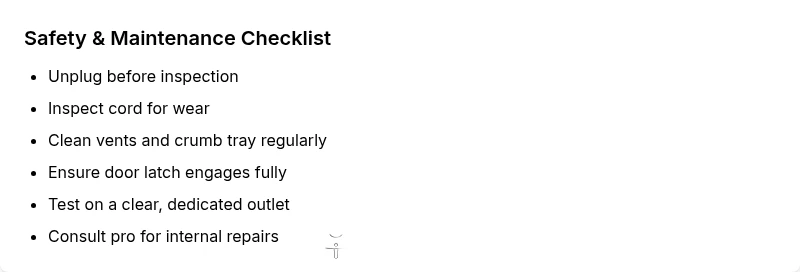
- Check power and seating first
- Identify common faults: thermostat, latch, fuse
- Only perform safe checks; seek pro help for internal repairs
- Regular maintenance prevents future failures