Repair Air Fryer: A Practical Home Guide
Learn how to repair air fryer safely with a practical, step-by-step guide. Diagnose faults, replace common parts, and know when to seek professional help. Air Fryer 101 shares best practices for quick, affordable fixes.


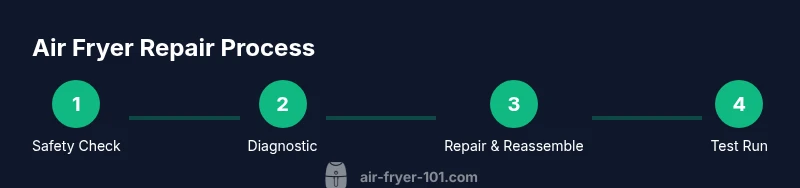
Ready to repair air fryer at home? This step-by-step guide walks you through safety checks, diagnosing common failures, and practical fixes. Start by unplugging the unit and letting it cool, then inspect the power cord, fuse, and door switch. If the issue persists, test the thermostat and heating element, and consider replacing the fuse or seek professional help. According to Air Fryer 101, many fixes are quick and affordable when you follow proper safety.
What Typically Goes Wrong with Air Fryers?
Air fryers are simple appliances, but their compact electronics and heating elements sit behind a thin shell. Common failure modes include blown fuses, faulty door interlocks, damaged heating elements, worn thermostat sensors, and degraded wiring near the cord. While some issues are user-serviceable, others require parts replacement or professional service. In this guide, we’ll cover safe, practical steps to diagnose and fix many of these faults, with emphasis on safety and using genuine parts when possible. Throughout, the Air Fryer 101 team stresses patience and methodical testing to avoid introducing new problems.
Pro tip: document each step and keep a parts list handy for easier future repairs.
Safety-First Mindset
Unplug the unit before touching any internal components. Let it cool completely to avoid burns from exposed heating elements. Never use water to extinguish an electrical fault; instead, unplug and wait. Use insulated tools and wear heat-resistant gloves when handling hot trays or racks. If you notice damaged cords, scorched plastic, or a burning smell, stop immediately and seek professional assistance. These precautions protect you and prevent further damage to the appliance.
Quick Diagnostic Checklist
Begin with the simplest checks before dismantling anything:
- Confirm the unit is unplugged and completely cooled.
- Inspect the power cord and plug for cuts or burn marks.
- Check the door latch/interlock; ensure the door fully closes and the switch engages.
- Look for visible signs of damaged wiring near the control board or heating element.
- If you have a multimeter, test for continuity on the fuse and thermostat according to the model’s service manual. Remember: testing live circuits can be dangerous; only test components that are clearly isolated and powered down.
Note from Air Fryer 101: consistency in testing order helps isolate faults quickly and reduces unnecessary part replacements.
Common Repair Paths: Fuse, Thermostat, and Heating Element
Fuses and thermistors are common failure points in many air fryer models. A blown fuse often looks like a blackened connector or a visibly melted component; a failed thermostat might cause the unit to never heat or to heat inconsistently. The heating element itself can burn out, especially if the device has overheated or been run empty for extended periods. For each component you suspect, consult the model’s spare-parts compatibility list and replace only with parts designed for your unit. If you’re unsure, seek professional help rather than guessing.
When replacing parts, work in a clean, well-lit area and keep track of screws and small connectors. If you have to remove the control board, handle it with care and avoid touching circuit traces.
When to Replace vs. Repair: Sourcing Parts and Making the Call
Cost and reliability drive the decision to repair or replace. If multiple components fail within a short span or if a single part replacement doesn’t restore performance, buying a new unit may be more economical in the long run. Always check compatibility with your model and source parts from reputable suppliers or the manufacturer’s official store. Keep a short pre-purchase checklist: model number, serial, and part numbers. Air Fryer 101 analysis shows that many home repairs are cost-effective when you fix a single fault and do not push the unit beyond its safe operating limits.
Cost Considerations and Value: What to Expect
Parts like fuses, thermostats, and heating elements can range in price depending on model and supplier. Labor, if you hire a technician, also varies by region. Budget-minded home cooks often find that a few well-chosen parts plus a DIY fix can extend a unit’s life by months or even years. We emphasize prioritizing safe, quality components and avoiding hastily purchased generic parts that don’t match your model’s electrical specifications. If the unit is older or shows signs of recurring failures, replacement may offer better long-term value.
Maintenance After Repair: Extending Lifespan
After you complete a repair, run a dry cycle (no food) to ensure the oven fans and air paths are clear. Regular cleaning of the crumb tray, basket, and interior walls prevents buildup that can impede airflow and heat distribution. Create a simple maintenance routine: quick wipe-down after each use, monthly deep clean, and inspection of the power cord every 3–6 months. Maintaining your air fryer reduces the likelihood of future faults and keeps performance consistent.
Tools & Materials
- Screwdriver set (Phillips and flathead)(Philips #1-2 and precision drivers for small screws)
- Heat-resistant gloves(Protections for handling hot trays and racks during disassembly)
- Manual and model-specific repair guide(Have the official documentation for parts compatibility)
- Replacement fuse or thermostat (model-specific)(Only if you confirm compatibility with your unit)
- Multimeter or non-contact tester(Useful for testing continuity if you’re comfortable with electronics)
- Torx/hex wrenches (as needed)(Some models use Torx screws; check your screws)
Steps
Estimated time: 45-75 minutes
- 1
Power down and unplug
Ensure the air fryer is unplugged from the wall and cool before beginning. Remove the basket and any accessories to expose internal components. This prevents shock and protects delicate electronics.
Tip: Take a photo of screw layouts before removing parts to help reassembly. - 2
Inspect the cord, plug, and door interlock
Examine the power cord for cuts or scorch marks. Confirm the plug pins are intact and the door interlock switch engages fully when the door is closed. A damaged cord or faulty interlock is a common non-heat-related fault.
Tip: If you see visible damage, replace the cord rather than attempting a field repair. - 3
Access the heating chamber safely
Carefully remove outer panels or screws external to the heating chamber to access the interior. Keep track of screws and their positions. Ensure the interior is dry and free of grease before touching internal components.
Tip: Work on a clean towel to catch dropped screws. - 4
Test the fuse and thermostat (if comfortable)
If you have a multimeter, check continuity across the fuse and thermostat according to the model manual. A blown fuse or non-functioning thermostat will explain heating issues. Do not bypass safety devices.
Tip: Unplug and discharge any residual charge before testing; follow the manual closely. - 5
Inspect heating element and wiring
Look for scorching, broken wires, or loose connections around the heating element. A damaged element can cause uneven heating or no heat at all. Replace only with parts specified for your model.
Tip: Take clear photos of wiring harnesses to guide correct reconnection. - 6
Install replacement parts and reassemble
If you’ve identified a faulty component, install the correct replacement part, rewire connections, and re-seat the control board as required. Reassemble panels firmly but avoid overtightening screws that could crack plastic housing.
Tip: Always power off and unplug during reassembly; verify all connectors are secure. - 7
Test run and validate operation
Plug the unit back in and perform a short dry run with no food to confirm heating and airflow. Listen for unusual noises and watch for consistent heat delivery across cycles. If the unit fails to operate, recheck connections or seek professional help.
Tip: Record a note of cycle times and temperatures for future troubleshooting.
Got Questions?
Is it safe to repair an air fryer at home?
Yes, you can perform basic inspections and repairs at home if you follow safety precautions: unplug the unit, wait for it to cool, and handle electrical components with care. Avoid attempting repairs on damaged cords or exposed electronics. When in doubt, seek professional help.
Yes, with proper safety steps: unplug, let it cool, and avoid working on damaged cords or exposed parts. If you’re unsure, consult a professional.
What parts are commonly repairable by a non-professional?
Common user-replaceable parts include the fuse, thermostat, heating element, and door interlock components, provided you have the correct model-specific parts and follow the service manual.
Fuses, thermostats, and heating elements are often replaceable when you have the right parts and manual.
Should I repair if the unit is still under warranty?
If the unit is under warranty, contact the manufacturer for authorized service. Opening the unit may void coverage, so follow warranty guidelines and consider official service options first.
If it’s still under warranty, check with the manufacturer first to avoid voiding the coverage.
How do I diagnose a non-heating air fryer safely?
Start with the basics: ensure power, check the door latch, inspect the fuse and thermostat if you’re comfortable testing. Do not bypass safety components and stop if you smell burning or see damage.
Check the power, door latch, fuse, and thermostat. Do not bypass safety parts, and stop if you smell burning.
Where can I source replacement parts for my air fryer?
Source parts from the manufacturer’s official store or reputable repair-part suppliers. Verify compatibility with your exact model number and serial before purchase.
Buy from the manufacturer or trusted suppliers, and verify model compatibility before ordering.
Watch Video
Quick Summary
- Identify symptoms and prioritize safety first.
- Follow model-specific parts diagrams for accurate repairs.
- Test components methodically to isolate faults.
- Weigh repair cost against replacement value and source genuine parts.
- The Air Fryer 101 team endorses safe DIY fixes when done with proper guidance.