How to Stop Air Fryer from Smoking When Cooking Bacon
Practical steps to prevent smoking while cooking bacon in an air fryer. Prep, temperature, placement, and cleanup tips from Air Fryer 101 for crispy bacon with minimal smoke.


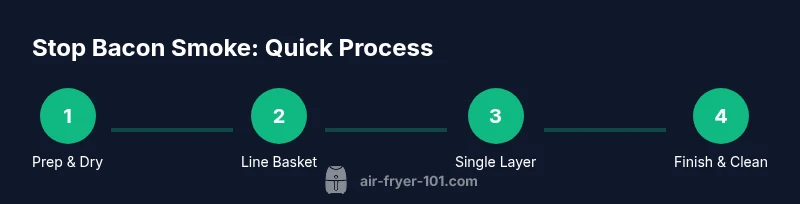
How to stop air fryer from smoking when cooking bacon: prepare dry, trimmed bacon, preheat the fryer to 350-375°F, line the basket with parchment or use a rack, and cook in a single layer with proper airflow. This guide from Air Fryer 101 gives practical steps to keep smoke under control.
Why bacon smoking happens in an air fryer
Bacon contains fat that renders as it heats. In an air fryer, that rendered fat and the tiny droplets exchange heat very quickly with the hot circulating air. If there is too much surface fat, if the bacon is crowded, or if the fryer is set too hot, fat can heat past its smoke point and produce visible smoke. Crisping bacon is a balance between rendering fat and keeping fat from overheating. According to Air Fryer 101, understanding where the smoke comes from helps you tailor your setup for cleaner cooking. The key is controlling three variables: temperature, airflow, and fat management. By recognizing these factors, home cooks can enjoy crisp bacon without creating a kitchen furnace.
Choosing bacon for air fryer to minimize smoke
When selecting bacon, consider thickness and fat content. Thinner slices render quickly and may smoke more if overcooked; thicker slices can stay moist if not monitored. Look for center-cut bacon with balanced fat, and trim visible excess fat before cooking. Pat the slices dry with paper towels to remove surface moisture, which can turn to steam and create smoke as the fat renders. Air Fryer 101's approach combines gentle prep with reliable cooking conditions so you can achieve crispy edges with less smoke.
Prepping the air fryer basket and tools
Start with a clean basket; old grease can burn and create smoke when heated. Line the basket with perforated parchment or place a small rack to lift bacon off the bottom and promote even airflow. Have tongs ready for turning, plus paper towels to blot fat as needed. If your model supports it, a shallow trivet or rack improves air circulation and reduces hotspots that cause smoking. Proper setup buys you predictable, smoke-light results.
Temperature and time guidelines for cooking bacon
For most standard-cut bacon, a good starting point is 350°F (175°C). Thinner bacon might cook faster, while thicker slices benefit from 360-375°F. Begin with 6-8 minutes and check progress; for very thick slices or crispy texture, continue in 1-2 minute increments. The goal is rendering fat without overheating the fat until it smokes. Air Fryer 101 recommends adjusting by model and thickness, not a one-size-fits-all timer, so have a plan for fine-tuning.
Layering and placement techniques
Avoid overlapping slices; arrange bacon in a single layer with small gaps to let air circulate around each piece. If you have a rack, place bacon on it so fat drips away and air hits both sides. For crowded baskets, smoke is more likely; in that case cook in batches. Keeping a consistent layer helps reduce hot spots that can smoke and ensures even browning across each strip.
Handling fat and splatter during cooking
Fat renders quickly; to minimize splatter and smoke, pat excess fat away and keep the surface dry. Use a light coat of oil on the basket only if your bacon is very lean; otherwise, skip oil entirely. Keep the air fryer door closed during cooking to maintain stable airflow, but be ready to pause if you notice excessive smoke. Small adjustments in fat management can have a big impact on smoke production.
Quick fixes if you start seeing smoke
If you see smoke, pause the cycle and turn off the appliance. Carefully remove the basket, pour out accumulated fat, and wipe the bottom of the tray. Return to cooking at a lower temperature (325°F/165°C) and keep the slices in a single layer. If smoke persists, consider finishing the bacon in the oven to avoid direct heat issues in the air fryer. These steps help you regain control without sacrificing crispness.
Post-cook cleanup to prevent future smoking
Let bacon rest on a paper towel for a minute to absorb residual fat. Empty and wipe the drip tray after cooling, then wash the basket and liners to remove fat buildup. Regular maintenance—clean, grease-free surfaces—reduces future smoke and keeps your air fryer performing well. Consistent cleaning is as important as proper cooking technique, especially for bacon.
Troubleshooting quick-reference
- Too much fat on the bacon? Trim excess fat and pat dry before cooking to minimize rendered fat in the basket.
- Smoke begins early: Lower the temperature by 25°F and start with a shorter initial cook; ensure the basket is clean and empty.
- Uneven cooking: Cook in batches or use a rack to elevate bacon; avoid overcrowding.
- Alarm or strong smoke: Ventilate the kitchen, pause cooking, and finish in the oven if needed.
- Repeat smoking after changes: Ensure the air fryer is preheated and you’re using a single-layer setup.
Tools & Materials
- Air fryer(Any model works; ensure it’s clean and functioning.)
- Parchment paper or silicone liner(Perforated parchment or a slotted liner preferred.)
- Rack or trivet (optional)(Elevates bacon for even air exposure.)
- Kitchen scissors(Trim fat and cut bacon as needed.)
- Paper towels(Pat dry bacon and blot excess fat.)
- Tongs(Turn bacon for even cooking.)
- Thermometer (optional)(Monitor doneness if desired.)
Steps
Estimated time: 40-60 minutes
- 1
Prepare the bacon
Begin with dry, trimmed bacon. Pat slices dry to remove surface moisture, and remove any visible excess fat to reduce splatter. Separate slices so they don’t touch, ensuring even rendering.
Tip: Trimming fat slightly below the rind helps reduce smoking without compromising flavor. - 2
Preheat the air fryer
Preheat to 350°F (175°C) if your model requires preheating. A consistent starting temperature helps render fat evenly and reduces sudden smoke spikes. If your model reaches heat quickly without preheating, set to 350°F and proceed.
Tip: Preheating creates a stable airflow pattern that minimizes hotspots. - 3
Line or rack the basket
Line the basket with perforated parchment or place a rack so fat doesn’t pool at the bottom. This keeps the slices above the most direct heat and allows air to circulate around every piece. Avoid using nonstick sprays that can burn and create smoke.
Tip: A rack is especially helpful for thicker bacon or home-cut slices. - 4
Arrange bacon in a single layer
Place bacon in a single layer with small gaps; overlap invites trapping fat and uneven cooking. If you have more slices, cook in batches to maintain airflow. A uniform layout promotes crisp, even rendering.
Tip: Too much density increases smoke risk and undercooks some areas. - 5
Start cooking and monitor
Cook for 6-8 minutes at 350°F, then check progress. Thickness affects timing, so be ready to add 1-2 minute increments as needed. The goal is rendered fat with light browning, not burning fat.
Tip: Check early on thick-cut bacon to avoid overcooking later. - 6
Flip halfway through
Use tongs to flip the slices halfway through cooking for even browning on both sides. If your air fryer’s design yields consistent circulation, you may skip flipping for thinner slices. Flipping helps render fat from both sides evenly.
Tip: Flipping reduces hotspots and ensures uniform crispness. - 7
Address smoke mid-cook if needed
If smoke appears, pause, turn off, and remove the basket. Pour out accumulated fat and wipe the tray. Return to cooking at 325°F and keep the bacon in a single layer; resume with close monitoring.
Tip: Reducing temperature and clearing fat immediately often halts smoke without sacrificing texture. - 8
Finish, rest, and clean
When bacon reaches your preferred crispness, remove and blot on paper towels. Let it rest for a minute to finish crisping. Clean the basket and liner to prevent future smoking from fat buildup.
Tip: Regular cleanup after bacon runs keeps your air fryer performing at its best.
Got Questions?
Why is my air fryer smoking when cooking bacon?
Smoking happens when rendered fat overheats and creates visible smoke, especially if the bacon is crowded or the temp is too high. Proper prep, airflow, and temperature control reduce smoke.
Fat rendering at high heat is the main cause of smoking; keep space between slices and moderate the temperature.
Should I preheat my air fryer for bacon?
Preheating helps establish stable airflow and even rendering, reducing smoke spikes. If your model doesn’t require preheating, you can start at cooking temp after loading the bacon.
Preheating helps the bacon render evenly and reduces smoke chances.
What temperature and time are best for cooking bacon in an air fryer?
A common starting point is 350°F for 6-8 minutes, then adjust by thickness. Thinner bacon may finish sooner, thicker bacon later. Always monitor for smoke and browning.
Start around 350, check at six minutes, and adjust for thickness.
What can I do if I see smoke mid-cook?
Pause and turn off, remove the basket, pour out the fat, and wipe the tray. Resume cooking at a lower temperature once clean.
If you see smoke, pause, remove fat, lower the temperature, and continue.
Is there a safe way to reduce smoke in a busy kitchen?
Ventilate the area with a range hood or open window; avoid leaving the fryer unattended if smoke persists. Consider finishing in the oven if needed.
Ventilate the kitchen and be ready to switch methods if needed.
How do I clean my air fryer to prevent smoking later?
Clean the basket and drip tray after each use to remove fat buildup. Regular maintenance reduces future smoke and keeps the unit performing well.
Clean the basket and tray after cooking to prevent future smoke.
Watch Video
Quick Summary
- Dry and trim bacon before cooking.
- Cook in a single layer with airflow.
- Adjust temperature and time by thickness.
- Clean after cooking to prevent future smoke.