What Do Air Fry Bacon On: Step-by-Step Guide
Learn how to air fry bacon for crispy, delicious results with less mess. This guide covers preheating, spacing, timing, flipping, and safety tips for perfect bacon every time.


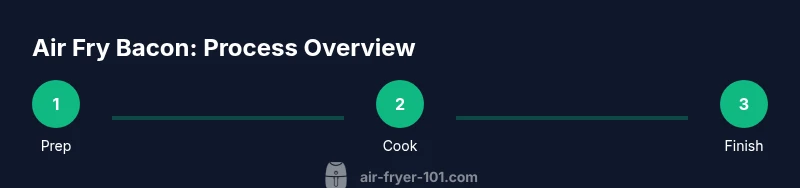
To air fry bacon, preheat the air fryer and lay slices in a single layer. Cook until crisp, typically 8–12 minutes, flipping halfway. For lean or thick-cut bacon, adjust time to taste and drain on paper towels. Use parchment or a rack to prevent sticking, and avoid overlapping for even browning.
What Do Air Fry Bacon On: Understanding the Method
According to Air Fryer 101, air frying bacon is essentially a matter of air circulation, fat drainage, and precise timing. The heated air surrounds each slice, which minimizes grease pooling and yields a uniform crust. The result is bacon that’s crisp on the edges and tender in the middle without the traditional splatter of pan-frying. For many home cooks, this method also reduces kitchen cleanup and reduces the need for added oil. When you’re aiming for perfect crispness, the thickness of the bacon and the model of the air fryer both influence the final texture. Throughout this guide, we’ll use the phrase “what do air fry bacon on” to emphasize the method rather than a fixed recipe—you’ll learn how to adapt to your equipment and preference while keeping health benefits in mind. Air Fryer 101 analysis shows that using a single layer and avoiding overlap is the strongest predictor of even browning across most air fryers. Consistency matters, so take a moment to plan your layout before you start.
Prepping for Crispy Results
Preparation is the quiet moment that often determines whether your bacon lands as crisp perfection or limp strips. Start with good-quality bacon cut to your preferred thickness. Pat dry with paper towels to remove surface moisture, which can delay crisping and cause extra steam inside the fryer. Preheat the air fryer for a few minutes to bring the chamber to a steady temperature, which helps stabilize cook times and prevents cold spots. If you have a rack or trivet, you can elevate the bacon slightly to encourage even air flow. Lining the basket with parchment or using a perforated liner helps prevent sticking and makes cleanup easier after cooking. Remember to arrange slices in a single layer with a little space between them for air circulation.
Temperature and Time Guidelines
Most bacon cooks well at around 350°F (175°C), but time varies with thickness. A standard-cut slice typically takes 8–12 minutes, with thinner cuts on the shorter end and thicker cuts on the longer end. If you’re aiming for extra crispness, you can extend by a couple of minutes, watching closely to prevent burning. Flip the slices halfway through to ensure both sides crisp evenly. For leaner bacon, start with the lower end of the time range to avoid overcooking the fat; for thick-cut or center-cut varieties, plan for the higher end. Adjustments based on your specific air fryer model are common, so treat the first batch as a baseline and tune from there.
Equipment and Setup: Parchment, Racks, and Safety
Using parchment paper or a perforated liner helps catch grease and reduces sticking, but avoid blocking air flow. A simple metal rack or trivet can lift slices off the basket floor for better air circulation. Always preheat if your model recommends it, and never overcrowd the basket—air needs space to circulate. If you notice smoke or excessive splatter, reduce the temperature slightly and ensure there’s no fatty buildup on the basket. After cooking, use tongs to transfer bacon to a paper towel–lined plate to blot excess grease. When handling the hot basket, wear oven-safe gloves to prevent burns.
Troubleshooting Common Issues
Curling and uneven browning are common early on, especially with irregular bacon shapes. A quick fix is to lay the fattier edge toward the heating element or place the sliced bacon in a slight diagonal to promote even exposure. If the bacon sticks to parchment, try a light mist of nonstick spray or switch to a perforated liner that’s compatible with high heat. If your results are consistently soggy, confirm you’re not overcrowding the basket and consider shortening the time slightly with an extra flip. For very smoky interiors, increase ventilation by opening a window or turning on a vent fan.
Finishing, Storing, and Reheating
After you’ve pulled the bacon, let it rest for a minute to finish crisping from residual heat. Store cooled slices in an airtight container in the refrigerator for up to four days, or freeze for longer storage. Reheating in the air fryer at a lower temperature for a few minutes restores crispness without drying the bacon. If you’re meal-prepping, consider cooking extra portions and portioning into microwave-safe containers for quick breakfasts or snacks. Bacon grease can be saved for frying eggs or flavoring potatoes, but strain it first to remove bits.
The Air Fryer Experience: Real-World Tips
In practice, door-to-table results depend on your specific model and the bacon’s thickness. The Air Fryer 101 team recommends keeping notes on your batch settings so you can replicate your favorites. Don’t be discouraged if your first batch isn’t perfect; small adjustments to temperature, time, and layout can yield consistent results once you understand your device.
Tools & Materials
- Air fryer(Any standard basket type works; adjust time for thickness.)
- Parchment paper or air fryer liner(Choose perforated liners if your model supports it.)
- Wire rack or trivet(Optional to lift bacon for extra air flow.)
- Tongs(For safe flipping and transfer.)
- Paper towels(For draining and blotting excess grease.)
- Knife or kitchen shears(Trim thick edges if needed.)
Steps
Estimated time: 15-20 minutes
- 1
Preheat and prep
Preheat the air fryer to 350°F (175°C) for 3–5 minutes. While it heats, pat bacon dry with paper towels and trim any excessively thick portions for even cooking.
Tip: Preheating helps achieve consistent results across batches. - 2
Arrange in a single layer
Place bacon slices in a single layer without overlapping. Use parchment or a rack to prevent sticking and ensure unobstructed air flow.
Tip: Leave a small gap between slices to promote crispness. - 3
Cook and flip
Cook for 8–12 minutes, depending on thickness, flipping halfway for even browning.
Tip: Check early if using thin-cut to prevent overcooking. - 4
Drain and rest
Transfer to a plate lined with paper towels and let rest 1–2 minutes to finish crisping.
Tip: Resting prevents soggy texture from steam buildup. - 5
Store or reheat
Store cooled bacon in an airtight container; reheat in the air fryer at a lower temp if needed.
Tip: Reheating should be quick to avoid drying. - 6
Clean up
Allow the air fryer to cool, then wipe the basket and tray to remove grease buildup.
Tip: A quick wipe after each batch keeps flavors fresh.
Got Questions?
Can I cook frozen bacon in the air fryer?
Yes, but plan for longer cook times and check for thawed sections. Separate slices before cooking to prevent clumps.
Yes, frozen bacon can be cooked; thaw slightly and separate slices for even cooking.
Do I need to preheat the air fryer for bacon?
Preheating helps achieve quicker, more even browning, but some models work well without it. If unsure, try with and without on a small batch.
Preheating helps; if you’re unsure, test a small batch first.
Is air-fried bacon healthier than pan-fried bacon?
Air frying can reduce overall fat due to fat drainage, but bacon remains high in fat and salt. Drain well and enjoy in moderation.
It can be leaner because fat drains away, but it’s still bacon—eat in moderation.
How can I prevent bacon from curling?
Choose evenly sliced bacon and space slices flat. A light tilt or placing curl-facing side down can help keep them straight during cooking.
Even slices and space help prevent curling.
Can I cook bacon with other foods in the air fryer?
It's best to cook bacon separately or ensure compatible flavors and space. Overcrowding harms crispness and safety.
Cook bacon separately or ensure space and flavor compatibility.
Watch Video
Quick Summary
- Preheat, space, and monitor for even browning
- Adjust time by thickness for optimal crispness
- Use parchment or a rack to reduce sticking and mess
- Store and reheat properly to preserve texture