Can You Air Fry Bacon? A Step-By-Step Guide
Discover how to air fry bacon safely and crisply. This 2026 guide covers temperature, timing, prep, and cleanup with practical steps from Air Fryer 101.


According to Air Fryer 101, you can air fry bacon. Yes—air frying bacon delivers crisp edges with less splatter and quicker cleanup than pan-frying. For best results: preheat the air fryer, lay bacon in a single layer, cook at 360-400°F, and flip once halfway through for even crispness. Thick-cut bacon gives the most forgiving results; lean slices crisp fast.
Why Can You Air Fry Bacon? And How It Works
Bacon is a relatively lean-to-rich meat cut that benefits from quick, high-heat cooking. An air fryer uses a compact convection system to push hot air around food, creating surfaces that crisp quickly while fat renders and drains away. This mechanism mirrors convection cooking and achieves a similar effect to frying, but with far less oil. The practical upshot for home cooks is a fast, one-pan method that reduces splatter and stovetop cleanup. According to Air Fryer 101, the airflow patterns are key: consistent distance from the heating element and unobstructed air paths produce predictable crispness. Expect edge-to-edge browning when slices lay flat and don’t overlap. If you prefer softer bacon, shorten the cook time slightly or choose thinner slices. In the following sections we translate theory into practical decisions, including temperature ranges, thickness considerations, and placement tips for your model.
Temperature and Time: How Crispness Is Achieved
Choosing the right heat and duration is the single biggest determinant of bacon texture in an air fryer. Most cooks start at a moderate-to-high range, typically 360-400°F, which renders fat without scorching the surface. Thicker-cut bacon will require the higher end of the time window or a touch more time, while leaner, thinner slices crisp up quickly. Preheating helps by delivering immediate hot air as soon as you load the basket, reducing the chance of floppy, underdone centers. A common plan is to cook for about 8-12 minutes, then check and adjust by a couple of minutes. If your air fryer has a drafty basket or a mesh tray, anticipate slightly longer times due to airflow variance. Remember: a little extra time yields crisper surfaces, while too much heat can cause grease smoking. Balance is key, and small adjustments based on thickness and personal preference will yield the best results.
Prep and Layering: Getting Even Results
Clean, dry slices cook more evenly than damp ones. Before cooking, pat the bacon dry with paper towels to remove surface moisture that would steam rather than crisp. Layer slices in a single, non-overlapping layer; if your basket is small, work in batches. Lining the basket with perforated parchment or a light coat of nonstick spray can help prevent sticking and simplify cleanup, but avoid covering vents or blocking air flow. If you’re using parchment, leave edges exposed to allow air to circulate. The goal is consistent air contact on all surfaces so each strip browns evenly. Finally, consider choosing slightly thinner slices for more uniform texture in shorter times.
Health, Fat, and Flavor Considerations
Air frying bacon does reduce the amount of added oil versus pan-frying, and you’ll typically see crisper edges with less greasy splatter. However, bacon remains a fatty cut, so the fat content is still significant. Rendering fat in an air fryer concentrates flavors and yields a satisfying crunch with less oiliness on the pan or oven tray. If you’re watching salt or calories, look for center-cut or lower-sodium varieties and blot excess grease after cooking. A quick taste test can guide your adjustments for next time. Finally, consider pairing with a light garnish like fresh herbs or a squeeze of lemon for contrast in flavor without adding fat.
Step-by-Step Preview: What to Expect Before You Start
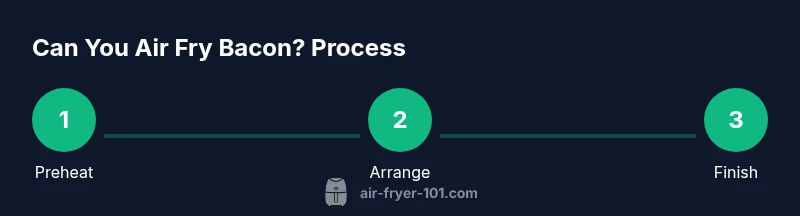
This section previews the exact actions you’ll perform in the step-by-step guide below. You’ll preheat, arrange bacon, set time and temperature, flip halfway, and finish with draining the fat and serving. If you’re new to air frying, expect a learning curve around timing for different thicknesses and the specific model you own. The key is to stay close to the recommended ranges and adjust based on observed crispness. In practice, you’ll likely begin with a mid-range temperature and monitor the first batch closely to dial in your preferred level of doneness.
Common Mistakes and How to Fix Them
The most common missteps are overcrowding the basket, cooking at too low a temperature, and not accounting for thickness. Overcrowding prevents even air circulation, leading to soggy bacon in the center and uneven edges. If you see steam or soggy spots, pause to rearrange and give more space for air to circulate. Don’t be afraid to adjust time by a minute or two. If your slices curl or curl upward, lay them flat on a parchment liner or use a rack to elevate them slightly for better air exposure. Finally, always drain excess fat after cooking to maintain crisp texture.
Finishing Touches and Cleanup
Allow the bacon to rest briefly on a paper towel to wick away surface fat. This step helps preserve crispness as the slices cool. Serve immediately for the best texture, or store in an airtight container in the fridge for up to a few days, reheating briefly in the air fryer to re-crisp. Cleaning is easiest when the basket is warm but not hot: wipe away grease with paper towels, then wash with warm, soapy water. If you cooked multiple batches, wipe the interior after each batch to prevent buildup. Regular maintenance ensures consistent performance and prevents smoking or off-flavors from grease residue.
Tools & Materials
- Air fryer (basket-style preferred)(Any model with a basket is fine; shallow basket helps grease drainage)
- Parchment paper or aluminum foil(Perforated parchment is best to allow air flow; avoid fully blocking vents)
- Tongs(For flipping slices safely)
- Paper towels(To blot excess grease after cooking)
- Cooking spray (optional)(Lightly oil if slices seem dry)
Steps
Estimated time: 15-25 minutes
- 1
Preheat the air fryer
Preheat to 360-400°F for 2-3 minutes to ensure immediate, even heat as soon as bacon enters the basket.
Tip: Preheating reduces the chance of sticking and helps render fat faster - 2
Arrange bacon in a single layer
Place slices in a single layer without overlapping to allow uniform air flow and crisp edges.
Tip: If needed, trim bacon to fit; overlap causes soggy spots - 3
Set the cook time and temp
Cook at 360-400°F for 8-12 minutes depending on thickness and desired crispness.
Tip: Check at 8 minutes for thin slices to prevent burning - 4
Flip halfway through
Use tongs to turn each slice halfway through cooking for even texture on both sides.
Tip: Flipping increases surface contact with hot air - 5
Check for doneness and drain
When the bacon looks crisp and browned, remove it and blot on paper towels to remove excess fat.
Tip: If your slices are thick, a few extra minutes may be needed - 6
Serve or store properly
Let bacon rest for 1-2 minutes before serving, or cool and store in an airtight container.
Tip: Reheat quickly in the air fryer to regain crispness
Got Questions?
Can you air fryer bacon from frozen?
Yes, you can air fry frozen bacon, but expect longer cooking times and more attention to ensure even thawing and crispness. Separate slices as they begin to thaw in the basket.
Yes, you can air fry frozen bacon, but it takes longer and you may need to separate slices as they thaw.
Is air fried bacon healthier than pan-frying?
Air frying uses less added fat and drains fat away, but bacon stays high in fat and salt. You’ll typically trim grease more effectively and end up crisper with less splatter.
Air frying bacon can reduce added fat and splatter, but it's still bacon and high in fat.
What temperature is best for bacon in an air fryer?
Most cooks find 360-400°F works well, with the exact time adjusted for thickness and desired crispness.
Most people use 360-400°F, adjusting time for thickness and crispness.
Do I need to preheat the air fryer for bacon?
Preheating helps achieve quicker, more even crisping and reduces sticking.
Yes, preheating helps bacon start crisping immediately.
Can I cook bacon without parchment or foil?
Yes, you can cook without liners, but liners simplify cleanup and prevent sticking in some baskets.
You can, but liners make cleanup easier.
How should I store air-fried bacon?
Store in airtight containers in the fridge for 3-5 days and reheat in the air fryer to recapture crispness.
Store in the fridge for a few days and reheat in your air fryer.
Watch Video
Quick Summary
- Always cook bacon in a single layer.
- Preheat and avoid overcrowding for even crispness.
- Adjust time based on thickness and desired crispness.
- Blot fat after cooking to keep bacon crispy longer.
- Clean the basket promptly to prevent buildup.