Can You Cook Bacon in an Air Fryer? A Practical Guide
Discover how to cook bacon in an air fryer for crispy, delicious results with minimal mess. Learn temps, times, prep tips, troubleshooting, and flavor variations with Air Fryer 101.


According to Air Fryer 101, you can cook bacon in an air fryer. It delivers crispy results with less mess than pan-frying and cooks faster than many oven methods. For best texture, arrange bacon in a single layer, pat dry, and preheat to about 350-400°F, then cook 8-12 minutes, checking for crispiness.
Why bacon in the air fryer is a smart choice
Cooking bacon in an air fryer is popular because the rapid hot-air convection produces a crisp exterior with less grease and mess compared with skillet frying. The Air Fryer 101 team found that the enclosed basket helps render fat efficiently while keeping splatter contained, which means cleaner countertops and less lingering odor. You can tailor texture by adjusting time and temperature and by choosing thickness according to your preference. Thinner slices crisp quickly for breakfast, while thicker slices stay satisfyingly chewy in the center if you prefer. For households cooking for multiple people, you can cook several batches in quick succession and still achieve consistent results. Overall, the air fryer offers a convenient, health-conscious alternative to pan-frying that aligns with busy, health-minded home cooks.
How air fryer bacon works (the science behind it)
Air fryers operate with a high-velocity fan that circulates hot air around food, creating convection similar to deep frying but with far less oil. When you cook bacon this way, fat renders and drains away, while the surface browns through the Maillard reaction to form a crisp crust. The neat part is that the bacon cooks evenly because the air reaches all sides of each slice in a compact basket. A properly preheated, single-layer arrangement minimizes overlap and hot spots. In Air Fryer 101 analysis, consistent heat and controlled air flow are the keys to even browning across slices, which helps you achieve repeatable results no matter the batch size.
Bacon types and prep for air frying
Thickness matters. Regular-cut bacon behaves differently from thick-cut or center-cut varieties. For traditional streaky bacon, you’ll usually achieve a strong crisp with shorter times; for thick-cut, expect longer cooking to crisp through the center. Thaw frozen bacon fully or pat to remove surface moisture to prevent steaming. Pat each slice dry with paper towels to minimize steam and promote browning. If you’re using pre-sliced, lightly pat and arrange in a single layer. Whether you prefer smoky, peppery, or maple-flavored bacon, selecting fresh slices will help you reach the target texture more reliably. Keep a small bowl of paper towels handy for blotting fat after cooking.
Equipment, accessories, and setup
Equip yourself with a reliable air fryer that can reach at least 350°F. A parchment liner with perforations helps prevent sticking and makes cleanup easier, but avoid covering the entire basket to maintain airflow. Tongs are ideal for turning slices mid-cook, while a small rack can help if you want to elevate bacon and promote even fat drainage. A timer or phone reminder ensures you don’t overcook. Have a plate lined with paper towels ready to drain and rest the bacon after it comes out of the fryer. If you’re new to air frying bacon, start with a simple setup using standard 1-2 inch thick slices and adjust in future batches based on texture preference.
Step-by-step cooking overview
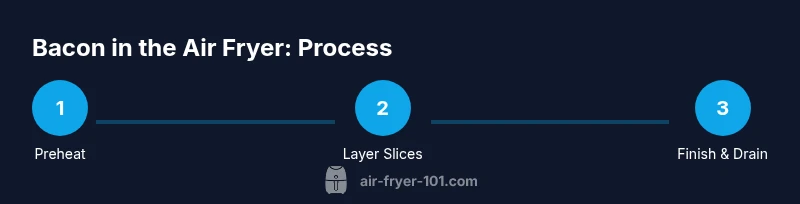
Think of the process as four parts: preheat, arrange, cook, and finish. Start by preheating the air fryer to a moderate temperature, then lay the bacon in a single, non-overlapping layer on a perforated parchment sheet or directly on the basket. Cook with a halfway flip to ensure even browning, monitoring closely as the fat renders. When the slices reach your desired crispness, transfer to paper towels to drain and rest briefly before serving. You can reserve rendered fat for other recipes if you like. For best results, avoid overcrowding and keep slices spaced so heat can circulate freely around each piece.
Troubleshooting and common issues
If bacon seems soft or undercooked, extend the cook time by 1–3 minutes, but check frequently to avoid burning. Overcrowding leads to uneven browning; always cook in batches if needed. If fat splatter becomes intense, reduce the temperature slightly and extend the cooking time a bit to compensate. If slices curl, light spacing and a gentle flip during cooking can help flatten them. Smoke is usually caused by excess fat; trim excess fat where possible and ensure the air fryer’s basket is clean before cooking. Finally, avoid using overly thick slabs that cannot render fat evenly in a short timeframe.
Health, safety, and cleanup considerations
Air frying bacon is convenient but still produces fat that can smoke if heated excessively. Preheating to the recommended temperature and preventing overcrowding minimizes smoke and uneven browning. After cooking, pour off fat carefully into a heat-safe container and wipe the basket with warm, soapy water. The parchment liner should be discarded after use unless your model allows reuse; always let the unit cool before cleaning. Remember that bacon fat is high in saturated fat, so moderation is wise and it can add flavor to other dishes when used sparingly.
Flavor variations and finishing touches
Maple-glazed or pepper-crusted bacon adds an extra dimension to the classic air fryer result. A light sprinkle of brown sugar or chili powder can create a sweet-spicy crust when combined with the natural fat. If you prefer extra crispness, finish the slices under a hot broiler for 30 seconds, but watch closely to avoid burning. For a smoky finish, add a touch of liquid smoke before cooking and adjust the sugar balance accordingly. Always experiment with small batches to dial in your preferred level of crispness and flavor.
Verdict and best practices
The Air Fryer 101 team’s verdict is that bacon cooks exceptionally well in most standard air fryers when you respect temperature, time, and spacing. Start with 350–360°F and 8–12 minutes for regular slices, adjusting to 12–14 minutes for thicker cuts. Use a single-layer layout to ensure even browning, and flip halfway for uniform texture. Clean as you go to avoid buildup that can affect future batches. With practice, you’ll master consistent results that mix well with breakfast plates, salads, or tacos.
Authority sources and further reading
For further reading on air frying bacon, refer to reliable sources such as the U.S. Department of Agriculture on cooking safety and clean kitchen practices, and university extension resources that discuss convection cooking basics and fat rendering. These references help ground practical kitchen tips in well-established food science and safety guidelines.
Tools & Materials
- Air fryer(Model with adjustable temperature 325-400°F; 1500–1800W recommended)
- Parchment paper with perforations(Prevents sticking and makes cleanup easier; avoid full basket coverage)
- Tongs(For safe flipping and handling of hot slices)
- Paper towels(Blot fat before cooking and drain cooked bacon after)
- Measuring cup or timer(Helps track precise cooking times)
- Optional: aluminum foil(Use sparingly; do not cover the entire basket to maintain airflow)
- Cooking spray(Lightly spray parchment if needed to prevent sticking)
Steps
Estimated time: 15-22 minutes
- 1
Preheat the air fryer
Set the appliance to 350°F (175°C) and allow it to preheat for 3–5 minutes. Preheating helps start even browning and fat rendering from the first slice.
Tip: Preheating consistency improves evenness across all slices. - 2
Prepare the bacon
Pat dry each slice with paper towels to remove surface moisture. If needed, trim excess fat for faster rendering and crisper results.
Tip: Dry slices thoroughly to avoid steaming and soggy bacon. - 3
Lay out in a single layer
Place bacon on perforated parchment or directly in a single layer with space between slices. Overlapping causes uneven browning and under-rendering fat.
Tip: Leave 1/4 inch gap between slices for air to circulate. - 4
Cook and flip
Cook for 8–12 minutes; flip slices halfway through to promote uniform browning. Start with 8 minutes for regular slices and add time for thicker cuts.
Tip: Monitor closely the last 2 minutes to prevent over-crisping. - 5
Check for crispness
Remove when the bacon has reached your desired crispness. Remember that it will continue to crisp slightly as it rests on towels.
Tip: If you want extra crispness, give it a 1–2 minute final blast. - 6
Drain and serve
Transfer hot bacon to paper towels to drain and rest before serving. This step removes excess grease and enhances texture.
Tip: Pat lightly again if you see extra oil pooling on the surface. - 7
Save rendered fat (optional)
Let fat cool in a non-reactive container; you can use a small amount for roasting vegetables or in other recipes.
Tip: Use a clean jar to avoid flavor transfer. - 8
Clean the air fryer afterward
Once cooled, wipe the basket and insert with warm, soapy water. Remove parchment remnants and inspect for grease buildup.
Tip: Regular cleaning prevents smoking and preserves airflow efficiency.
Got Questions?
Can I cook thick-cut bacon in an air fryer?
Yes. Thick-cut bacon works well, but it needs a longer cook time and closer attention to avoid undercooking the center. Start at 350°F and check every 2 minutes after the first 8 minutes.
Yes. Thick-cut bacon works, but you may need more time and careful checking to ensure the center is cooked through.
Do I need to preheat the air fryer for bacon?
Preheating helps achieve quicker and more even browning. If your model runs hot, you can start directly at 325–350°F and extend the cook time slightly.
Preheating helps you get even browning; you can skip it on some models but expect slightly longer times.
What temperature is best for crispy bacon?
Most cooks find 350–360°F (175–182°C) produces a reliable balance of crunch and tenderness. Increase to 380–400°F for extra crispness if slices are very thin.
A good target is around 350 to 360 degrees for reliable crispness; adjust if you prefer more or less texture.
How long does bacon take in the air fryer?
Regular slices typically take 8–12 minutes; thicker slices may need 12–15 minutes. Flip halfway and check early to avoid burning.
Most bacon cooks in about 8 to 12 minutes, with longer times for thicker cuts.
Can I reuse rendered bacon fat?
Yes, you can strain and store rendered fat for roasting vegetables or roasting meats later. Keep it in a clean, sealed container in the fridge for up to a month.
Rendered bacon fat can be saved for cooking if stored properly.
How do I clean the air fryer after bacon?
Let the unit cool, then wash the basket and tray with warm, soapy water. Wipe the interior with a damp cloth. Avoid abrasive cleaners that could damage coatings.
Let it cool, then wash the basket and tray; wipe the interior with a damp cloth.
Watch Video
Quick Summary
- Start with single-layer bacon for even browning
- Preheat, monitor, and flip for consistent texture
- Drain on towels to finish crisping
- Avoid overcrowding to prevent steaming
- Clean the basket after use to prevent smoke