What to Cook Bacon On in an Air Fryer: Surfaces That Crisp
Discover the best surfaces to cook bacon in an air fryer, from parchment to racks, to achieve crisp perfection with minimal mess. Compare options, prep tips, and a step-by-step guide.


You can cook bacon in an air fryer by laying slices on a parchment liner or a small rack, then cooking at 360°F for 8–12 minutes. Flip halfway and check for your preferred crispness; adjust time by thickness. For very thick cuts, start at 380°F and add 2–3 minutes. Don’t crowd the basket to prevent steaming.
Why the cooking surface matters for bacon in the air fryer
When you cook bacon in an air fryer, the surface you choose determines how evenly heat circulates, how much grease drains away, and how clean your finished dish turns out. The right surface can mean crisper edges, less shrinkage, and easier cleanup. In this guide we explore what to cook bacon on in an air fryer and how each option affects texture, grease management, and flavor. According to Air Fryer 101, using a proper surface is a major factor in achieving consistently crisp bacon without soggy spots or a greasy finish. Understanding the role of the surface helps home cooks make quick, confident decisions every time.
Parchment paper, foil, and silicone liners: picking the best surface
Parchment paper with tiny holes or a perforated silicone liner is a favorite starting point because it catches grease while still allowing air to flow. Aluminum foil can work in a hurry for liners but can block airflow if crumpled or folded too thickly. Silicone liners offer a reusable alternative, but they must be perforated or vented to prevent steam buildup. Each option changes how heat hits the bacon and how much cleanup is required. Air Fryer 101 recommends starting with parchment or a perforated silicone liner for most cooks to balance cleanups and crisp texture.
Using a rack versus laying bacon flat: trade-offs for airflow
A small, oven-safe rack elevates the bacon so hot air can circulate around each slice, producing uniform crispness and less grease pooling. Laying bacon flat directly on parchment is simpler and often yields excellent results, especially when space is tight. The rack is especially helpful for thicker cuts or when you’re cooking multiple strips that would otherwise overlap. If you do use a rack, make sure it fits your air fryer basket without blocking air paths.
Prepping bacon: trimming, patting dry, and spacing matters
Pat dry each slice with a paper towel to remove surface moisture that can hinder crisping. Trim fat edges if desired to reduce shrinkage, but avoid removing too much fat, which carries flavor. Space slices so they don’t touch; slightly overlapping bacon can steam rather than crisp. The goal is an even layer with room for air to circulate, which improves both texture and bite.
Do you need to preheat the air fryer for bacon? practical guidance
Preheating can shorten the time to crispness, especially on newer models with fast air delivery. If your air fryer maker recommends preheating, do it for 2–3 minutes before adding bacon. If you’re in a hurry or your model runs hot, you can skip preheating and monitor the first batch closely to avoid overcooking. The choice largely depends on your model and preferred texture.
Step-by-step cooking guide: core technique for perfect crisp
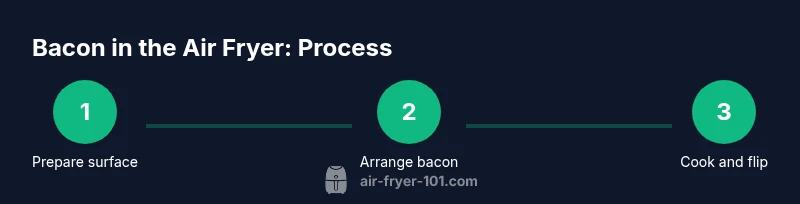
- Choose a surface (parchment, liner, or rack). 2) Preheat if your model requires it. 3) Arrange bacon in a single layer with space between slices. 4) Cook at the recommended temperature (360°F for standard slices; 380°F for thick-cut). 5) Flip halfway through to ensure even crisp. 6) Rest for a minute or two before serving to finish color and texture. 7) Clean the tray promptly to prevent grease buildup on future cooks.
Timing tips: thickness, cut, and temperature
Thin-cut bacon usually crisps faster, often around 8–10 minutes at 360°F, while thick-cut may need 11–14 minutes at 380°F. Slicing thickness isn’t the only factor—bacon with higher fat content can render more quickly and may brown faster. If you’re unsure, start with the lower end of the range, check for color and bite, and adjust in 1–2 minute increments.
Mess control and cleanup: grease management
Grease can splatter or pool, depending on surface and airflow. A parchment liner or perforated liner helps catch drips while letting fat drain away from the bacon. Wipe down the basket after the bacon finishes and wash reusable liners promptly. Keep a paper towel handy to quickly absorb excess grease before it cools and solidifies.
Variations: maple bacon, peppered, and turkey bacon in the air fryer
Maple-glazed or pepper-seasoned bacon adds flavor but can brown faster due to sugar or spices. For maple bacon, reduce the time by 1–2 minutes to prevent burning. Turkey bacon cooks similarly but usually requires a bit less time and lower heat due to its leaner profile. Always monitor the first batch when trying a new variant.
Healthier options and flavor ideas for air fryer bacon
If you’re aiming for less fat, consider partially thawed slices or lean cuts and trim excess fat before cooking. Spice blends and a light brush of maple or hot sauce can add flavor without deep-frying. The air fryer helps preserve bacon’s savory profile while achieving crisp texture with less oil.
Post-cook cleanup: quick steps to finish
Let the bacon rest briefly to finish crisping in its own heat. Dispose of grease safely by letting it cool in the tray before pouring into a non-flammable container. Wipe the basket with a damp cloth or sponge, then wash. Thorough cleaning prevents residue buildup that can affect future cooks and flavors.
Troubleshooting common issues: soggy edges, uneven browning, and smoke
If edges are soggy, check that slices aren’t touching and that air can circulate fully around each piece. Uneven browning usually means overlapping or crowding the basket. A light mist of oil spray isn’t necessary for crisp bacon, and excessive fat can cause smoking; use a lower temperature if your fryer is smoking and ensure proper ventilation.
Tools & Materials
- Parchment paper or parchment liners(Perforated liners are best for airflow)
- Air fryer safe rack or elevated tray(Fits your basket width; leaves space between slices)
- Aluminum foil (optional)(Use sparingly to catch drips; may reduce airflow if crumpled)
- Silicone baking mat (perforated, optional)(Reusable surface; ensure it’s perforated to allow air)
- Tongs or scissors(For flipping and handling hot slices)
- Paper towels(Pat dry before cooking; absorb extra grease after)
- Knife or kitchen shears (optional)(Trim excess fat if desired)
- Grease catcher or small tray (optional)(Helps with cleanup and grease management)
Steps
Estimated time: 15-20 minutes total, depending on thickness and model
- 1
Choose surface
Select parchment paper, a perforated silicone liner, or a rack based on your preference and fryer size. This choice sets the stage for airflow and cleanup.
Tip: Perforated options balance cleanup and air flow best. - 2
Preheat if required
If your model recommends preheating, run the air fryer empty for 2–3 minutes. Preheating helps reach crispness faster.
Tip: If unsure, start with no preheat and watch the first batch closely. - 3
Arrange bacon
Place bacon in a single layer with small gaps between slices to maximize air exposure and even browning.
Tip: Avoid overlapping bites—space is key for crisp edges. - 4
Choose temperature and time
Standard slices: 360°F for 8–12 minutes. Thick-cut: 380°F for 11–14 minutes. Adjust minimal amounts for desired crispness.
Tip: Begin at the lower end of the range and add minutes in 1–2 increments. - 5
Flip and monitor
Flip halfway through to ensure even browning. Monitor the last few minutes to prevent overcooking.
Tip: Flipping helps avoid soggy edges and uneven coloring. - 6
Rest and serve
Let bacon rest 1–2 minutes on a plate lined with paper towels to absorb remaining grease.
Tip: Resting seals texture and reduces grease on the bite.
Got Questions?
Can I cook bacon directly on the air fryer basket without a liner?
Yes, but it’s messier and harder to achieve even crisp. A parchment liner or rack helps grease drain away and prevents sticking, making cleanup easier.
Yes, you can cook directly, but using a liner or rack reduces mess and promotes even crisp.
What temperature is best for bacon in an air fryer?
Common starting points are 360°F for regular bacon and 380°F for thick-cut slices. Adjust by 20-degree increments if needed to hit your preferred crisp.
Start around 360 degrees for regular bacon, 380 for thick-cut, then tweak as needed.
Is preheating essential for bacon?
Preheating shortens time to crisp on many models, but you can omit it if you monitor the first batch and adapt. It’s model-dependent.
Preheating helps some models; otherwise, watch the first batch and adjust.
How can I prevent grease fires when using an air fryer?
Keep grease contained in the tray, avoid overfilling, and avoid water on hot grease. If you notice smoke, pause cooking and ventilate your area.
Contain grease, don’t overfill, and don’t use water. If you see smoke, stop and ventilate.
Can I reheat leftover bacon in an air fryer?
Yes. Reheat at 350°F for 3–5 minutes depending on thickness, checking frequently to avoid overcooking.
Reheat at 350 degrees for a few minutes; keep an eye on it.
Will maple syrup or sugar-coated bacon burn in the air fryer?
Sugary coatings brown quickly. Reduce time slightly and monitor closely to prevent burning; you can apply glaze after cooking for best results.
Sugar browns fast; watch closely or add glaze after cooking.
Watch Video
Quick Summary
- Use parchment or a rack for optimal airflow.
- Do not overcrowd the basket; space between slices is essential.
- Adjust time by bacon thickness to reach your preferred crisp.
- Clean grease promptly to prevent odor and smoke.