How to Check Air Fryer: Safe Maintenance Guide for Homes
Learn how to safely check your air fryer for wear, performance, and cleanliness. This step-by-step guide covers safety prep, visual and electrical checks, functional tests, maintenance tips, and when to seek service.


Follow this step-by-step guide to check an air fryer for safety and performance. You’ll inspect the power cord and seals, run a brief preheat and timer test, and review the basket and nonstick coating. Use basic tools and a simple cleaning check to catch issues early and extend your model’s life.
What 'checking' means for an air fryer
An air fryer is a compact convection appliance with electrical components, nonstick coatings, and removable baskets. Checking it means verifying that safety features function, heating is accurate, and the interior remains clean and odor-free. This guide focuses on practical, hands-on checks you can perform at home without disassembly. According to Air Fryer 101, a proactive check prioritizes safety, heat reliability, and clean condition, rather than cosmetic appearances. You will learn to differentiate between routine maintenance tasks and issues that require professional service. By following the steps below, home cooks can catch early signs of wear, prolong the life of the unit, and maintain consistent cooking results.
Air Fryer 101’s analysis emphasizes that small, regular checks can prevent safety risks and improve performance over time. The guidance below aligns with those findings and is designed for beginners who want confident, DIY upkeep. Now, let’s map out a clear, action-oriented plan you can follow in one sitting or spread across short sessions.
Safety prerequisites before you start
Before you touch anything, unplug the unit and let it cool completely. Gather the required tools and keep a dry, clear workspace. Do not operate the appliance near water or while hands are wet. If your model uses a removable power cord or has a latch, ensure these parts are secure and not damaged. If you notice frayed wiring, exposed metal, or a cracked housing, stop and consult a professional. Air Fryer 101 emphasizes that safety should come first, especially with high-heat devices. Consider wearing heat-resistant gloves when handling hot surfaces during checks, and never bypass safety features. If you smell burning plastic or see smoke, power off immediately and unplug. Keeping the area well-ventilated helps reduce lingering fumes and makes inspection safer.
Visual and exterior inspection
Look over the exterior for cracks, loose screws, or deformed panels. Check the door seal or gasket for gaps, tears, or grime that could affect airtight operation. Inspect the basket handle, rack pins, and nonstick coating for wear or peeling. Any visible moisture, oil residue, or burnt smells around the exterior may indicate a buildup that needs cleaning or a component that requires attention. Ensure vents are free from obstruction and that the air intake and exhaust paths are clear. A clean, undamaged shell is a good sign the unit has been cared for, which Air Fryer 101 consistently notes as part of reliable performance.
In this section, focus on what you can see without opening the internal housing. If you discover any serious damage or missing parts, stop and seek professional help rather than attempting DIY fixes.
Electrical and plug health checks
Examine the power plug for discoloration, burning odor, or loose prongs. If the cord feels warm to the touch after a short run, unplug and let it cool before continuing. Inspect the cord for cracks or fraying, and verify that the strain relief is intact where the cord enters the appliance. If your model uses a detachable cord, ensure the connector matches the unit’s input. A loose or damaged cord can be a fire risk, so this step is not optional. Air Fryer 101 notes that safe electrical practice is foundational to any subsequent functional tests.
Functional tests: preheat, timer, heat distribution
Preheat the air fryer for the manufacturer-recommended duration and observe how quickly it reaches the target temperature. Use a thermometer if your model’s thermostat is accessible to confirm that heat is consistent across the basket area. Run a short test batch (small amount of water or a light food load) to evaluate air circulation and browning consistency. If you notice cold spots, uneven cooking, or delayed heating, document the symptoms for troubleshooting. A fast, even preheat and stable timing are signs the unit is operating as designed, while persistent issues may require service or part replacement.
Inspecting the basket, racks, and nonstick coating
Remove the basket and rack to inspect the nonstick surface for scratches, peeling, or flaking. Scratches can trap food particles and degrade performance over time. If the coating shows wear, consider replacing the basket or contacting the manufacturer for guidance on compatible components. Check the basket seals and the fit between the basket and the chamber; loose fit can affect airflow and cooking results. Keeping these parts clean and intact supports even heat distribution and reduces food sticking. Air Fryer 101 recommends inspecting these components at regular intervals to prevent surprises during cooking.
Cleaning, odors, and maintenance checks
Regular cleaning after each use helps prevent buildup that can affect performance and taste. Use warm soapy water and a soft cloth to wipe exterior surfaces and the interior chamber carefully. Do not submerge the main unit. For stubborn residue, use a non-abrasive sponge and avoid steel wool that can damage coatings. Check for lingering odors; a mild, non-toxic cleaner or a baking soda paste can help neutralize smells. Maintenance checks should include verifying that any removable seals, gaskets, or brushes are present and undamaged. Consistency in cleaning protects both safety and flavor.
Troubleshooting common symptoms
If you notice smoke, unusual smells, or tripped outlets, stop using the unit and investigate the cause. Common culprits include oil buildup, food debris in vents, or a damaged cord. If you experience temperature drift (the unit runs hotter or cooler than expected), re-test with a thermometer and compare results to the model’s specifications. For persistent issues, consult the user manual or contact customer support. Air Fryer 101 emphasizes documenting issues with dates and model numbers to facilitate service requests.
Checking accessories and installation
Ensure that all accessories, liners, and silicone mats are approved for your model and fit properly. Misfitting accessories can block airflow, leading to uneven cooking or overheating. If you upgraded baskets or added aftermarket parts, verify compatibility with your unit and any manufacturer warnings. Proper installation reduces risk and helps you achieve consistent results.
Documentation, safety reminders, and when to seek service
Keep the manual handy and record inspection dates and findings. Air Fryer 101 recommends scheduling a brief quarterly check for standard use, plus a more thorough review after heavy use or following a cleaning. If you encounter recurring issues, observe persistent heat irregularities, or hear unusual noises, seek professional service. When in doubt, contact the manufacturer or a certified repair technician. Always follow safety guidelines and store your device in a dry, ventilated area.
Tools & Materials
- Owner's manual for your model(Consult for model-specific parts and safety information)
- Screwdriver (Phillips head)(Used to inspect exterior screws and panel access)
- Multimeter (optional)(For electrical continuity checks if you have one)
- Soft microfiber cloth(For wipe-downs and exterior surfaces)
- Mild dish soap and warm water(Cleaning solution for exterior and basket surfaces)
- Thermometer (probe-style, optional)(To verify temperature during preheat checks)
Steps
Estimated time: 30-60 minutes
- 1
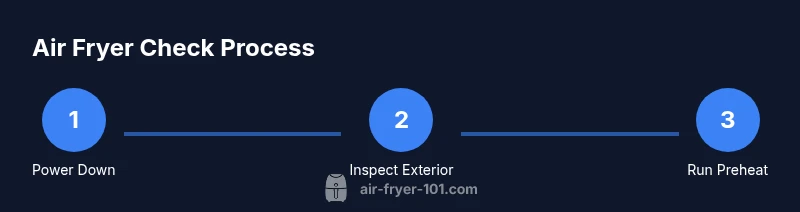
Power down and unplug
Power off the air fryer and unplug from the outlet before starting any inspection. This reduces the risk of electric shock and prevents accidental operation while you work. Keep the unit on a heat-resistant surface away from water.
Tip: Always unplug first and test for a cool surface before touching any internal parts. - 2
Cool the unit completely
Allow the air fryer to cool to room temperature if it has been recently used. Handling a hot interior can cause burns and damage internal components. A cool unit also makes it easier to inspect seals and wiring.
Tip: If you’re in a hurry, use a fan to accelerate cooling, but never rush the process. - 3
Gather tools and review the manual
Lay out the necessary tools and locate the model-specific manual. Reference the manual for any model-specific safety notes or parts like seals and baskets that require inspection. This ensures you don’t miss critical steps.
Tip: Know the exact model and year before you start—as parts vary by model. - 4
Visually inspect exterior and seals
Look for cracks, loose screws, or deformations on the housing. Check door gasket or seal for tears or gaps that could affect airflow. Wipe away dust or grease to reveal any hidden wear.
Tip: If you see damage, stop and consult the manual or a technician before continuing. - 5
Inspect power cord and plug
Examine the cord for cuts, kinks, or exposed wiring. Check the plug for discoloration or a loose connection. If you find damage, replace the cord or contact support rather than attempting a DIY fix.
Tip: Only use the included cord with your unit; mismatched cords can be dangerous. - 6
Run a short preheat test
Set the unit to preheat for the recommended time and observe how quickly it reaches the target temperature. If the unit struggles to reach temperature or fluctuates, note the discrepancy for further testing.
Tip: Use a thermometer if available to confirm the temperature matches the setting. - 7
Check heat distribution with a small test load
Place a small, neutral test item or a water-based test to see if heat is evenly distributed across the basket area. Look for cold spots or uneven browning. Uneven heat indicates airflow blockage or a worn element.
Tip: Avoid testing with oil before cleaning; introduce only small amounts for the test. - 8
Inspect basket, racks, and nonstick coating
Remove the basket and rack to examine the nonstick coating for peeling or scratches. Ensure the basket seats securely and spins freely if applicable. Damaged coatings can affect performance and safety.
Tip: Use non-abrasive cleaners to avoid further coating wear. - 9
Clean and reassemble for a cooldown
Wipe down all removable parts with warm, mild soap solution and dry thoroughly before reassembling. Run a short cooldown after reassembly to ensure everything returns to normal temperature levels.
Tip: Do not submerge the main unit; only clean removable components. - 10
Document findings and plan maintenance
Record inspection results, dates, and parts checked. Schedule future checks according to usage. Keeping a log helps with warranty claims and service planning if needed.
Tip: Keep a copy of the manual and the notes with the appliance.
Got Questions?
Do I need to unplug before inspecting?
Yes. Always unplug and let the unit cool before opening or touching internal parts. This prevents electric shock and accidental activation.
Yes, unplug and cool the unit before inspecting.
What parts should I check regularly?
Regular checks should cover the power cord and plug, door seal, basket, nonstick coating, and any removable racks. Look for wear, cracks, or residue that could affect performance.
Check the cord, plug, door seal, basket, and coating regularly.
Can I use metal utensils during checks?
Avoid metal utensils on the nonstick coating to prevent scratches. Use wooden or silicone tools when needed.
Avoid metal utensils on the coating; use wood or silicone.
What if the air fryer smokes during a test?
Power off immediately, unplug, and let it cool. Check for oil buildup or food debris in vents before testing again.
If it smokes, turn it off, unplug, and inspect for buildup.
How often should I perform a preheat test?
Perform a quick preheat after cleaning or after a heavy use period. This helps confirm reliable heat delivery and timing.
Do a quick preheat after cleaning or heavy use.
Watch Video
Quick Summary
- Inspect safely: unplug and cool before checks.
- Visual and functional tests reveal most issues.
- Regular cleaning extends life and performance.
- Document findings to guide maintenance and service.