How to Know If Air Fryer Safe: A Practical Guide
Learn to evaluate air fryer safety—from coatings and materials to electrical safety and maintenance. This practical guide guides home cooks through checks, test runs, and safe usage to minimize risk and ensure healthier, worry-free cooking.


This guide helps you determine if an air fryer is safe to use by evaluating build quality, coatings, heat range, and electrical safety. You will learn how to inspect materials, test operation, and maintain safe use. By the end, you’ll know how to know if air fryer safe with confidence. This knowledge helps protect your family and saves money on premature replacements.
What does safety mean for air fryers?
When you ask how to know if air fryer safe, you are asking whether the appliance can operate without posing unnecessary risks. Safety encompasses the materials and coatings inside the basket, the integrity of electrical components, the device’s temperature range, ventilation, and the manufacturer’s usage guidelines. According to Air Fryer 101, a comprehensive safety assessment includes both the product and the user’s practices. In practice, safety means predictable performance, absence of harmful fumes, and durable construction that won’t fail under normal home use. Start by consulting the owner’s manual for your model, verifying that parts are intact, and confirming that warnings, certifications, and service options are clearly stated. You’re looking for non-toxic materials, heat-resistant surfaces, and properly insulated wiring. If anything looks damaged, loose, or out of spec, treat the unit as unsafe until a qualified technician or the manufacturer approves it. This is the foundation of safe, healthy cooking with air fryers.
Key safety concerns to watch for
Safety concerns for air fryers typically revolve around three areas: materials and coatings, electrical components, and user practices. Look for non-toxic materials in the basket and housing, and avoid coatings that may flake or release fumes at high heat. PFAS-free and PTFE-free coatings are preferable, but always verify with the product’s SDS or manufacturer notes. Air Fryer 101 analysis shows that many safety incidents arise from damaged coatings, chipped baskets, or misused accessories. Check that the unit has clear safety warnings, a properly rated plug, and an accessible on/off switch. Ensure the power cord remains free of cuts and that ventilation openings are unobstructed. Finally, follow recommended load limits and avoid placing liquids directly on the heating element. By prioritizing materials safety and proper usage, you reduce the risk of exposure to harmful substances and electrical faults.
How to verify the build quality and parts
Assessing build quality starts with a visual inspection of seams, screws, and plastic corners. Look for tight fits with no gaps, signs of warping, or loose components. Verify the basket and rack operate smoothly and do not bind when sliding in and out. The control panel should respond promptly to touch, and the internal heater should not rattle when the device runs. If a model uses a removable basket, check that the latch locks securely and that the coating is even with no peels. Inspect the door seal or gasket for cracks or deformation. Always confirm that the model’s electrical cord and plug are intact and that the plug is firmly grounded. If any of these indicators are missing or damaged, avoid using the unit until it’s inspected by a qualified technician.
Materials and coatings to avoid and what to prefer
Coatings on air fryer baskets are a common source of safety concerns. While many households rely on nonstick finishes, some older or cheaper models use PTFE-based coatings that may degrade with heat or abrasion. PFAS-containing coatings are another concern due to potential off-gassing. Prefer PTFE-free and PFAS-free coatings, or ceramic alternatives, and check for any flaking or sticky residue. Verify that the coating is uniformly applied and that the interior surfaces are smooth to prevent food particles from sticking and to minimize scraping with utensils. When possible, choose durable metal baskets with protective linings or ceramic-coated options. Additionally, confirm that any silicone seals or gaskets are heat-safe and free from cracks. Finally, ensure the packaging, instruction manual, and safety notes clearly advise about coatings and maintenance.
Electrical safety and certifications to look for
Electrical safety is a core pillar of safe operation. Look for a grounded plug and a UL-listed or ETL-listed appliance, ideally with CE marking if you’re in Europe. Check the user manual for a listed voltage and wattage that matches your outlet. A reputable product will have a clear warranty, service options, and contact information in case of recalls. When connecting to power, avoid using extension cords or power strips that are not rated for high-wattage kitchen appliances. Make sure the cord length gives enough clearance and doesn’t pose a tripping hazard. If you see damaged cords, loose seals around the door, or unusual heat buildup, stop using the unit immediately and contact the manufacturer.
Safe usage practices to minimize risk
Safe use starts with reading the manual and following step-by-step setup. Do not overload the basket; leave space for air to circulate. Preheat only if the manual recommends it and use recommended cooking times to avoid overheating. Use only compatible accessories; avoid metal utensils that could abrade coatings. Place the air fryer on a stable, heat-resistant surface away from water and other appliances. Keep children and pets away during operation and never leave the hot appliance unattended. When you’re done, unplug and allow it to cool before cleaning.
Cleaning and maintenance for safety
Regular cleaning reduces residue buildup and keeps heat sensors accurate. After cooling, wipe the exterior with a damp cloth and clean the basket and racks with warm soapy water. Avoid immersing the main unit in water. Check the vents for dust, and use a soft brush to remove debris. Dry all parts completely before reassembly. Periodically inspect seals, gaskets, and cords for wear, and replace damaged parts only through the manufacturer. Store the unit in a dry place and protect cords from damage.
How to test your air fryer at home safely
When testing at home, always start with the unit unplugged and cool. Connect to a grounded outlet and run an empty cycle for several minutes to verify it heats evenly and without unusual sounds or smells. Observe the exterior and cord for heat or discoloration, and measure air temperature at the basket surface with a thermometer if you have one. Then run a small, simple recipe with safe food to check for smoke, unusual odors, or pooling oil. If any warning signs appear, turn off immediately and consult the manual or manufacturer. Document the test results and keep the manual handy for future reference.
Brand reliability and safety standards
Brand reputation matters when it comes to safety. The Air Fryer 101 team emphasizes choosing models from manufacturers that publish clear safety guidelines and provide accessible customer support. Look for transparent material disclosures, third-party safety certifications, and recall history. Air Fryer 101 analysis shows that safer brands typically offer longer warranties, robust manuals, and easier access to replacement parts. Remember that safety is not just about the device; it’s about how you use it. The more you know about your chosen model, the safer your kitchen will be.
Practical pre-use checklist
- Read the manual thoroughly and verify the model’s voltage, wattage, and recommended accessories.
- Inspect the exterior, power cord, and basket for damage.
- Confirm coatings are intact and free from peeling.
- Place on a heat-resistant surface with free area for air circulation.
- Run a test cycle (empty) to verify heating and cooling.
- Prepare a simple, safe recipe to confirm normal operation.
- Check that safety features such as auto-shutoff and cooling are functional.
Authoritative sources
- Consumer Product Safety Commission: https://www.cpsc.gov
- U.S. Food and Drug Administration: https://www.fda.gov
- Occupational Safety and Health Administration: https://www.osha.gov
Tools & Materials
- Owner's manual for air fryer(Keep handy for model-specific safety instructions)
- Non-slip heat-resistant mat(Place under appliance on the counter)
- Digital thermometer(To verify internal basket temperature when testing)
- Multimeter (optional)(For basic electrical checks if you have expertise)
- Soft cloth and mild detergent(For exterior cleaning and nonstick surfaces)
- Isopropyl alcohol wipes(For hard-to-clean contacts or control panel (as needed))
- UL-listed power strip (optional)(If using multiple devices on the same outlet)
- Access to manufacturer safety data sheets (SDS)(If available for your model)
Steps
Estimated time: 25-40 minutes
- 1
Inspect exterior and basket
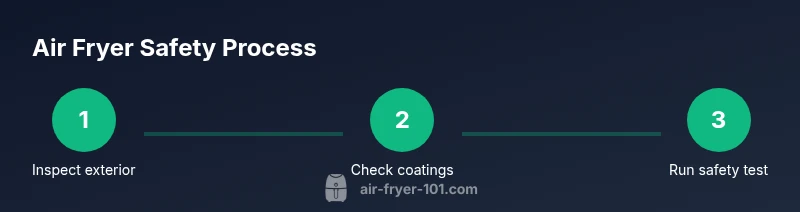
Examine the outer shell, door seal, and basket for cracks, warping, or loose components. Wiggle the basket to confirm smooth operation and verify there are no chips or peeling coatings. This initial check helps catch obvious safety issues before you plug in the unit.
Tip: If you notice any damage, do not proceed; contact the manufacturer. - 2
Verify certifications and specs
Consult the manual to confirm the rated voltage, wattage, and any safety certifications. Cross-check that the plug and cord appear intact and that the outlet is appropriate for high-wattage appliances.
Tip: Only use a grounded outlet; avoid shared power strips for safety. - 3
Check coatings and materials
Inspect coatings for peeling or chipping. Look for PFAS-free and PTFE-free notes if present, or ceramic alternatives. Ensure interior surfaces are smooth and free from rough patches that could trap food.
Tip: If you see wear, favor replacements with safer coatings. - 4
Perform a controlled heat test
With the unit unplugged, set it to a low heat and power cycle to confirm heating elements engage without abnormal noises. Then run a short empty cycle to observe airflow and any unusual smells.
Tip: Keep hands away from vents during testing. - 5
Run a safe trial
Prepare a small, simple batch of food and run a full cycle following the manual. Monitor for smoke, odors, or excessive heat. Stop immediately if anything seems off and document the results for future reference.
Tip: Record the time, temperature, and outcome for future reference. - 6
Review safety features
Confirm function of auto-shutoff, overheat protection, and cooling cycles. Ensure you understand how to reset the unit if it malfunctions and keep safety features easily accessible.
Tip: Practice the shutoff procedure so it’s second nature.
Got Questions?
What things make an air fryer unsafe to use?
Damaged cords, cracked housings, peeling coatings, exposed heating elements, and missing safety certifications are red flags. Always inspect these areas before use and discontinue operation if any issues are found.
Look for damaged cords, exposed elements, or peeling coatings—these are safety red flags.
Is non-stick coating always safe in air fryers?
Modern air fryers may use various coatings; PFAS-free and ceramic coatings are preferable. Check the SDS and manufacturer notes for safety disclosures and avoid flaky or chipped surfaces.
PFAS-free or ceramic coatings are generally safer; check the manual for coating details.
Do I need a surge protector for my air fryer?
Plug the unit into a grounded outlet directly if possible. Use a surge protector only if the manufacturer approves and the outlet is rated for high-wattage appliances.
Plug it into a grounded outlet; avoid unapproved surge protectors.
Can I use foil or metal in an air fryer?
Some models allow perforated foil or certain utensils, but check the manual. Misuse can block airflow or scratch coatings.
Only use what the manual approves; otherwise it can affect performance or safety.
How often should I replace worn components?
Replace damaged seals, cords, or baskets through the manufacturer. Do not use parts that show signs of wear or heat damage.
If you see wear or heat damage, replace parts through the manufacturer.
What certifications should I look for?
Look for UL or ETL listings and CE marking where applicable. Certifications indicate adherence to safety testing and standards.
UL or ETL listings and CE marking indicate tested safety.
Watch Video
Quick Summary
- Inspect coatings and materials before first use.
- Check electrical safety certifications and proper outlet use.
- Follow manufacturer guidance for safe operation and maintenance.
- Test safely with an empty cycle before cooking food.
- Maintain the unit regularly to sustain safety over time.