When to Clean Air Fryer: A Practical Maintenance Guide
Learn when and how to clean your air fryer for optimal performance, odor control, and longevity. This step-by-step guide covers post-use cleaning, deep cleans, tools, safety, and pro tips for home cooks.


With an air fryer, cleaning should be routine. After each cooking session, wipe the basket and pan, and give the interior a quick wipe once the unit cools. Schedule a deeper clean when you notice buildup, odor, or reduced airflow—typically monthly or when the crisper basket shows residue. Use warm soapy water and a non-abrasive sponge, and avoid soaking electronics.
Understanding why cleaning matters
Regular cleaning keeps your air fryer performing at its best. By removing oil buildup, crumbs, and food residue, you maintain efficient airflow, even cooking, and a fresher kitchen-smelling appliance. According to Air Fryer 101, consistent cleanings help protect the nonstick coating and prevent lingering flavors from transferring between cooks. A clean unit is also safer, reducing the chance of smoke during high-heat cooking. Think of cleaning as part of your cooking routine, not a one-off chore. Small, consistent care compounds over time and yields noticeably better results.
What to clean first: removable parts and interior surfaces
Start with the parts you remove: the basket, the pan, and any racks. These components are designed to be washed—either by hand with warm, soapy water or in the dishwasher if the model specifies dishwasher-safe parts. After removing them, wipe the interior surfaces and the heating element housing with a damp, non-abrasive cloth. Never immerse the main unit in water, and avoid spraying liquids directly into vents or controls. Dry all parts completely before reassembling to prevent steam and moisture from affecting electronics.
How often to clean: a practical cadence for most households
A basic post-use wipe-down after every cook is ideal. Plan a deeper clean every 1–4 weeks depending on usage, the type of food you routinely cook, and whether you notice odor or visible residue. If you’re cooking oily foods or sauces, a more frequent deep clean may be warranted. Air Fryer 101 analysis suggests that regular upkeep keeps the nonstick surface intact and preserves airflow, which helps with crispiness and even cooking over time.
Tools and materials you’ll want on hand
Keep a mild dish soap, warm water, a nonabrasive sponge or microfiber cloth, a soft-bristled brush for corners, and a microfiber towel for drying. For odor control and tougher residue, have baking soda on hand and a small bowl for a gentle paste. A dedicated old toothbrush can help reach crevices around the basket latch and vent areas. If your model explicitly lists dishwasher-safe parts, place those components on the top rack to avoid heat exposure to gaskets.
How to approach the cleaning process: a calm, repeatable flow
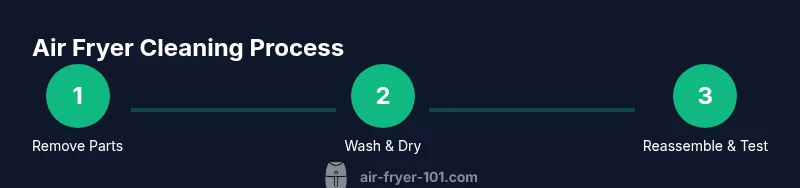
Plan a consistent flow: unplug and cool the unit, remove parts, wash removable pieces, wipe the interior, clean the exterior and vents, dry thoroughly, and reassemble. This routine minimizes moisture exposure to the electronics and reduces the chance of streaks or missed spots. If you notice a burnt-on film, pre-soak the basket briefly in warm, soapy water and use a soft brush. Always dry completely before use to prevent steam from causing warping or odors.
Dealing with stubborn residue and odors
For stubborn grime, create a gentle paste of baking soda and water, apply to the area, and let sit for a few minutes before scrubbing with a soft brush. Vinegar can be used for deodorizing, but test on an inconspicuous area first to avoid discoloration. Avoid abrasive pads that could scratch the nonstick coating. After treating spots, rinse thoroughly with clean water and dry with a soft cloth to prevent water spots and rust in metal parts.
Safety tips: protect the appliance and yourself
Always unplug the unit before cleaning and allow it to cool completely. Do not spray liquids directly onto the control panel or into any openings. Use a damp cloth rather than soaking the interior; never immerse the main unit. If your model has a dishwasher-safe basket, remove it before loading into the dishwasher and follow the manufacturer’s directions. Wear gloves if you’re using baking soda pastes or cleaning sprays to protect your skin.
Preventive maintenance and storage tips
Establish a light cleaning routine immediately after cooking to prevent buildup. Consider placing a reusable liner or parchment paper in the basket to minimize direct contact with oils. Store your air fryer in a dry, ventilated area and inspect seals and gaskets quarterly for signs of wear. Regularly checking these components helps you catch issues early and avoid costly repairs.
When to seek service or replacement
If you notice persistent odors after cleaning, reduced airflow, strange noises, or error codes on the display, consult the manufacturer’s guide or contact support. While many issues can be resolved with a thorough cleaning, some problems require professional service or part replacement. Keeping receipts and model numbers handy can speed up service requests.
Common mistakes to avoid
Do not submerge the main unit or spray water into the control panel. Avoid using abrasive cleaners or steel wool on nonstick surfaces. Don’t skip drying steps; moisture left behind can degrade seals or electronics. Finally, don’t rely on aggressive soaking or harsh chemicals, which can damage coatings and void warranties.
Tools & Materials
- Dish soap (mild)(Prefer pH-neutral soap)
- Warm water(For washing and rinsing)
- Nonabrasive sponge or microfiber cloth(For gentle cleaning)
- Soft-bristled brush(Reach crevices and corners)
- Microfiber towel(Drying and buffing)
- Baking soda(Odor removal and paste if needed)
- Old toothbrush(Detail work on hinges and vents)
- Gloves(Protect hands when using pastes)
- Dishwasher (top rack, if allowed)(Check model manual for dishwasher-safe parts)
Steps
Estimated time: 20-30 minutes
- 1
Power off and cool
Unplug the air fryer and allow it to cool completely before cleaning. This prevents electrical risks and helps oils firm up less aggressively for removal.
Tip: Never start cleaning while the unit is hot; heat can warp plastic and gaskets. - 2
Remove removable parts
Take out the basket, pan, and any racks. This makes it easy to wash all food-contact surfaces separately and prevents trapped residue from spreading during cleanup.
Tip: Rinse parts under warm running water to loosen oil before washing. - 3
Wash basket and pan
Wash removable parts with warm soapy water. Use a nonabrasive sponge to avoid scratching nonstick coatings. For stubborn spots, let them soak briefly.
Tip: Avoid placing metal utensils that could gouge the coating. - 4
Wipe the interior
Wipe the interior surfaces once cool with a damp cloth. Do not submerge the main unit; never spray water into vents or electronics.
Tip: Use a soft brush for corners where oil collects. - 5
Clean exterior and vents
Wipe the exterior and vent openings to remove dust and grease. Keep vents clear to maintain airflow and prevent overheating.
Tip: If visible grease has built up around the vent area, a cotton swab can help. - 6
Dry and reassemble
Dry all components thoroughly before reassembly. Verify seals are intact and the basket sits correctly in the chamber to avoid improper sealing.
Tip: Run a quick 2-minute empty cycle to ensure everything is dry and functional before the next use.
Got Questions?
Can I put the air fryer basket in the dishwasher?
Many baskets are dishwasher-safe on the top rack, but always check your model’s manual. If in doubt, hand wash to protect nonstick coatings. Dry completely before reuse.
Many baskets are dishwasher-safe on the top rack, but always check your model’s manual. If unsure, hand wash and dry completely before using again.
How often should I deep clean my air fryer?
A deep clean is generally recommended every 1–4 weeks depending on usage and odor. If you notice residual smells or visible residue, perform a deeper clean sooner.
Deep cleans are typically every one to four weeks depending on usage and odors. Do it sooner if you smell lingering scents.
Is vinegar safe to use for deodorizing?
Vinegar can deodorize, but test on a small area first and rinse thoroughly to avoid strong odors or coating damage. Diluted solutions are usually best.
You can use diluted vinegar for deodorizing, but test first and rinse well to avoid lingering smells.
Can I soak the basket or pan?
Soaking is helpful for tough residue but avoid soaking the main unit. Soak baskets and pans in warm soapy water for a few minutes before scrubbing.
Soak removable parts in warm soapy water for a few minutes before scrubbing, but never soak the main unit.
What signs indicate I need service?
If cleaning doesn’t remove odors, airflow remains restricted, or you see error codes, contact the manufacturer. Some issues may require replacement parts or professional service.
If odors persist or airflow is reduced after cleaning, seek manufacturer support for potential service.
Are there any warranty concerns with cleaning?
Follow the manual to avoid improper cleaning that could void warranties. Using nonrecommended cleaners or soaking electronics can affect coverage.
Follow the manual to protect your warranty; avoid soaking electronics or using harsh cleaners.
Watch Video
Quick Summary
- Clean after each use to maintain airflow
- Prioritize washing the basket and pan
- Never submerge the main unit
- Dry thoroughly to prevent moisture damage
- Follow manufacturer guidelines for parts