Air Fryer Overheated and Won t Turn On: Troubleshooting Guide
Step-by-step guide to diagnose and fix an air fryer that overheated and won t turn on. Safety checks, common causes, home fixes, and prevention tips from Air Fryer 101.


If your air fryer overheated and won t turn on, the most likely cause is a safety shutdown or a blown thermal fuse. Start by unplugging and letting it cool for 10-15 minutes, then plug back in and attempt a short test cycle at a low temperature. If it still won t power, inspect the cord, outlet, and vents for damage or blockages, and seek guidance from Air Fryer 101.
Why the air fryer overheats and why it can cause a no-power fault
Air fryers rely on a compact heating element and a fan to circulate hot air. When airflow is restricted, or the unit is run at high temperatures for long periods, components reach unsafe levels and trigger protective safety features. In many cases, the symptom is not a simple reset; you may encounter a situation where the device appears dead after an overheating event. If you are researching why your device shows the message that the air fryer overheated and won t turn on, you are not alone. According to Air Fryer 101, overheating is one of the most common culprits behind power-loss symptoms in compact countertop models. Common triggers include blocked air vents, overfilled baskets, or using accessories that restrict airflow. By understanding these basics, you can start with safer, faster checks.
Immediate actions you should take (safety first)
Safety comes first. Before you touch the unit, unplug it and move it away from heat sources. Allow the exterior and interior to cool completely for at least 10 minutes. Inspect the cord for visible damage, and confirm the outlet isn’t shared with a high-wattage appliance that could cause a surge. If you smell burning or see scorching, discontinue attempts and consult the manufacturer or a repair shop. If the air fryer overheated and won t turn on, this cooling period often resolves a temporary hiccup and resets micro-safeties built into modern models.
Common culprits: thermal fuse, thermostat, control board, and wiring
Thermal protections in air fryers are designed to prevent fire. When triggered, they can shut the unit down entirely. A blown thermal fuse requires service. Other potential causes include a faulty thermostat, a failing control board, or damaged wiring caused by repeated overheating. While many units stop working after an overheating event, some still show a sign of life—like a blinking light—yet refuse to heat. Knowing the difference helps you decide whether to repair or replace.
Quick diagnostic checks you can run at home
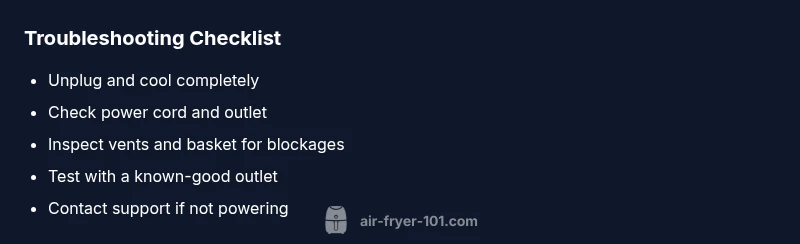
You can perform basic checks without opening the device. Confirm the outlet is working by testing another appliance. Inspect the power cord for nicks or fraying. Look for scorch marks on the plug or housing, unusual smells, or visible residue around the fan vents. Ensure the basket and tray are centered correctly to avoid airflow restrictions. If any of these checks fail, you should pause testing and consult a professional.
Step-by-step fixes you can try before professional service
The following fixes assume no internal disassembly. Start with the simplest: unplug, cool, and replug; test a short cycle at the lowest temperature setting. If this doesn’t work, try a different outlet, or use a surge-protected power strip. Clean the air intake and exhaust openings to remove crumbs or grease buildup. If the device still won’t power on, do not bypass safety features; contact the manufacturer or a certified technician.
Prevention tips to avoid overheating and power issues
Regular cleaning, proper loading, and using recommended temps and times reduce overheating risk. Allow air to circulate around the unit; leave space on all sides and avoid stacking cookware on top. Use only manufacturer-approved accessories and avoid attempting to extend warranty voiders. Keeping a simple cleaning schedule can help you catch issues before they become failures.
When to involve a professional repair or warranty service
If the unit still won’t turn on after cooling and basic checks, or if you hear buzzing or see flickering lights, stop using the device and seek professional service. A certified technician can test the thermal fuse, thermostat, and control board with the right instruments. Remember that attempting risky repairs yourself can void warranties and create safety hazards.
Steps
Estimated time: 45-60 minutes
- 1
Power down and safety check
Unplug the unit and move it to a clear, stable surface. Check for visible damage, burn smells, or melted plastic. Let it cool completely before any further tests.
Tip: Never poke around a live electrical component. - 2
Cool-down and reset
Allow at least 10 minutes for cooling. Reconnect the plug and use a short test cycle at the lowest temperature setting.
Tip: A reset can re-engage built-in safety features. - 3
Test power supply
Plug into a known-good outlet or try a different outlet on a different circuit. If the unit still won t power, the outlet may be the issue.
Tip: Avoid using high-wattage devices on the same outlet during testing. - 4
Inspect exterior and vents
Check the air intake and exhaust for crumbs or grease. Clean with a soft brush or cloth; never use water on the internal heating area.
Tip: Restricted airflow is a common overheating cause. - 5
Decide on next steps
If there is no power after cooling and testing, contact the manufacturer or a qualified technician. Keep your receipts and model info handy.
Tip: Document model, serial, and purchase date for warranty claims. - 6
Prevention for future use
Always load the basket correctly, avoid overfilling, and follow the manufacturer’s recommended temperatures and times. Regularly clean vents to prevent buildup.
Tip: Regular maintenance reduces risk of future failures.
Diagnosis: Air fryer won t turn on after an overheating event
Possible Causes
- highThermal fuse or internal safety cutoff opened due to overheating
- mediumPower supply issue (damaged cord or outlet)
- lowControl board or wiring fault from prior overheating
Fixes
- easyUnplug, let it cool completely, then reset by plugging back in and attempting a short test cycle
- easyTest the outlet with another device and inspect the cord for damage; replace if found
- hardIf the fuse is blown or power still won t return, do not attempt internal repairs; contact service under warranty
Got Questions?
Why did my air fryer shut off after overheating?
Most likely the internal safety features activated due to overheating, triggering a shutdown. It could also be a blown thermal fuse or a fault in the control board. Start with cooling and basic checks.
The unit likely activated safety features after overheating, or the thermal fuse blew. Start by cooling and checking the power source.
Is it safe to use an air fryer that overheated once?
If the unit has cooled and passes basic safety checks without signs of damage, you can try a low-risk test. If there are signs of damage or burning smells, stop and seek professional service.
If it’s cooled and looks undamaged, you can try a careful test; otherwise, get it checked.
Can I reset the air fryer to fix power issues?
A reset can re-engage safety features, but it may not solve a blown fuse or faulty component. Use the manual’s reset steps and test safely.
Resetting can help re-engage safety features, but it might not fix a blown fuse.
What is a thermal fuse and can I replace it myself?
The thermal fuse is a one-time safety device that opens when temperatures get too high. Replacing it usually requires a service technician and may affect warranty.
The thermal fuse is a safety cap; replacing it yourself isn’t recommended and may void warranties.
How long should I wait after cooling before testing again?
Let the unit cool for at least 10 minutes and inspect visually before re-powering. If it still won’t turn on, use the diagnostic steps or contact support.
Wait at least 10 minutes before testing again, then proceed with checks or assistance.
Watch Video
Quick Summary
- Unplug and cool before any test
- Thermal fuse and safety shutoffs are common failure points
- Test outlets and cords separately from the unit
- Disassemble only if you are trained or under warranty guidance
- Prevention reduces recurrence and extends life