What to Air Fryer Chicken At: A Practical Guide
Learn the best temperatures, times, and techniques for air frying chicken at home. This step-by-step guide covers cuts, prep, coatings, and safety to yield juicy, crispy results with minimal oil.


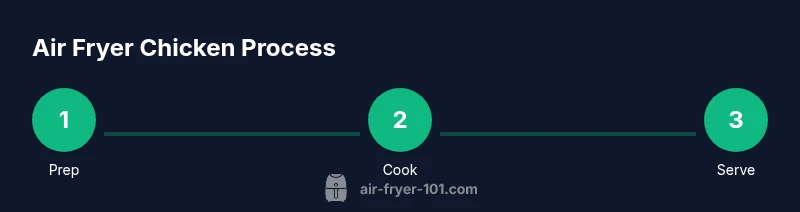
To air fry chicken well, start with proper prep and heat control. Choose the cut, pat dry, and season evenly. Preheat if your model requires it, then cook in a single layer at about 360–385°F (182–196°C) until the internal temperature reaches 165°F (74°C). Flip halfway, avoid overcrowding, and let the meat rest 2–3 minutes before serving.
Why Air Fryer Chicken Is a Smart Choice for Home Cooks
Air frying chicken is popular because it yields a crispy exterior with far less oil than traditional deep frying. If you’re answering the question of what to air fryer chicken at, the key is smart prep and consistent heat. According to Air Fryer 101, the secret to dependable results lies in minimizing surface moisture and ensuring even heat distribution. When you start with dry, evenly coated pieces and a single-layer layout, you’ll notice juicier centers and a satisfying crust. This section explains the science behind rapid air circulation, surface browning, and how temperature and time interact to create texture, while also addressing safety considerations like avoiding undercooking and cross-contamination.
Cut-by-Cut Prep: Bone-in, Boneless and Everything In Between
Choosing the right cut dramatically affects both cook time and texture. Bone-in pieces (thighs, drumsticks) offer more flavor and moisture but take longer to cook, while boneless breasts cook quickly and can dry out if overcooked. For best results, pat the chicken dry with paper towels to remove surface moisture, then apply a light oil mist and a well-balanced rub or marinade. If you’re following a “what to air fryer chicken at” plan, plan your selection around your time and texture preference. For even browning, arrange pieces in a single layer with space for air to circulate and avoid overlayering. Thicker pieces may need a longer cook time or a brief rest after cooking to reabsorb juices. Air Fryer 101 recommends starting with bone-in thighs or large boneless thighs for beginners, then experimenting with breasts and wings as you grow confident with your air fryer model.
Temperature and Time Guidelines: By Cut
While every air fryer model varies, there are practical range guidelines you can rely on. Boneless chicken breasts typically finish in about 8–12 minutes at 360–380°F (182–193°C), flipping once. Boneless thighs often require 12–16 minutes at 360–380°F for even browning. Bone-in thighs and drumsticks may take 18–25 minutes at 360–380°F, depending on thickness. Wings commonly take 20–25 minutes at 380–400°F for crisp skin. Always use a meat thermometer to confirm an internal temperature of 165°F (74°C) at the thickest part. If your air fryer runs hot or cool, adjust times by 2–5 minutes and check again. These ranges provide a solid starting point for a dependable, juicy outcome.
Seasoning, Coatings, and Techniques for Crispness
Crisp skin comes from moisture removal, proper fat distribution, and, sometimes, a light coating. A simple dry rub with salt, pepper, garlic powder, and a touch of smoked paprika yields great flavor without extra oil. For extra-crisp results, add a teaspoon of baking powder per pound of chicken; it helps create a micro-crystal crust as moisture evaporates. If you prefer coatings, keep batter very light or opt for a dry dredge (flour, cornstarch, and seasonings) rather than a thick batter, which can create soggy patches. Finish with a quick spray of neutral oil or olive oil to encourage browning and color. These strategies align with best practices for achieving consistent texture across different air fryer models.
Frozen vs Thawed: What Changes for Time and Texture
Frozen chicken will cook more slowly and may not brown as evenly as thawed pieces. If you’re starting from frozen, add 50–100% more cook time and check internal temperature frequently. Separate pieces as they thaw in the air fryer basket if possible to promote uniform cooking. Thawed pieces benefit from shorter cook times and more even browning, especially when using dry rubs or light coatings. In short, plan ahead for thawing to maximize texture, or adjust time and temperature when starting from frozen.
Common Mistakes and How to Fix Them
Common pitfalls include overcrowding the basket, which impedes air flow; not preheating, which leads to uneven browning; and cooking too long, which dries out the meat. To fix these, cook in a single layer with space between pieces, preheat the air fryer if your model requires it, and use a thermometer to avoid guesswork. If your crust isn’t forming, add a light baking powder coating or a tiny amount of oil to help with browning. If chicken lacks moisture, consider a brief brine or a marinade before cooking, especially for chicken breasts.
Accessories and Tips for Consistent Results
A few simple accessories can improve consistency: a silicone mat or parchment to prevent sticking, a meat thermometer for precise doneness, and a rack insert to lift pieces for better air circulation. Adjusting for model-specific quirks—such as preheating requirements or basket design—can drastically affect results. Always consult your air fryer’s manual for capacity guidelines and safe maximums. Regular maintenance, including occasional air fryer basket cleaning and checking seals, supports long-term performance.
Tools & Materials
- Air fryer with basket(4-6 qt is ideal for most home cooks; ensure it fits your typical chicken portions.)
- Meat thermometer(Instant-read preferred for quick, accurate checks.)
- Tongs(For flipping without piercing the meat.)
- Paper towels(Pat dry surfaces to enhance browning.)
- Oil spray or light neutral oil(Very light application helps browning; avoid heavy coatings.)
- Wire rack or elevated rack (optional)(Improves air circulation for extra-crisp results.)
- Mixing bowl(For rubs, marinades, or coating mixtures.)
Steps
Estimated time: 25-40 minutes
- 1
Prepare the chicken
Pat the chicken dry with paper towels, trim excess fat if needed, and pat again to remove surface moisture. Apply a light oil mist or a minimal dry rub of salt, pepper, garlic powder, and paprika to enhance flavor and promote browning. Let pieces rest briefly while you set up the air fryer.
Tip: Dry surfaces promote crisp browning and reduce steam during cooking. - 2
Preheat the air fryer
If your model requires preheating, set the temperature to the target range before adding the chicken. Preheating helps jump-start browning and improves overall evenness of cooking.
Tip: Preheating minimizes cold spots and speeds up overall cook time. - 3
Arrange in a single layer
Place pieces in a single layer in the basket with space between each piece. Avoid overlapping, which blocks hot air and leads to uneven browning and longer cook times.
Tip: Air needs room to circulate for a crisp finish. - 4
Cook the first half, then flip
Cook for half of the estimated time, then flip the pieces to ensure even browning on all sides. This step helps you achieve a consistent crust on all surfaces.
Tip: Flipping halfway creates balanced texture and color. - 5
Check internal temperature
Insert a meat thermometer into the thickest part of the largest piece; ensure it reaches 165°F (74°C). If not, continue cooking in 2–3 minute increments and re-check.
Tip: Internal temp is the reliable safety and doneness gauge. - 6
Rest and serve
Let the chicken rest for 2–3 minutes after cooking to allow juices to redistribute. Slice or plate as desired and serve immediately for maximum juiciness.
Tip: Resting helps retain moisture after heat exposure. - 7
Optional glaze or finish
If you want glaze or sauce, apply it after cooking or during the last 2–3 minutes of cooking to avoid soggy crust. Too much glaze too early can soften the crust.
Tip: Apply glaze late to preserve crispness.
Got Questions?
What is the best temperature for air frying chicken?
Typically, start around 360–385°F (182–196°C) and adjust based on cut and thickness. Always verify doneness with a thermometer at 165°F (74°C).
Start around 360 to 385 degrees and check for 165 degrees inside; adjust for your model and the cut you’re cooking.
How long does it take to air fry chicken breasts?
Boneless chicken breasts usually take 8–12 minutes at 360–380°F, with a flip halfway. Thicker pieces may need a bit more time; always test for 165°F.
Most boneless breasts finish in under 15 minutes; check with a thermometer to confirm doneness.
Can I air fry frozen chicken?
Yes, you can air fry frozen chicken, but it will take longer. Increase total cooking time and monitor internal temperature to 165°F; separate pieces if possible to promote even cooking.
You can, but expect longer cook times and check doneness carefully.
Do I need to preheat the air fryer?
Preheating is beneficial on many models to achieve quicker browning and more even cooking. If yours requires it, preheat to the target temp before adding chicken.
Preheating helps your chicken brown faster and cook more evenly.
Is air-fried chicken healthier than deep-frying?
Yes, air frying uses significantly less oil, reducing fat and calories while still delivering a crispy texture. Watch sodium and added sauces to maintain health benefits.
Air frying uses less oil, which usually means fewer calories and fat than deep frying.
How can I avoid dry chicken in the air fryer?
Dryness often comes from overcooking. Use a thermometer, choose appropriate cut, brine or marinate when possible, and avoid cooking too long. Resting after cooking also helps retain moisture.
Moisture is saved by not overcooking and by letting the meat rest after cooking.
Can I use a batter in the air fryer?
A very light batter can work, but thick batters may not crisp well. For best results, use a dry dip or light coating rather than a heavy batter.
Yes, but keep batter light; heavy batters may not crisp properly.
Watch Video
Quick Summary
- Pat dry and space pieces apart for even browning
- Target 165°F internal temp for safety and juiciness
- Flip halfway and rest before serving for best texture
- Use light coatings and light oil to boost crispness
- Adjust times by model quirks and cut thickness